
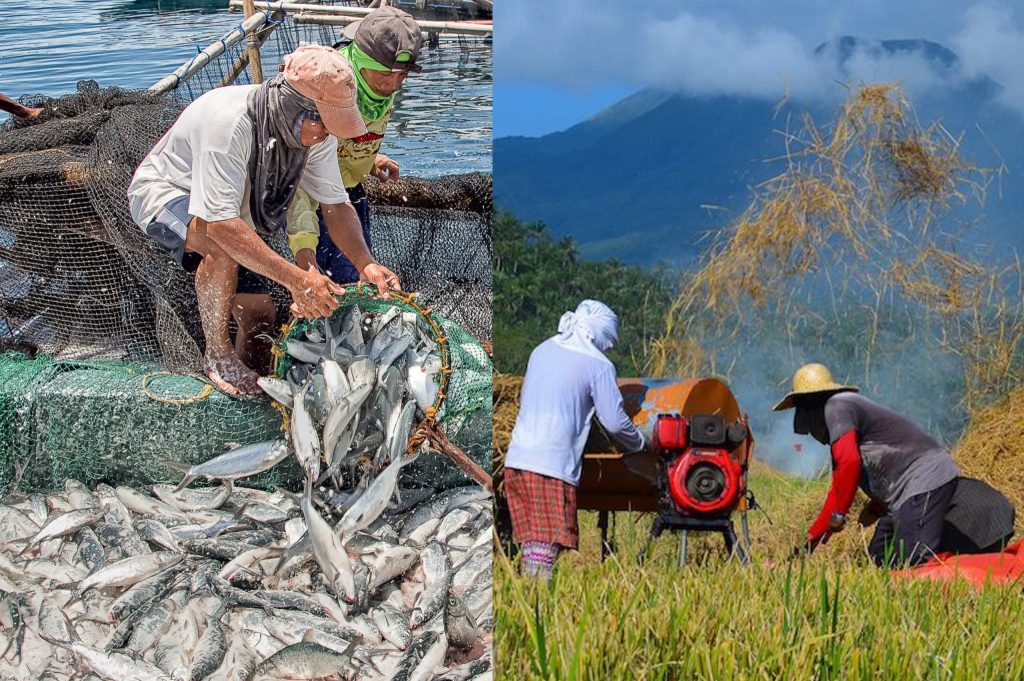
MANILA — The Department of Agriculture (DA) has launched a set of interventions aimed at protecting farmers, fisherfolk, and consumers from increasing food production costs driven by rising fuel prices, Agriculture Secretary Francisco P. Tiu Laurel Jr. said.
The measures, carried out under the directive of Ferdinand Marcos Jr., form part of a broader whole-of-government response to the ongoing energy emergency.
Data from the Philippine Statistics Authority showed that food inflation among the country’s bottom 30 percent income households rose to 3.7 percent in March from 1.9 percent in February. The increase was attributed to higher input and transportation costs linked to escalating oil prices.
Despite the uptick, Tiu Laurel said food supply remains adequate, although prices are expected to stay elevated in the near term.
“To protect our farmers and fisherfolk from rising costs, and to keep food accessible for all Filipinos, we are combining financial assistance with securing essential inputs like fertilizers,” Tiu Laurel said. “Programs such as Benteng Bigas and Meron Na are being rapidly rolled out, while infrastructure initiatives—including farm-to-market roads, rice processing systems, and post-harvest facilities—are being accelerated. These steps reduce production costs, stabilize supply, and boost farmers’ incomes.”
The DA has deployed trucks to Benguet to assist vegetable farmers in transporting produce to markets, while Food Terminal Inc. is helping onion growers obtain fair prices. Planters Products Inc. and the Fertilizer and Pesticide Authority are also sourcing more affordable fertilizer options to sustain production.
Tiu Laurel said the country continues to have enough food supply despite volatility in global fuel markets and rising fertilizer costs tied to tensions in the Middle East. The DA is also studying additional measures, including possible price caps on imported rice, to keep food affordable while ensuring local producers remain incentivized.
Cereals accounted for 41.8 percent of March’s food inflation, followed by fish and seafood at 36.2 percent, and vegetables at 21.1 percent. The department said its interventions are focused on stabilizing these key commodities and preventing further increases in costs.
“Beyond immediate assistance, we are investing in infrastructure and supply chain improvements to make the agricultural sector more resilient,” Tiu Laurel said. “These steps will lower input costs, improve market access, and ensure farmers and fisherfolk can sustainably meet demand even under challenging conditions.”
While food prices may remain elevated in the short term, the government said its coordinated strategy—combining direct support, infrastructure upgrades, and regulatory measures—aims to ease pressure on both producers and consumers.




 Republika News
Leave a comment