
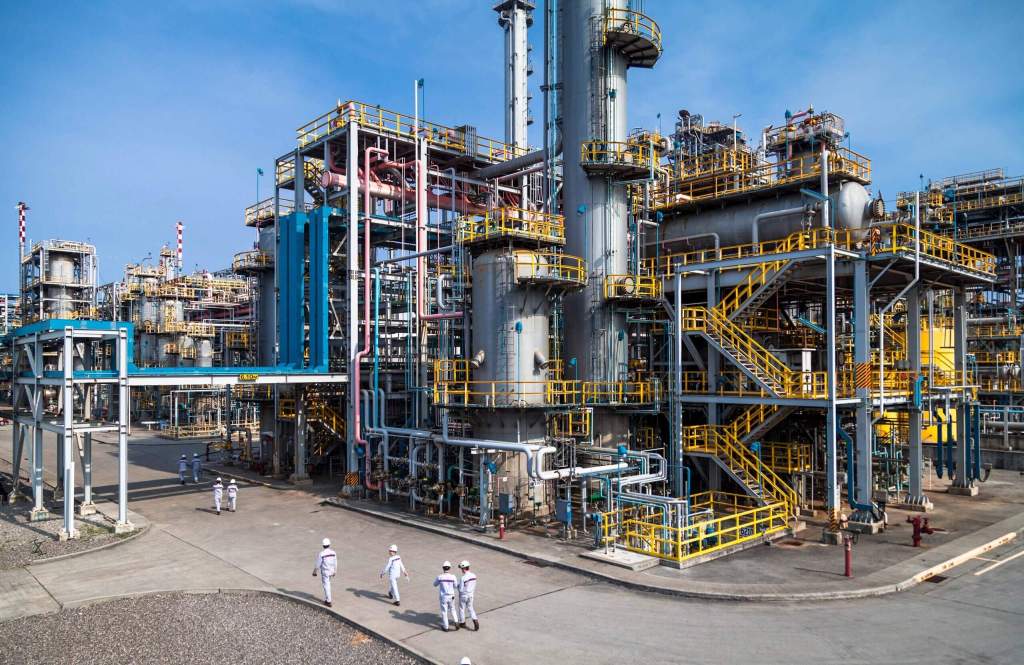
MANILA — The Philippines cannot simply stockpile large volumes of crude oil to build reserves due to limited storage capacity, the Department of Energy (DOE) said, warning that local fuel prices remain vulnerable to global disruptions.
In a report by 24 Oras, DOE Secretary Sharon Garin said it is still uncertain whether the recent decline in global crude prices—driven by a two-week ceasefire between the United States and Iran—will translate into lower domestic fuel costs.
“Whenever there’s an oil infrastructure destroyed in whatever country, prices spike and then go down, and then suddenly something else happens,” Garin told lawmakers during a congressional hearing.
She noted that about 20% of the world’s oil supply comes from the Middle East, and price spikes—including the possibility of crude oil reaching P200 per liter—cannot be ruled out.
“If the war stops today, will the 20% be able to deliver? I think it will take months because much of the infrastructure has been damaged. LNG facilities, in particular, may take years to restore,” she added.
The DOE said the country currently has enough fuel inventory for roughly 50 days, supplemented by one million barrels of diesel scheduled to arrive this month. The government had planned to purchase up to two million barrels to boost reserves, but storage constraints limited procurement to one million barrels.
“We are only good for about 60 days in total—57.8 days for gasoline and 47.26 days for diesel,” Garin said, adding that the Oil Deregulation Law of 1998 has left the country dependent on private oil companies for supply and storage.
She emphasized the need to revisit the law to strengthen the government’s capacity to respond during crises.
“When there is war and prices spike, it becomes unpredictable… The DOE can monitor and recommend, but it does not have the power to control prices beforehand,” Garin said.



 Republika News
Leave a comment