
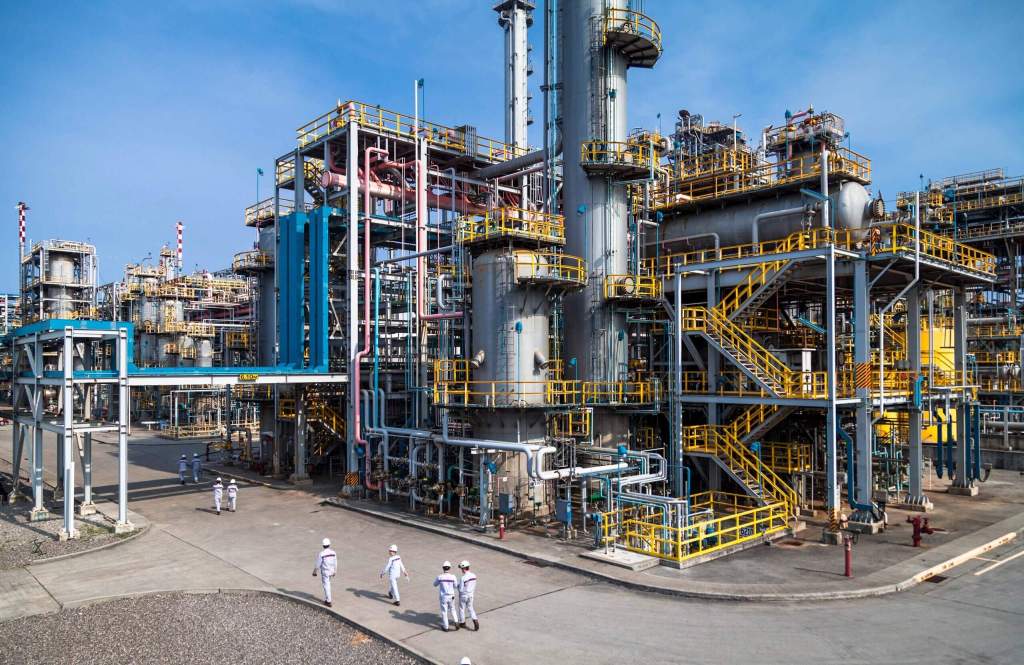
MANILA — A push to investigate possible anti-competitive practices in the oil industry is gaining traction in the House of Representatives following remarks by Economic Planning Secretary Arsenio Balisacan on what he described as “seemingly excessive” margins during the ongoing fuel price shock.
House Senior Deputy Minority Leader Leila de Lima said she supports calls to examine whether oil firms may be engaging in cartel-like behavior, urging regulators to take action amid rising fuel costs.
“Hindi pwedeng tatanggapin lang natin ang ganitong nakakalula at nakapagdududang pagtaas sa presyo ng langis,” De Lima said in a statement on Saturday, April 11.
(We can’t just accept this shocking and suspicious rice in the price of oil.)
Balisacan, speaking during a House hearing on April 8, said regulators have the authority to look into possible violations of competition laws in the industry.
“I haven’t looked at the market since then, but I think that given the excessive, seemingly excessive margins during this crisis, I think it’s worth looking into closely,” he said.
He added that agencies such as the Energy Regulatory Commission and the Philippine Competition Commission have the mandate to investigate potential anti-competitive behavior and called for stronger coordination between them.
“I think the issue here is that the oil regulators are not exercising their powers to make sure that market players are being fair in the way they play their game in the market,” Balisacan also said.
Following the statement, De Lima filed House Resolution 914, which directs the House Committee on Energy to investigate the sharp increase in diesel prices and possible market abuse.
The resolution seeks to determine why the Philippines has been among the most affected countries in the global oil price surge and whether existing laws are sufficient to protect consumers.
It also calls for an inquiry into whether current pricing reflects fair competition or indicates profiteering, price manipulation, or collusion, and whether regulatory powers are adequate to address excessive price movements.
During the same hearing, De Lima questioned the government’s mechanisms for detecting overpricing during periods of global volatility.
She cited Energy Secretary Sharon Garin, who earlier said she does not believe there is overpricing in the current market.
“That is a bit hard to believe, especially seen from the presentation of Cong. [Antonio] Tinio… that domestic pump prices do not increase proportionately to global benchmarks, our domestic pump prices rise faster than global benchmarks,” she said in mixed Filipino and English.
“We are in a situation where consumers are paying today’s high prices for yesterday’s cheaper fuel. It is a disservice if the government has no clear mechanism to ensure fairness,” she added.
De Lima also said the country’s oil deregulation policy may need to be reassessed amid global market volatility.
“What’s happening now with this crisis, we are realizing that our current oil deregulation policy is not an ideal policy. That’s why there’s a need to review the Oil Deregulation Law and conduct an urgent investigation into the possible market abuse in determining the fuel prices,” she said.
She earlier filed House Bill 8824 seeking to amend the Oil Deregulation Law to strengthen monitoring and competition safeguards while maintaining market liberalization.
The Senate has likewise called for an inquiry into possible collusion and abusive pricing practices in the oil industry.
 Republika News
Leave a comment