
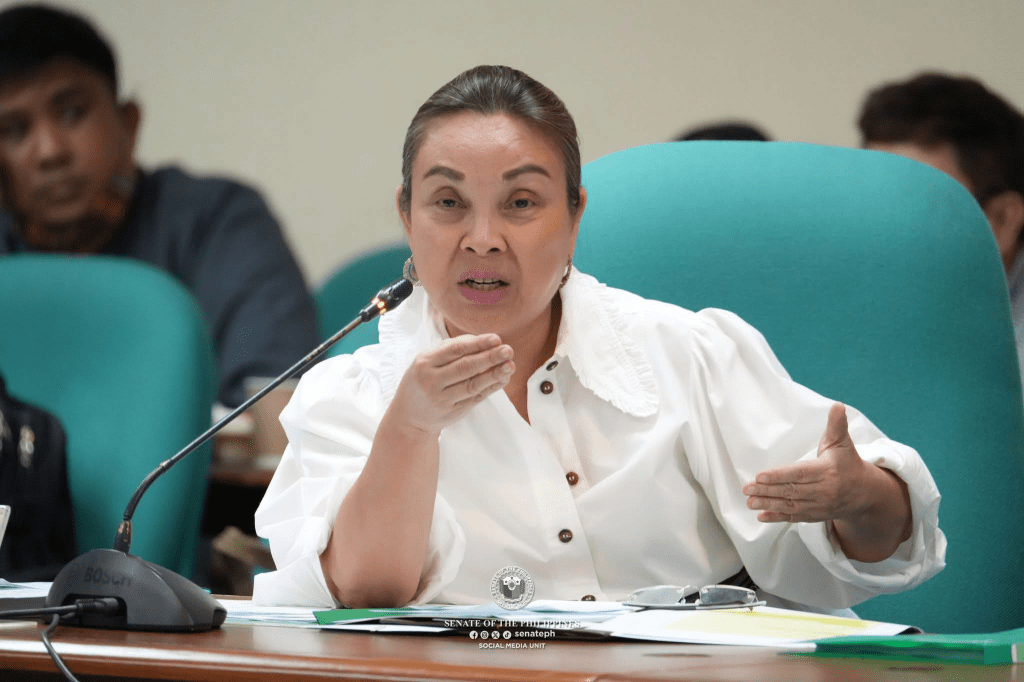
MANILA — Sen. Loren Legarda has filed Senate Bill No. 2020, or the “Bayanihan 3: Power to the People Act,” which seeks to combine immediate relief for Filipinos with a time-bound revenue package, including a proposed one-time levy on ultra-high-net-worth individuals, amid the 2026 global oil crisis.
The proposal includes a “Solidarity Wealth Contribution” on individuals with net assets exceeding ₱1 billion. The levy is tiered at 1 percent for assets above ₱1 billion, 2 percent above ₱2 billion, 3 percent above ₱3 billion, and 4 percent above ₱4 billion.
The measure is designed as a one-time emergency tax that will cease upon the end of the national emergency, unless extended by Congress. It also provides for possible exemptions for primary residences and assets used in active business operations, subject to implementing rules.
“Ang panukalang ito ay panawagan sa tunay na bayanihan. Sa gitna ng krisis, lahat tayo dapat magbahagi ng pasanin ayon sa ating kakayahan. Hindi puwedeng ang ordinaryong Pilipino lang ang laging unang tinatamaan ng taas-presyo, habang ang pamahalaan naman ay limitado sa piecemeal na tugon. Kaya sa panukalang ito, ang mga may mas malaking kakayahang tumulong ay inaasahang makikibahagi rin, pansamantala, upang may maipantustos sa agarang tulong para sa mga pinakaapektadong sektor,” Legarda said.
The wealth contribution is part of a broader four-pillar tax package aimed at generating funds for a crisis response program, which also includes a proposed windfall profit levy of up to 15 percent on extraordinary crisis-related profits of utilities and companies in the energy, transport, and water sectors.
The bill also directs the Executive to study the imposition of a temporary luxury goods tax on high-end vehicles, jewelry, yachts, private aircraft, luxury fashion, and premium real estate.
Revenues from the proposed measures will go to a special fund for emergency response, fuel subsidies, social protection, food security, and energy stabilization. Any unused funds will revert to the General Fund after the emergency period.
Legarda also proposed allowing the Department of Finance, in coordination with the Department of Energy, to suspend or reduce excise taxes on fuel products and to temporarily adjust or remove value-added tax on petroleum products. Any relief must be reflected in pump prices, with the DOF required to submit a report within seven days detailing its fiscal impact and consumer effect.
The measure further strengthens market monitoring through a proposed National Energy Real-Time Monitoring System under the DOE to detect predatory pricing and cartel activity. The Energy Regulatory Commission is also directed to review electricity charges and implement temporary relief measures for consumers.
The bill requires all fiscal interventions, including the proposed wealth tax and windfall levy, to undergo a 30-day assessment covering legal, constitutional, and administrative feasibility before implementation.
“Hindi rin puwedeng ang iilang apektadong ahensya lang ang kumikilos. Dapat buong makinarya ng gobyerno ang gumagalaw. May ilang ahensya na ngang nagsisimula nang mag-isip ng kani-kanilang ambag, at kahit walang direktiba, nagpakita na ng agarang pagtulong sa ating mga kababayan. Walang dahilan para hindi ito tularan ng iba pang sangay ng pamahalaan. Ang tanong dito, ahensya, ano ang ambag mo ngayong krisis?” Legarda said.
She added that agencies must move quickly but ensure proper and lawful implementation of policies.
The bill was filed and received by the Office of the Secretary on April 6, 2026, during the 20th Congress, First Regular Session.
 Republika News
Leave a comment