
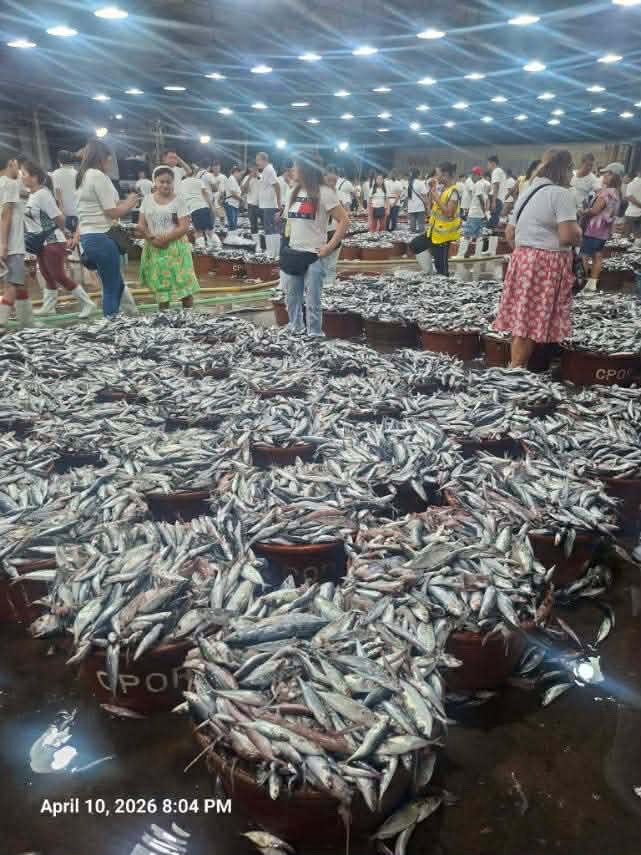
MANILA — Galunggong (round scad) landings at the Navotas Fish Port Complex almost doubled in March 2026, reaching 16,165.52 metric tons (MT) from 8,161.92 MT recorded in the same period last year, reflecting a strong peak-season turnout attributed to better fishing conditions and recovery following the closed season, the Philippine Fisheries Development Authority (PFDA) said.
The PFDA said the surge in March highlights the sustained strength of the fisheries sector, which remains vital in maintaining food supply stability and providing livelihoods to fishing communities and industry players. The peak season for galunggong is projected to continue until the end of July 2026.
Agriculture Secretary Francisco P. Tiu Laurel Jr. said the figures demonstrate the long-term impact of fisheries management efforts. “A decade of implementing the closed fishing season policy has contributed to the recovery of fish stocks, and we are now seeing the results in higher and more stable landings,” he said.
Of the total catch, Shortfin scad comprised 9,731.68 MT, while Bigeye scad contributed 6,433.84 MT.
The PFDA attributed the rise in volume to several factors, including the successful enforcement of the three-month closed fishing season from November 1 to January 31, which allowed fish populations to replenish.
The agency also pointed to environmental factors, such as the early onset of El Niño, which may have influenced fish movement and improved catch efficiency. Favorable conditions during vessel deployment activities in late January were also cited.
PFDA General Manager Glen A. Pangapalan said port operations played a key role in accommodating the increased volume. “The Navotas Fish Port Complex was able to manage the significantly higher volume smoothly, ensuring proper unloading and distribution across the supply chain,” he said.
He added that further improvements in infrastructure, including cold storage, logistics, and post-harvest facilities, are needed to sustain gains. “Strengthening infrastructure will help minimize losses and ensure that increased landings translate into better quality fish and improved returns for stakeholders,” he said.
Industry data indicated that the strong March figures coincide with the start of the peak galunggong season, expected to last until July. The Bureau of Fisheries and Aquatic Resources is set to release a more detailed scientific assessment comparing year-on-year conditions.
The continued rise in supply reflects improving resource conditions and underscores the importance of coordinated fisheries management, as stakeholders monitor whether the upward trend can be sustained in the coming months.




 Republika News
Leave a comment