

MANILA, Philippines — Ten years after the passage of Republic Act 10687, key responsibilities mandated under the law establishing the Unified Student Financial Assistance System for Tertiary Education (UniFAST) remain largely unfulfilled.
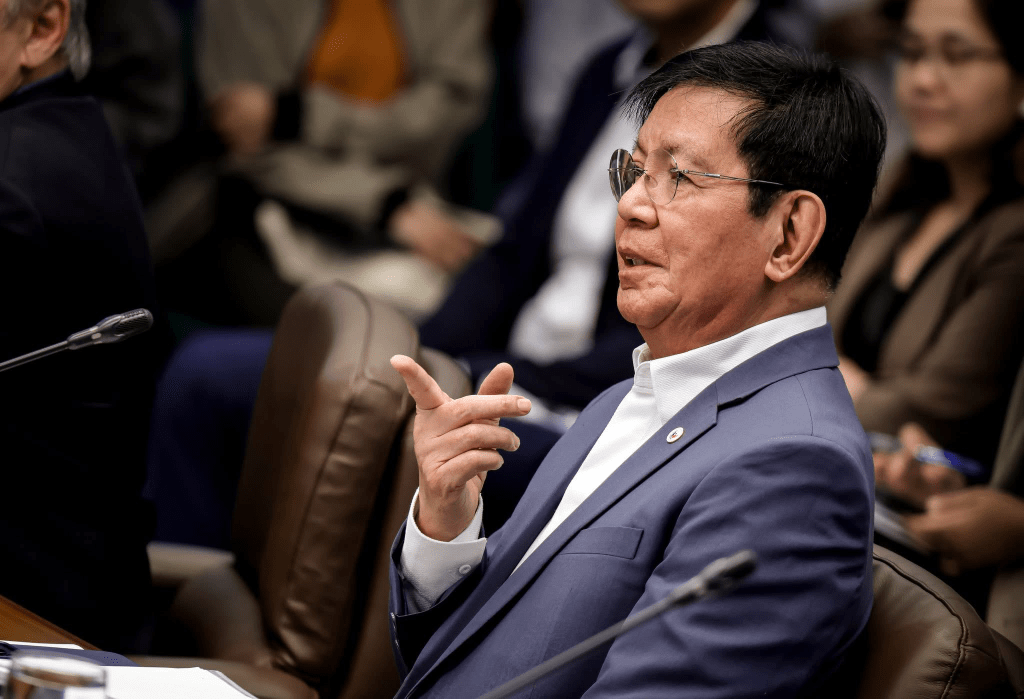
This was revealed in a recent hearing of the Second Congressional Commission on Education (EDCOM 2), which is currently reviewing the Commission on Higher Education’s (CHED) charter.
The law, passed in 2015, created UniFAST to “harmonize, reform, strengthen, expand, rationalize, and re-focus all legislated or ongoing StuFAPs [Student Financial Assistance Programs] of the government,” aiming to ensure more efficient and effective coordination among implementing entities.
“The UniFAST was the government’s answer to what was observed to be a ‘fragmented and meager’, ‘untargeted’ and ‘unharmonious’ [set of programs],” said EDCOM 2 Executive Director Dr. Karol Mark Yee. “The main goal of UniFAST was to harmonize all existing student financial assistance programs of the government across different agencies, to ensure improved efficiency and efficiency. However, ten years later, many of the intentions of the law are still unfulfilled.”
Though UniFAST currently administers the Universal Access to Quality Tertiary Education (UAQTE) program—including the Tertiary Education Subsidy and the Tulong Dunong Program—EDCOM 2 pointed out that many core functions have yet to be implemented. These include adopting a standardized qualifying exam system, conducting impact evaluations of scholarship programs, developing a long-term student loan system, and maintaining an online database of accredited schools.
Former CHED Chairperson Dr. Patricia Licuanan voiced concern that the original goals of UniFAST were overshadowed by the shift in focus to free tuition programs after the passage of the Universal Access to Quality Tertiary Education Act.
“When we launched the UniFAST, that was very groundbreaking and it was used almost like a career development for students. But again, here, the free universal tuition came out and everyone got focused on that,” she said. “So, the UniFAST board and UniFAST Secretariat [were] not able to do the other stuff, which is also very important.”
EDCOM 2 Standing Committee Member on Higher Education and University of Makati President Prof. Elyxzur Ramos raised concerns that the availability of UniFAST funding encouraged some local universities and colleges (LUCs) to prioritize program compliance over innovation.
“You will look good to your constituents, and you can easily pass on the cost to the national government through UniFAST – you just have to invest in putting up a building, and you come up with programs which are easiest to get COPC (Certificate of Program Compliance) approval,” Ramos said. “This is why we see a lot of LUCs duplicating courses that are also being offered by a lot of SUCs and private HEIs.”
EDCOM 2 also highlighted how some State Universities and Colleges (SUCs) have become increasingly dependent on government subsidies and delayed reimbursements from UniFAST.
In response, UniFAST Executive Director Atty. Ryan Estevez acknowledged that the board shifted its focus after being tasked to implement free tuition under RA 10931. He noted that only in recent years has UniFAST begun to readdress its original mandates.
“So in 2023, we started doing the Technical Working Groups (TWGs) for harmonization of StuFAPs. We started with some agencies like DOST,” Estevez said. “May mga number of agencies coming in with the hopes of having unified guidelines on student financial assistance systems. But most of them ang hesitation is parang ang dating kasi sa kanila kukunin namin yung kanilang scholarship programs. So medyo may hesitation doon sa part na yon.”
He added that a meeting with relevant agencies will be held in two weeks to present draft guidelines for harmonizing student aid programs. “So we did a draft actually, and in two weeks’ time magkakaroon kami ng meeting with some of the agencies because we will present to them the draft guidelines of harmonized StuFAPs. So that’s what we’re going to do in the next two weeks.”
EDCOM 2 Co-Chairperson Rep. Roman Romulo criticized the slow pace of efforts to establish a student loan system, suggesting that agencies like Land Bank and DBP, which already offer study-now-pay-later schemes, could have been tapped.
“Under the UniFAST law pwede niyong hingan ng tulong yung DBP and LandBank – they have their own scholarship already nagbibigay na sila ng ‘study now pay later’. Government agency rin yun eh so hindi ko maintindihan why don’t you want to coordinate with them,” Romulo said.
CHED Executive Director Atty. Cinderella Benitez-Jaro cited limited manpower as a key constraint, explaining that CHED has not received a proportional increase in plantilla positions despite being tasked to implement multiple new laws since 2018, including UniFAST.
“Ang nadagdag lang po sa amin with the implementation of [the UniFAST law], meron pong 18–20 plantilla positions and then sa Transnational Education Law there were created at least mga five plantilla positions po. But essentially all remain the same,” she said.
CHED Chairperson Dr. Shirley Agrupis also noted that while CHED’s budget has increased—P32.7 billion in 2022 alone—the bulk of the funding goes to RA 10931 and TES, leaving little for other grants or quality improvements, especially for private higher education institutions.
EDCOM 2 has directed UniFAST to submit a timeline by August 3 for addressing its nine unimplemented mandates.



Leave a comment