
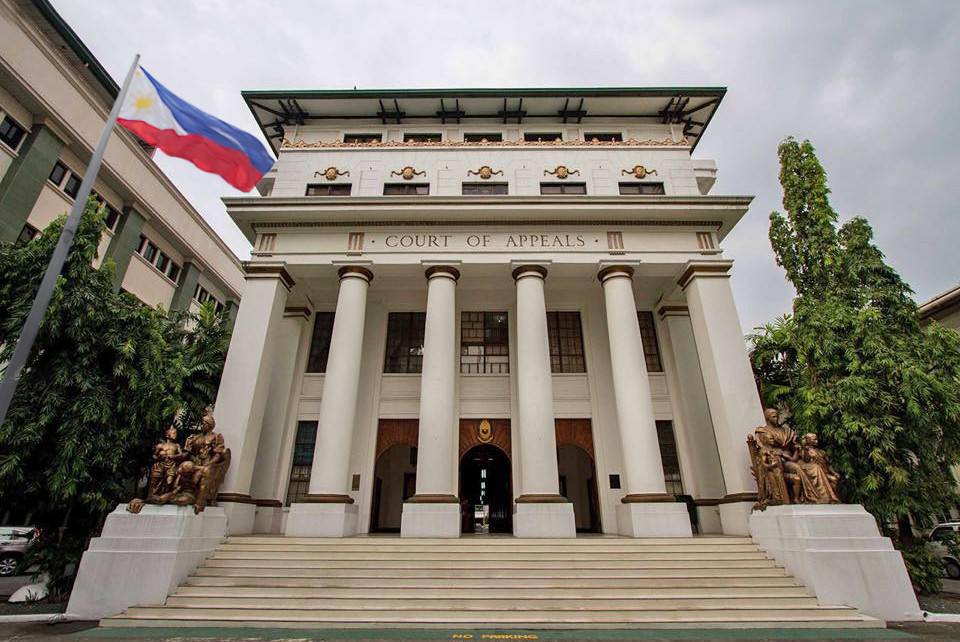
MANILA – The Court of Appeals (CA) has dismissed the perjury case filed against Dominican exorcist Winston Cabading in connection with his statements on the Marian apparitions in Lipa.
In a 37-page decision promulgated on January 26, the appellate court granted Cabading’s petition for certiorari, effectively quashing the information for perjury and issuing a permanent injunction against the implementation of previous orders of the Quezon City Regional Trial Court (RTC) Branch 96 that had found him guilty of perjury.
The case stemmed from a May 2022 Facebook livestream in which Cabading discussed the 1948 Lipa Apparition and reiterated the Catholic Church’s official position that the events were “not of supernatural origin.”
Following the broadcast, former Sandiganbayan Associate Justice Harriet Demetriou, a devotee of “Our Lady, Mediatrix of All Grace,” filed a complaint for offending religious feelings under Article 133 of the Revised Penal Code. While the trial court eventually quashed the charge, it led to subsequent allegations of perjury.
The perjury case was based on Cabading’s legal filings in which he asserted the existence of a 1951 Papal Decree approved by Pope Pius XII. Demetriou claimed that Cabading made a “willful and deliberate assertion of falsehood,” arguing that the decree was “non-existent” because he failed to attach a copy of it to his initial counter-affidavit.
The CA, however, found the argument flawed, noting that Cabading later submitted a certified true copy of the 1951 Decree to the prosecutor’s office and the trial court on April 15, 2024, after receiving it from the Vatican through the Catholic Bishops’ Conference of the Philippines.
“This fact alone negates the allegation that the 1951 Decree is ‘non-existent,’” the CA said.
The appellate court also noted that the RTC “merely brushed aside” the submission of the certified document, which it said constituted a violation of Cabading’s constitutional right to due process.
While the case involved religious issues, the CA stressed that its ruling was limited to determining whether the elements of perjury were present. It held that because the 1951 Decree did exist, Cabading could not be held liable for asserting its existence under oath.
“There is no reason to have petitioner endure the rigors of a trial under the insufficient subject information for perjury,” the court said, ordering the dismissal of the case to spare Cabading from the “anxiety of undergoing a useless trial.”



 Republika News
Leave a comment