
MANILA — Food prices in the country have remained broadly stable even amid higher fuel costs, the Department of Agriculture (DA) said, citing sufficient supply levels that have helped cushion logistics-related pressures.
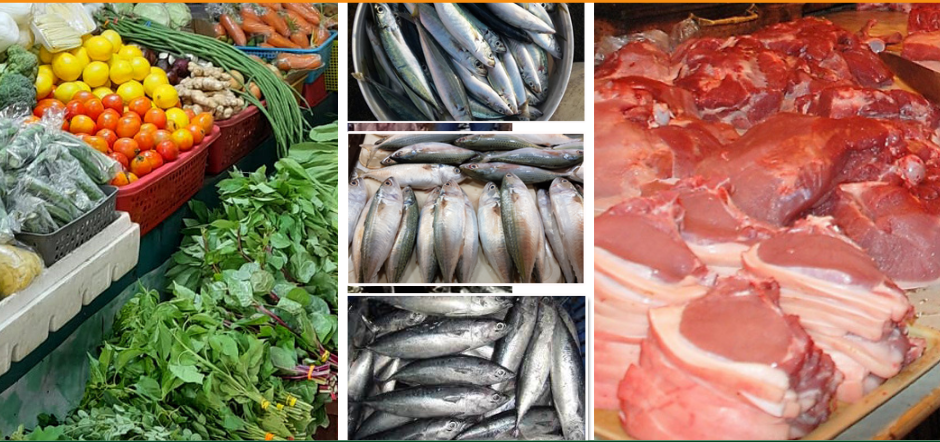
Based on monitoring by the DA’s Agribusiness and Marketing Assistance Service, only selective price increases were observed in imported rice and local beef and pork following global tensions triggered by the February 28 US-Israel airstrike on Iran. However, prices of most alternative protein sources, including chicken, eggs, fish, and vegetables, have either stayed steady or declined as of April 13.
The DA attributed the relative stability to improved supply conditions. It said the end of the fishing ban on January 31 led to higher fish catch volumes, particularly for galunggong and tamban, resulting in lower prices.
Galunggong dropped to around P200 per kilo from as high as P330, while tamban eased to P130 from P140.
To address rising prices of imported rice, President Ferdinand Marcos Jr. earlier said he is considering an executive order imposing a P50-per-kilo price cap, noting that market prices have climbed to around P60 per kilo.
The DA said its monitoring indicates that fuel-driven cost pressures have not yet significantly translated into retail price increases due to adequate domestic supply, although it warned that sustained oil price volatility could still affect inflation in the future, especially for imported and transport-dependent goods.
“The DA Bantay Presyo Supply and Monitoring Team is on top of the situation, closely tracking both supply and prices of basis necessities and prime commodities across markets nationwide,” said Assistant Secretary Genevieve Velicaria-Guevarra.
“We continue to monitor key agri-fishery products, including rice, cooking oil, sugar, pork, beef, chicken, tilapia, bangus, eggs, and vegetables. Based on our latest data, prevailing retail prices remain generally stable and are still fair and justifiable relative to farmgate prices, despite rising fuel costs,” she added.
The DA also noted that the market remains relatively well-supplied, although household demand may be softening due to broader cost pressures.
Inflation rose to 4.1 percent in March, higher than 2.4 percent in February and 1.8 percent in March 2025.




 Republika News
Leave a comment