
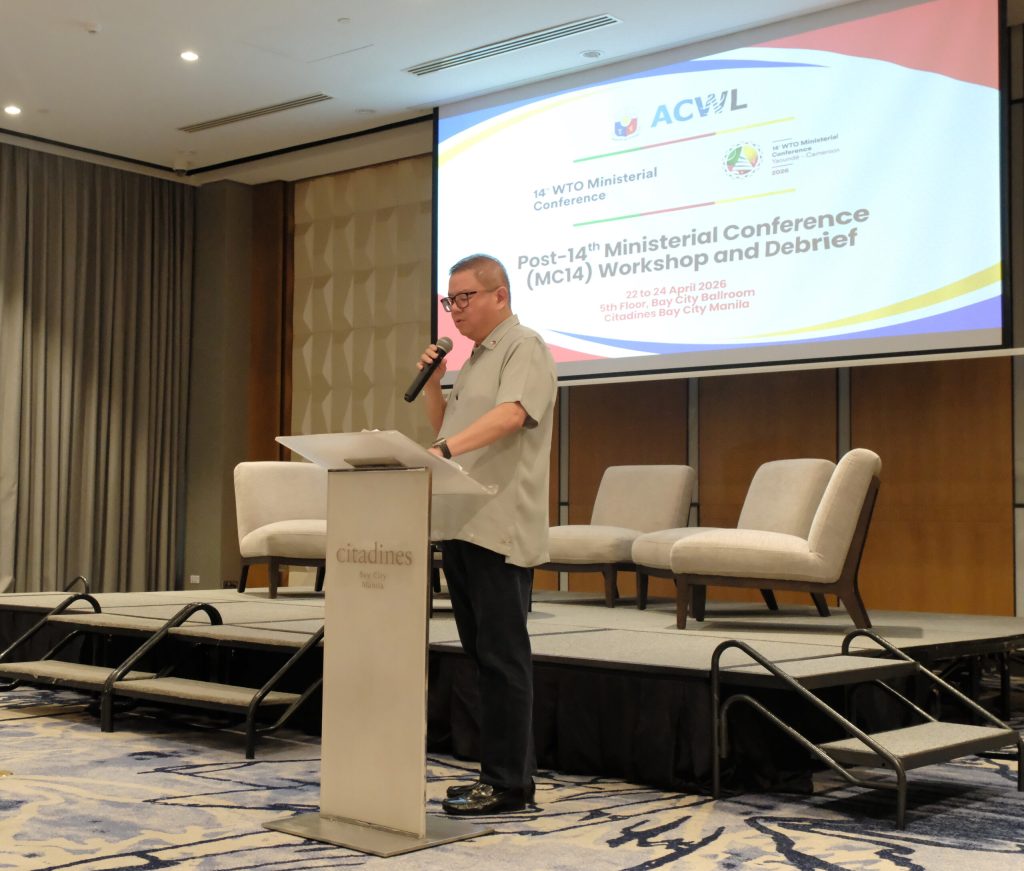
MANILA — The Philippines is seeking a more active role in global trade following the 14th World Trade Organization Ministerial Conference, with Agriculture Secretary Francisco P. Tiu Laurel Jr. citing both gains and lingering challenges from the negotiations.
Speaking at a post-ministerial workshop in Pasay City, Tiu Laurel emphasized that the World Trade Organization remains relevant despite ongoing geopolitical tensions and economic uncertainty.
“MC14 reaffirmed that, even in a complex and uncertain global environment, the multilateral trading system remains active and capable of delivering results,” he said.
Among the key outcomes highlighted was progress on fisheries subsidies. Tiu Laurel described the adoption of an outcome document on the issue as a significant development.
“One of the most notable achievements for us was the delivery of an outcome document on fisheries subsidies,” Tiu Laurel said. “This outcome not only advances sustainability objectives but also demonstrates that multilateral negotiations can deliver meaningful results when there is political will and effective leadership.”
The conference also saw continued discussions on fisheries rules, the implementation of the Fisheries Subsidies Agreement, and the introduction of measures aimed at supporting smaller economies. It also advanced provisions that would grant developing countries greater flexibility in complying with sanitary and technical trade regulations.
However, Tiu Laurel pointed out that key issues, particularly in agriculture and development, remain unresolved, reflecting the slow pace of consensus-building within the WTO. He noted that progress toward extending the e-commerce moratorium and broader reform efforts has been gradual.
The agriculture chief also recognized the Philippine delegation’s role during the negotiations. Trade Undersecretary Allan B. Gepty, who led the delegation, managed the country’s negotiating stance and coordinated inputs among agencies in Geneva, while Agriculture Undersecretary Asis G. Perez helped facilitate discussions on fisheries subsidies, working to bridge differences among member states.
Looking ahead, Tiu Laurel said the priority is to ensure that international commitments are effectively implemented at the national level.
“The message from MC14 is clear. The conference has provided direction, momentum, and a clear work program,” he said. “The responsibility now lies with us to translate these developments into coherent national positions, sustained engagement in Geneva, and effective coordination across our institutions.”
He added that government agencies need to remain aligned as negotiations continue, particularly on issues related to WTO reform and agriculture, with the recent workshop serving to refine the country’s priorities and next steps.
Tiu Laurel also acknowledged resistance to policy changes within the agriculture sector, saying reform efforts have drawn pushback as the Department of Agriculture moves forward with adjustments.
Despite these challenges, the Philippines continues to view the WTO as a key platform for expanding trade and driving economic growth. Tiu Laurel said improving competitiveness will depend on reducing production costs, strengthening marketing strategies, and maintaining product quality.
As global trade rules continue to evolve, he said the country aims to take on a more assertive role, with the challenge of turning international agreements into tangible domestic benefits.


 Republika News
Leave a comment