
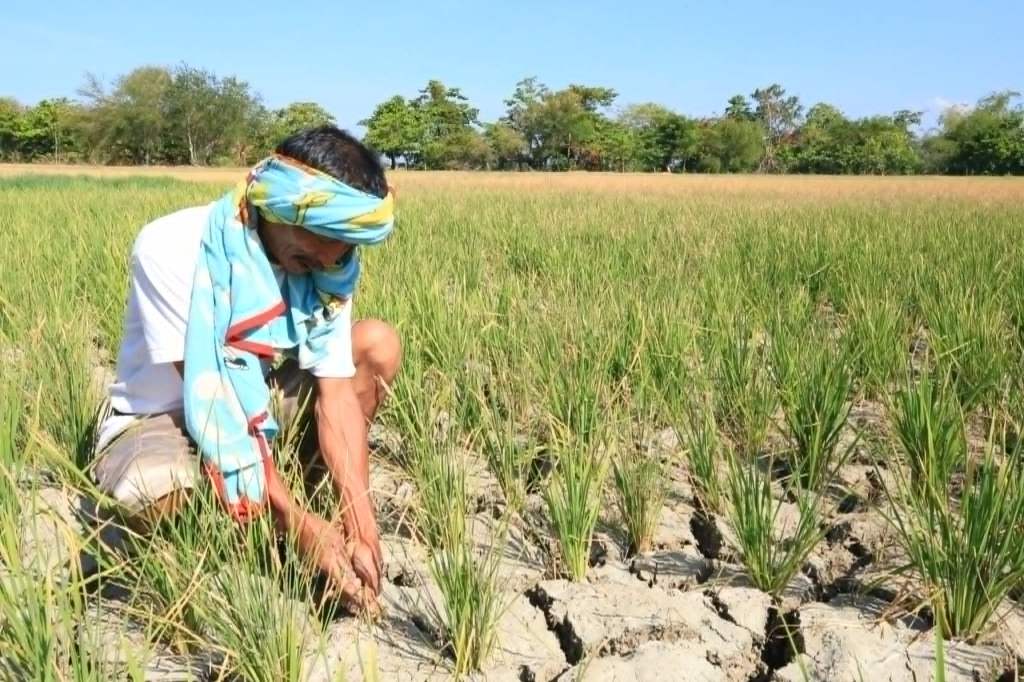
MANILA — The Department of Agriculture (DA) is intensifying measures to help farmers and consumers prepare for a potentially strong El Niño phenomenon that could reduce harvests and affect the country’s food supply, Agriculture Secretary Francisco P. Tiu Laurel Jr. said.
Tiu Laurel said while losses from El Niño may not be completely avoided, the impact could be lessened through various interventions and adaptive farming strategies.
Among the measures being promoted by the DA are shifting to crops that require less water, such as munggo, particularly in drought-prone areas, the use of solar-powered irrigation systems, low-cost greenhouse technologies, and earlier planting schedules.
“What we learned during the 2024 El Niño will guide how we prepare and intervene this time around,” Tiu Laurel said.
The agriculture chief added that interventions under the National Rice Program and the Rice Competitiveness Enhancement Fund are also being strengthened to help protect rice production and farmers’ incomes from the effects of prolonged dry conditions.
These interventions include the distribution of climate-resilient and high-quality seeds, fertilizer assistance, mechanization support, irrigation projects, water-saving technologies, credit programs, and expanded training and extension services for farmers.
According to the DA, the agency is also conducting irrigation system assessments, climate risk mapping, localized planning, and the prepositioning of drought-tolerant seeds, fertilizers, and irrigation assistance.
Existing support mechanisms such as crop insurance, access to credit, and market facilitation are likewise being reinforced, while the El Niño Task Force is being reactivated to improve coordination among agencies and strengthen response readiness.
As part of efforts to secure food supply, Tiu Laurel said the Philippines and Vietnam have reaffirmed their commitment to cooperation on rice supply.
Under the arrangement, the Philippines may purchase up to 1.5 million metric tons of rice from Vietnam, the country’s main rice supplier, if necessary and at competitive prices.
However, the agriculture secretary emphasized that import volumes would still depend on prevailing market prices and local production levels.
“Just like last year, when President Ferdinand Marcos Jr. imposed an import ban from September to December to support palay prices, we will continue to balance food security with the interests of our farmers, ensuring they earn a fair return for their hard work,” Tiu Laurel said.
The DA noted that agricultural production continues to face risks from supply disruptions and increasing input costs linked to the conflict in the Middle East, on top of the possible effects of a strong El Niño.
Agricultural output has already declined by 0.3 percent, with lower palay production offsetting gains in the poultry and livestock sectors.
Recent studies also suggest that a severe El Niño event could reduce agricultural production by as much as 20 to 30 percent.



 Republika News
Leave a comment