

MANILA — Sen. Bam Aquino has called for stronger nutrition interventions for children, saying efforts to improve education outcomes must begin with addressing malnutrition among Filipino youth.
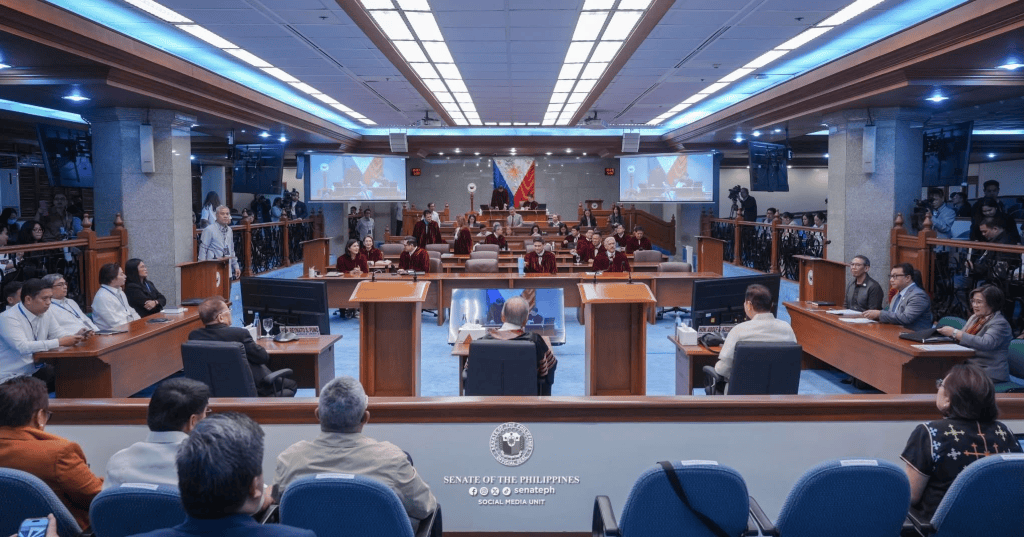
Aquino made the statement on Thursday as he sponsored Senate Bill No. 2272, which seeks to strengthen and expand Republic Act No. 11037, or the Masustansyang Pagkain para sa Batang Pilipino Act.
“Isa sa bawat apat na kabataan ay hindi naaabot ang kanilang tunay na potensyal. They will carry the lifelong burden of undernutrition. Hindi natin malulutas ang krisis sa edukasyon kung hindi natin tututukan ang isa sa mga ugat nito — ang kakulangan sa nutrisyon na nagsisilbing hadlang upang epektibong matuto ang mga estudyanteng Pilipino,” Aquino said.
The proposal was filed amid concerns over child malnutrition and its effect on learning outcomes. Aquino cited data from the Department of Science and Technology’s Food and Nutrition Research Institute showing that 25.3% of Filipino children under five years old are stunted, marking the first increase in the country’s stunting rate in a decade.
Studies conducted by the Second Congressional Commission on Education (EDCOM 2) have linked stunting, which results from chronic undernutrition during early childhood, to impaired cognitive development, reduced school readiness, and lower educational attainment and productivity later in life.
“Mayroong matatag na ugnayan sa pagitan ng nutrisyon at edukasyon. Ang isang gutom na bata ay hindi makapagpokus; ang isang malnourished na utak ay nahihirapan na maaalala ang pinag-aaralan sa eskwelahan,” Aquino said.
Aquino said nutrition programs should be viewed as long-term investments in human capital rather than solely as feeding initiatives.
“Ang ating panukala ngayon ay hindi lamang isang feeding program. Ito ay reporma sa edukasyon, isang public health strategy, at isang hakbang sa pagpapaunlad ng human capital ng ating bansa,” he said.
Under the measure, an Expanded National Nutrition Program would be established using a life-stage approach to address malnutrition. The program would provide nutrition interventions from pregnancy and infancy through adolescence to ensure support at different stages of a child’s development.
The bill also seeks to implement universal feeding for all Kindergarten to Grade 3 learners in public schools, a period Aquino described as critical for developing foundational literacy and numeracy skills.
To improve monitoring and policy implementation, the proposal includes the creation of a Universal Health Record system that would allow government agencies to track children’s nutritional status and development from the community level through their school years.
The measure also provides additional assistance for Indigenous learners, children living in geographically isolated and disadvantaged areas, learners with disabilities, and pregnant learners.
“Simulan po natin ang pag-unlad sa pinaka pundasyon, isang batang busog, malusog, at handang matuto,” Aquino said.
The counterpart bill has already been approved on third reading in the House of Representatives. The Senate version will continue to undergo deliberations as lawmakers seek a broader and more coordinated response to child malnutrition.



 Republika News
Leave a comment