
MANILA – The Department of Agriculture (DA) will invest P550 million over the next two years to establish a nationwide network of seed storage facilities aimed at strengthening the country’s supply of quality planting materials and improving the agriculture sector’s resilience against climate-related disruptions.
Agriculture Secretary Francisco P. Tiu Laurel Jr. said the government plans to build seed storage systems in all regions following recent weather disturbances that exposed weaknesses in the country’s agricultural supply chain.
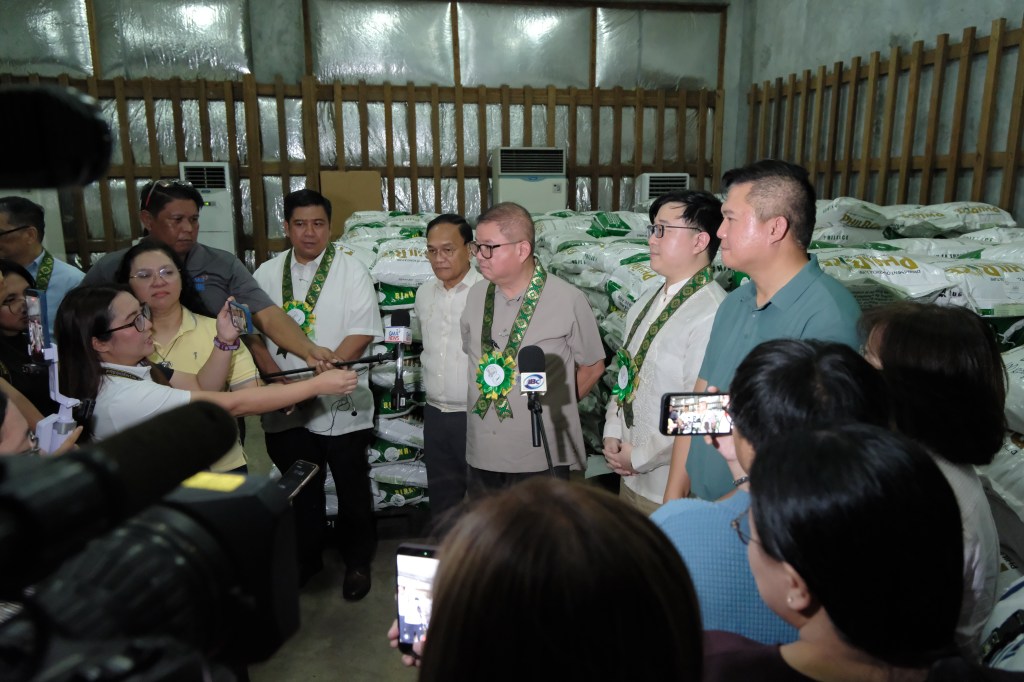
“Our target is to have seed storage systems in all regions to avoid a repeat of what happened in Baguio, where we didn’t have enough carrot seeds to replace those washed out,” Tiu Laurel said during the launch of the upgraded Bureau of Plant Industry (BPI) seed storage facility in Quezon City.
According to the DA, the shortage of carrot seeds prompted farmers to plant cabbage instead, resulting in a shortage of carrots and an oversupply of cabbage, highlighting the impact of limited access to quality planting materials on food supply, prices, and farmers’ incomes.
The department has allocated P250 million in 2026 to construct larger storage facilities in key agricultural areas, including Bicol, Cagayan Valley, Panay, and Iloilo. Another P300 million has been proposed for 2027 to further expand the network.
The upgraded BPI facility in Quezon City has three 400-square-meter storage rooms with a combined capacity of 9,000 bags of seeds, primarily rice seeds.
BPI Director Glenn Panganiban said the facility’s refurbishment cost less than P3 million, with more than half of the amount spent on a solar power system that provides around 60 percent of its electricity requirements.
Agriculture Undersecretary for Operations Roger Navarro said integrating solar energy into the storage facilities is essential to keeping operating costs low while ensuring continued operations during disruptions.
“This supports our goal of reducing production costs for farmers while making these facilities sustainable over the long term,” said Navarro, adding that future seed storage warehouses will likewise be equipped with substantial solar power systems.
The initiative was welcomed by stakeholders in the seed industry, who said it addresses a longstanding gap in the agricultural value chain.
“This is a big help for the local seed industry. Not all seed companies have the capital to build and maintain this kind of facility,” said Julius Barcelona, chief operating officer of Harbest Agribusiness Corp. and vice president of the Philippine Seed Industry Association.
Barcelona said shared storage facilities would allow seed companies to redirect funds previously used for maintaining emergency seed inventories toward research and development of higher-yielding and climate-resilient seed varieties.
The DA said the expansion of the seed storage network forms part of its strategy to strengthen agricultural resilience by ensuring farmers have access to quality seeds before disasters disrupt production.




Leave a comment