
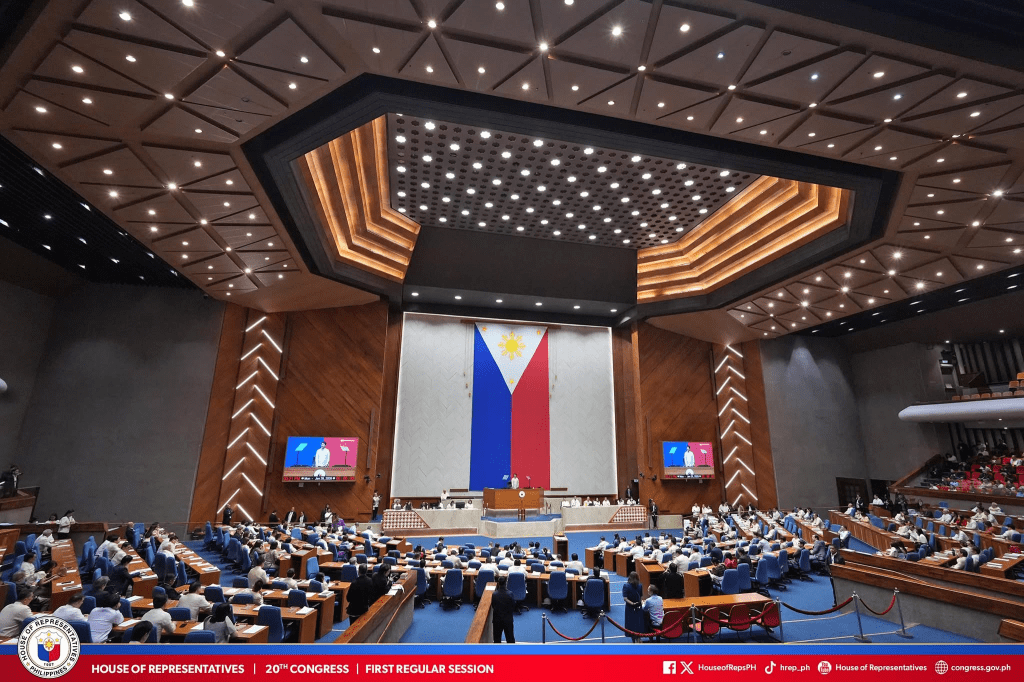
MANILA – The House of Representatives’ policy think tank said the Philippines could sustain and even strengthen its economic growth if Congress completes the passage of the Marcos administration’s priority measures under the Legislative-Executive Development Advisory Council (LEDAC).
In a report, it said that Congressional Policy and Budget Research Department (CPBRD) Executive Director Novel Bangsal said the House has already acted on nearly all of the administration’s priority bills.
“So ang pagkakaalam ko kasi doon sa mga LEDAC bills, Halos lahat na nung mga LEDAC priority bills ay pasado na sa House,” Bangsal said.
Under the leadership of Speaker Faustino “Bojie” Dy III and House Majority Leader Sandro Marcos, the House has approved 26 of the 52 LEDAC priority measures, while several others are in the advanced stages of deliberation.
Bangsal said the LEDAC agenda could help sustain the country’s economic momentum following the Philippines’ recent attainment of upper-middle income country status and continued improvements in economic growth and revenue collection.
He said the focus should now shift to the Senate, where several House-approved measures are awaiting action.
“So again…so actually ‘yung ball game nasa Senado na para if ever sana ‘yung mga batas na kailangan,” Bangsal said.
Among the measures he identified as possible to enact within the year are amendments to the Anti-Money Laundering Act and the Bank Secrecy Law.
“May mga amendment sa AMLA (Anti-Money Laundering Act), amendment sa Bank Secrecy Law. May mga low-[hanging] fruits na talagang kung kaya, within the year na ano pwede lang ipasa to be approved, to be signed by the President by this year,” Bangsal said.
Bangsal acknowledged that the Senate’s legislative workload may become more challenging in the coming months as it also serves as an impeachment court.
Despite this, he urged the chamber to prioritize the administration’s legislative agenda.
“So again, it’s up to the Senate para ma-fast-track nila yung mga LEDAC priority bills ng President,” he said.
As of June 3, the House reported that the 52 LEDAC priority measures were at various stages of the legislative process. One measure had already been enacted into law, one had a ratified bicameral conference committee report, three were under conference committee, 21 had been approved on third reading, one was under the Calendar of Business, one was awaiting the filing of a committee report, nine had been approved at the committee level pending action by the Committee on Appropriations, and 15 remained under technical working group or committee deliberations.






Leave a comment