
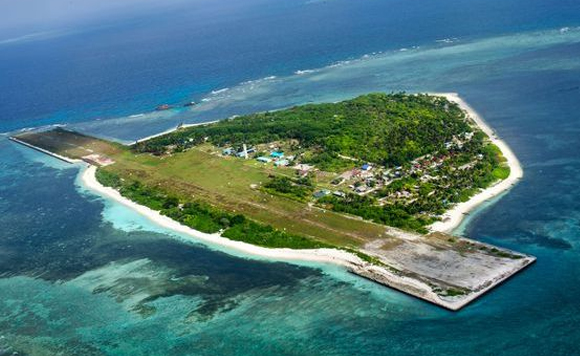
MANILA – President Ferdinand R. Marcos Jr. said the South China Sea (SCS) should never become a zone of conflict, urging the international community to uphold the rule of law to preserve peace, stability, and cooperation in the region.
Speaking during a diplomatic reception marking the 10th anniversary of the 2016 arbitral award in favor of the Philippines, Marcos called on governments, diplomats, and citizens to build on the legacy of the landmark ruling and continue supporting a rules-based international order.
“We hold a simple but unwavering conviction. The South China Sea must never be an arena of conflict,” Marcos said in his speech at the Conrad Manila in Pasay City.
“It must remain a sea of peace, cooperation and connectivity, a body of water that sustains livelihoods, fosters trade, protects marine biodiversity, and unites rather than divides our nations,” he added.
The President said lasting peace can only be achieved through justice, mutual respect, and the sovereign equality of all nations.
He said the Philippines pursued international arbitration more than a decade ago based on the principle that disputes between nations should be resolved through peaceful means and in accordance with international law, rather than through coercion or the use of force.
Marcos recalled that when the Philippines initiated arbitration proceedings in 2013, it chose dialogue over confrontation, law over intimidation, and peace over conflict.
“We did so because we possessed an unwavering faith in a rules-based international order. For the rule of law is a great equalizer of all nations. It ensures that right is not defined by might, that justice is never dictated by the relative size of a nation’s territory, military or economic power,” he said.
Marcos also emphasized that the significance of the 2016 arbitral award extends beyond legal and maritime issues, saying the ruling has direct implications for the lives and livelihoods of Filipino communities.
He reaffirmed the Philippines’ commitment to the United Nations Charter and the United Nations Convention on the Law of the Sea (UNCLOS), while expressing the country’s intention to continue engaging constructively with other nations.



Leave a Reply