
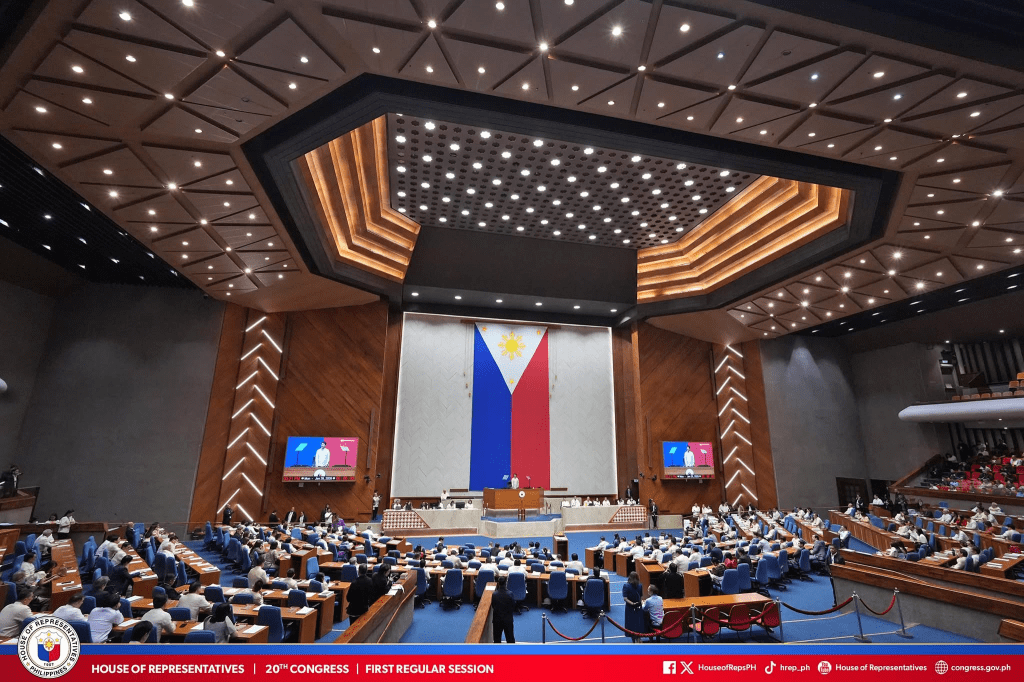
MANILA – The House Committee on Ways and Means on Tuesday began deliberations on the Marcos administration’s proposed income tax reform, with lawmakers saying the measure seeks to restore tax relief to an estimated 4.2 million Filipino workers whose salaries have only kept pace with inflation.
During the committee hearing, Ways and Means Committee Chairperson Marikina Rep. Miro Quimbo said the proposal implements President Ferdinand R. Marcos Jr.’s directive to reform the country’s income tax system and address the concerns of the country’s “missing middle”—low- and middle-income workers who regularly pay taxes but are not qualified for most government assistance programs.
Quimbo said the current income tax exemption threshold of P250,000, set under the Tax Reform for Acceleration and Inclusion (TRAIN) Law in 2018, no longer reflects the effects of inflation.
He noted that while workers have received salary adjustments over the years, many have become taxable again because the exemption threshold has remained unchanged despite rising prices.
According to Quimbo, raising the annual tax-exempt income threshold to P350,000 would restore the intended tax relief for workers whose wage increases merely kept pace with the cost of living.
He clarified that the proposed P350,000 threshold refers to annual taxable income rather than gross annual compensation, adding that after mandatory deductions and tax-exempt benefits, employees earning up to about P410,800 annually may still qualify for income tax exemption.
Citing Labor Force Survey data, Quimbo said about 4.2 million workers are expected to benefit from the proposal. Of the total, around 1.3 million workers would regain tax-exempt status, 1.2 million would become newly exempt, while the remainder would consist of new entrants to the labor force who would also be exempt from paying income tax.
He said the measure would effectively increase workers’ take-home pay without requiring employers to shoulder additional labor costs.
Quimbo also expressed support for the proposal to remove the two-percent minimum corporate income tax for qualified micro and small enterprises, saying businesses with little or no net profit should not be further burdened.
At the same time, he stressed that the proposed reforms would be accompanied by compensatory revenue measures to safeguard the government’s fiscal position.
He said the committee would ensure that any offsetting measures are fair and carefully designed so they would not diminish the intended benefits of the proposed tax relief for low- and middle-income earners.


 Republika News
Leave a comment