

MANILA — Deputy Speaker Francisco Paolo Ortega V on Wednesday said the controversy surrounding the alleged misuse of PHP612.5 million in confidential funds received by Vice President Sara Duterte could have been avoided if the Office of the Vice President (OVP) and the Department of Education (DepEd) had complied with proper liquidation procedures and submitted complete supporting documents.
The amount consists of PHP500 million released to the OVP from December 2022 to September 2023 and PHP112.5 million released to the DepEd in 2023, when Duterte concurrently served as education secretary.
“If they had completed the required staff work, we probably would not be dealing with this article of impeachment,” Ortega said during a press briefing.
“They should know how to liquidate funds properly. They should know the process,” he added.
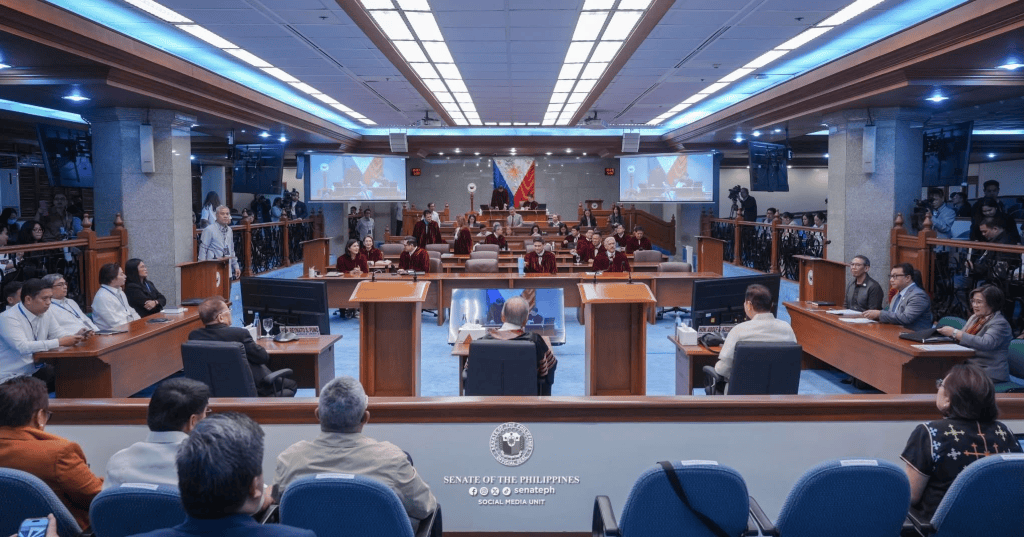
Ortega made the remarks after Commission on Audit (COA) state auditor Roderick Wamil testified before the Senate impeachment court regarding deficiencies in the liquidation reports covering the confidential funds of both agencies.
The La Union lawmaker said proper documentation could have spared the OVP and DepEd from the audit observations that eventually became part of the impeachment proceedings.
Drawing from his experience in local government, Ortega said receiving an Audit Observation Memorandum (AOM) is common when agencies fail to comply with documentary and procedural requirements.
“I’ve been in local government for a long time, from the barangay to the city and provincial levels. You will really receive an Audit Observation Memorandum if there are shortcomings in your processes,” he said.
He also cited Senator-Judge Francis Pangilinan’s observation during Wednesday’s hearing that the issue might not have reached the impeachment court had the required documents been complete.
“It would not have reached this point if the documents had been complete,” Ortega said.
He added that the incomplete records eventually raised questions about whether the supposed recipients of confidential fund disbursements actually existed and received the payments.
“If the documents had been complete, we would not be here. The records were incomplete, and it even reached the point where people questioned whether these individuals actually received the money and whether they were legitimate persons,” he said.
Ortega said the lack of supporting documents created a series of red flags that fueled the controversy.
“There were one red flag after another because the proper process was not followed,” he said.
He added that questions surrounding the unusual names appearing on acknowledgment receipts submitted to liquidate the confidential funds could also have been avoided.
“Even if those names were aliases or real people, if the proper process had been followed, the story would be different today,” Ortega said.
Wamil, who served for nearly a decade with the COA’s Intelligence and Confidential Funds Audit Office, testified that auditors found deficiencies in the liquidation documents and flagged expenditures that were unsupported or inconsistent with Joint Circular No. 2015-01, which governs the use, accounting, and audit of intelligence and confidential funds.

 Republika News
Leave a comment