
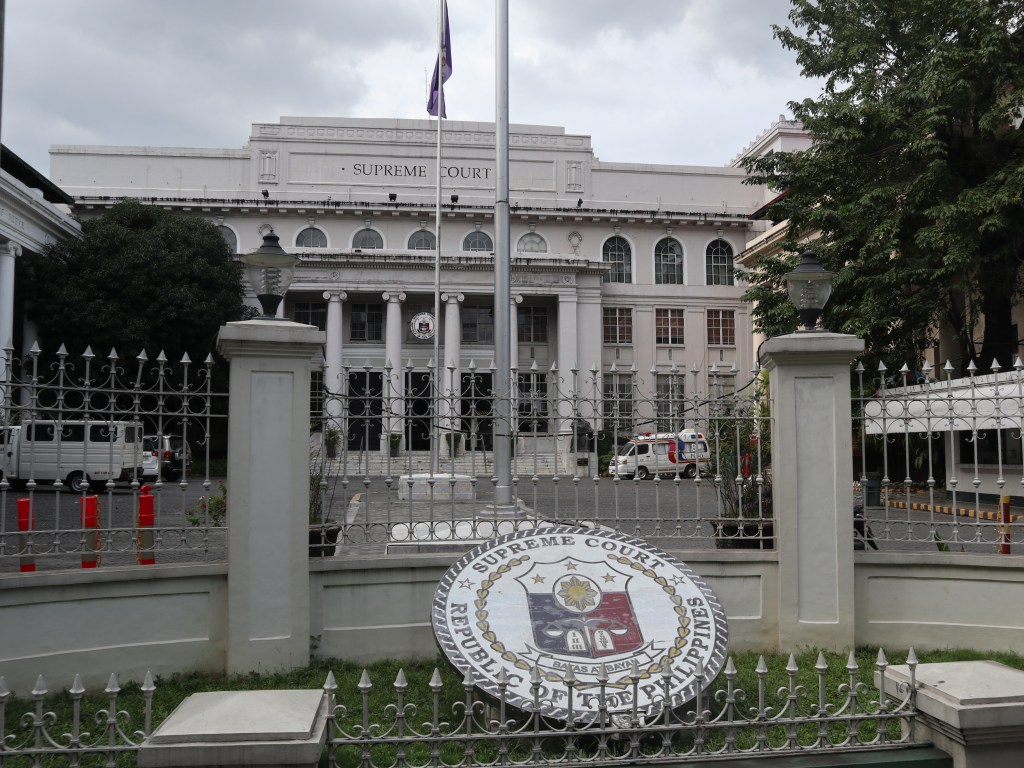
MANILA — The Supreme Court (SC) has ruled that Flying Risk Pay (FRP) under Republic Act No. 776, or the Civil Aeronautics Act of the Philippines, may be granted only to Civil Aviation Authority of the Philippines (CAAP) personnel whose official duties are directly connected to flight operations.
In a Decision penned by Associate Justice Henri Jean Paul B. Inting, the SC En Banc upheld the Commission on Audit’s (COA) disallowance of PHP323,579.50 in FRP paid to CAAP officials and employees whose work was primarily managerial, administrative, or financial.
Under Section 30 of RA 776, CAAP-licensed airmen and other authorized personnel who are required to make regular and frequent aerial flights in connection with their duties may receive FRP equivalent to 50% of their salary, provided they complete at least four hours of flight time each month.
The case stemmed from CAAP’s grant of FRP in 2011 to officials and employees who met the four-hour monthly flight requirement. Some recipients, however, occupied managerial, administrative, and finance positions and traveled by air mainly for conferences, seminars, public hearings, inspections, and other official activities.
COA disallowed the payments, ruling that FRP was intended for personnel whose duties inherently involved aerial and flight operations.
The recipients argued that the law covered not only “airmen” but also “other authorized personnel,” and that they qualified because they met the required monthly flight hours.
The SC rejected the argument, ruling that the phrase “other authorized personnel” must likewise refer to employees whose duties require them to undertake regular and frequent aerial flights as part of flight-related operations.
The Court noted that RA 776 defines an “airman” as a pilot, mechanic, flight radio operator, aircraft crew member, or a person responsible for inspecting, maintaining, or repairing aircraft—functions that are directly connected to aircraft operation and navigation.
It also cited the Government Accounting and Auditing Manual, which limits FRP to personnel whose duties are inherent in flight operations and excludes those who merely travel as passengers.
In the case before the Court, the employees’ air travel was only incidental to their managerial, administrative, or financial responsibilities.
“[T]he Court acknowledges the use of the terms airman and airmen when quoting the pertinent provisions of [RA] 776, in fidelity to the language of the law as presently written. On the same note, the Court emphasizes that the use of gender-fair language is essential to ensure inclusivity and to reflect the equal dignity and participation of all persons in the aviation sector.”
The SC also found that the recipients were not among the personnel authorized to receive FRP under CAAP’s 2011 Corporate Operating Budget, which had been approved by the Department of Budget and Management.
The Court ordered the recipients to return the FRP they received but absolved the approving and certifying officers from liability after finding that they had acted in good faith.
In a separate Concurring Opinion, Associate Justice Alfredo Benjamin S. Caguioa said FRP is a form of hazard pay intended for personnel exposed to flight-related risks because they participate in or supervise flight operations.
Since the recipients did not perform such duties, Caguioa said, they were not entitled to the benefit.


 Republika News
Leave a comment