
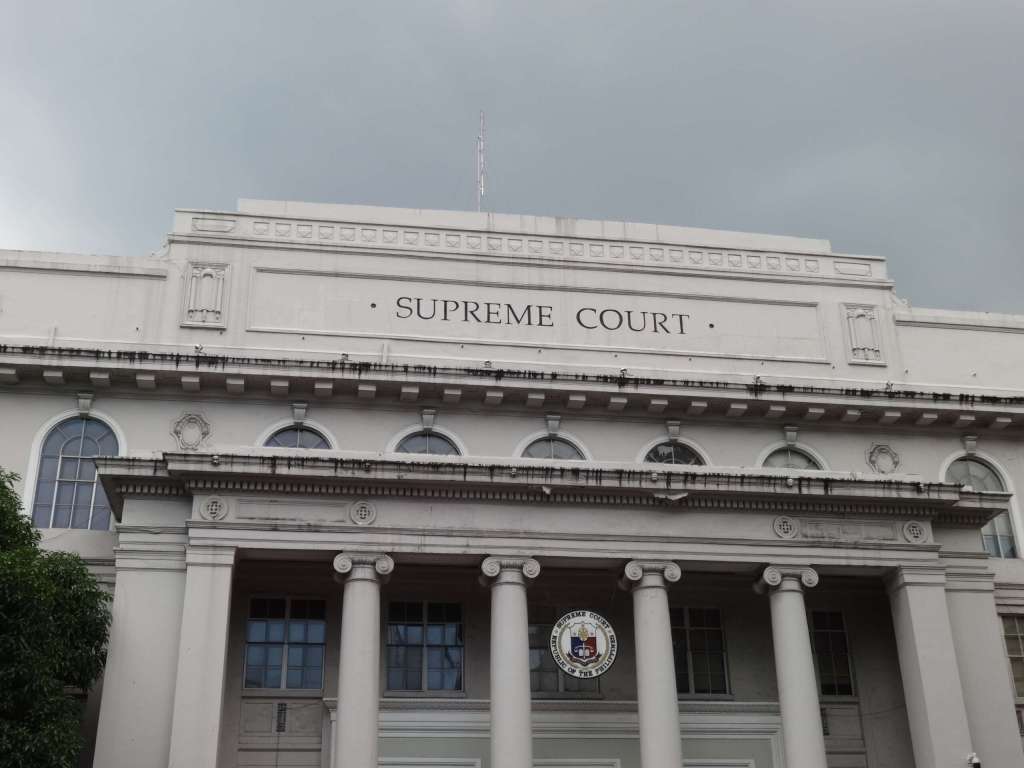
MANILA—The Supreme Court (SC) has ruled that evidence related to credit card fraud cannot be seized under a search warrant that authorizes authorities to look only for illegal drugs and drug paraphernalia.
In a Decision penned by Associate Justice Japar B. Dimaampao, the SC Third Division acquitted Edgar Silvano of violating Republic Act No. 8484, or the Access Devices Regulation Act of 1998, which prohibits the possession of counterfeit access devices, including fake credit cards.
The case stemmed from information received by the National Bureau of Investigation (NBI) that Silvano was allegedly involved in illegal drugs and computer hacking, particularly credit card fraud.
To verify the information, the NBI instructed an informant to purchase methamphetamine hydrochloride (shabu) from Silvano. Laboratory testing later confirmed that the substance was shabu.
The NBI subsequently secured a search warrant for violations of Republic Act No. 9165, or the Dangerous Drugs Act, authorizing the search for shabu and other drug-related items.
During the search of Silvano’s residence, NBI agents seized computers, ATM cards, laptops, a money counter, a dry seal and a card-scheming device, among other items.
They also recovered two American Express credit cards bearing the name “V S Tan.” An American Express manager later confirmed that the cards were fake because their numbers did not correspond to the records of the original account holder.
The Regional Trial Court convicted Silvano of possessing counterfeit access devices. The Court of Appeals affirmed the ruling, holding that the credit cards were validly seized under the plain view doctrine even though they were not specifically listed in the search warrant.
The SC disagreed and overturned the conviction.
The High Tribunal explained that authorities generally may seize only items specifically described in a search warrant. An exception is the plain view doctrine, which permits officers to seize evidence discovered while they are lawfully present in a particular place.
For the doctrine to apply, however, officers must have a lawful basis for being in the location where the evidence is found; the discovery must be inadvertent or unintentional; and it must be immediately apparent that the item may be linked to criminal activity.
The SC found that these conditions were not satisfied in Silvano’s case.
While the NBI agents were lawfully inside the residence under the drug-related search warrant, the warrant did not authorize them to search for or seize credit cards and other access devices.
The SC also found that the discovery was not inadvertent. The NBI already had information linking Silvano to alleged credit card fraud and hacking, yet it did not secure a search warrant covering those offenses.
The credit cards were likewise found inside a non-transparent bag, meaning their contents could not be seen until the bag was opened. Even after the cards were found, they did not appear counterfeit based solely on their appearance.
Their connection to a crime became apparent only through the NBI’s prior information and subsequent verification with American Express.
The SC therefore ruled that the credit cards had been unlawfully seized and could not be admitted as evidence against Silvano.
Without the credit cards, the prosecution failed to establish Silvano’s guilt for violating RA 8484, prompting the SC to acquit him.




Leave a Reply