
MANILA — Blanket class suspensions may worsen learning losses, particularly among early-grade learners, when schools that are not directly exposed to hazards are also ordered closed, according to a policy note released by the Second Congressional Commission on Education (EDCOM 2).
The policy note, titled The Hidden Cost of Class Suspensions: How Blanket Orders Could Deepen the Learning Crisis, was authored by University of Auckland PhD Economics candidate Tristan Piosang, EDCOM 2 Executive Director Dr. Karol Mark Yee, and former National Economic and Development Authority Secretary Dr. Karl Kendrick Chua.
It drew on preliminary estimates from an ongoing study linking class suspension data with early-grade reading performance in more than 37,000 public elementary schools during School Years 2024–2025 and 2025–2026.
The initial findings associated typical exposure to class suspensions with a 0.10-standard-deviation decline in reading attainment. Based on established estimates of normal reading progress among Grades 1 to 3 learners, the decline is equivalent to about 24 teaching days of learning progress.
With an average school recording about 17 suspended days in the analysis, the findings translate to roughly 1.4 days of reading progress lost for every day classes are suspended.
“This does not mean that classes should continue when children and teachers face actual danger. Their safety must always come first,” Yee said. “But safety and precision are not competing objectives. When the evidence shows that a school is unsafe, classes must be suspended. When the school is safe, it should be allowed to remain open or resume as soon as possible.”
About one in 10 school days lost
A typical public elementary school lost about 20 teaching days to hazard-related suspensions in SY 2025–2026, equivalent to roughly one in every 10 days in the official school calendar.
From Aug. 1 to Sept. 15, 2026, 12 of 28 class days were cancelled across the National Capital Region and several provinces, representing 43% of the class days during the period and disrupting learning delivery during the first term.
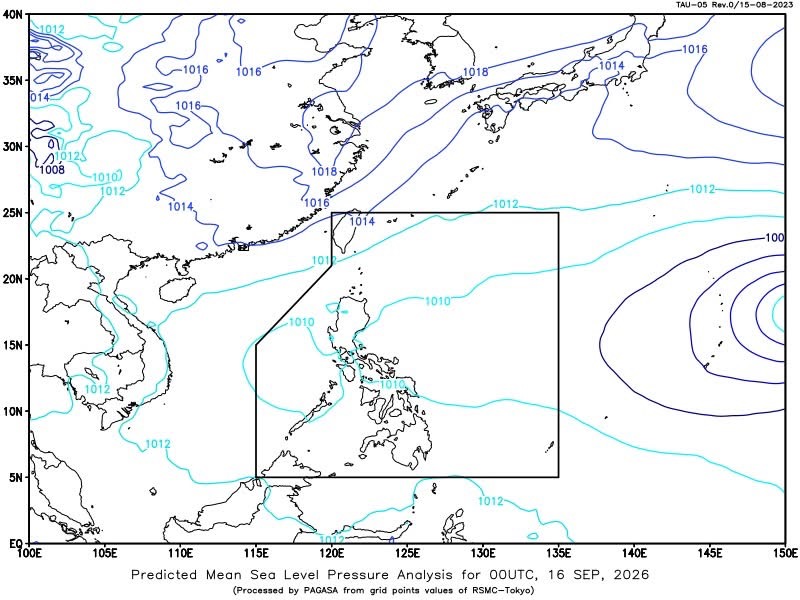
Typhoons, monsoon rains and shearlines account for most weather-related suspensions. However, the policy note said these hazards are sometimes compounded by the practice of issuing suspension orders across entire cities, provinces or regions.
EDCOM 2 data showed that schools in the Negros Island Region recorded an average of 26 class suspensions, while Regions I and V recorded 15 each.
In contrast, Lanao del Sur, Davao del Norte and Tagum City each recorded only one suspension, while seven Schools Division Offices in the Bangsamoro Autonomous Region in Muslim Mindanao had no recorded suspensions in DepEd-DRRMS data.
The policy note also pointed to differences in weather conditions within the same administrative areas, noting that one municipality could experience severe flooding while a nearby area experiences only intermittent rain or none at all.
“For schools confronting rising floodwaters, impassable roads, or other actual hazards, the learning cost is justified by the need to protect lives,” Chua said. “But when the same order closes schools that are not exposed to those conditions, the cost becomes avoidable. Every cancellation should therefore be supported by evidence, accounted for, and weighed against its consequences for learning.”
Early-grade learners bear the impact
The study focuses on Grades 1 to 3 because early-grade reading serves as a foundation for subsequent learning and younger children have less capacity to study independently during disruptions.
At the start of SY 2026–2027, an average of 86% of public-school learners covered by the analysis were not yet reading at grade level, equivalent to approximately 4.3 million students.
“A suspended day is not merely a missed lesson,” Piosang said. “Disasters may damage schools and homes, interrupt family incomes, displace communities, and leave both teachers and children unsettled. These effects can continue to weigh on learning long after the school doors reopen.”
The analysis compared schools with themselves across two school years to account for fixed differences such as location, socioeconomic conditions, staffing and resources.
The authors stressed that the findings are preliminary and form part of the first of three studies in Piosang’s doctoral research on disasters and human-capital outcomes at the University of Auckland.
EDCOM 2 pushes changes to suspension rules
The policy note called for the amendment of Executive Order No. 66, s. 2012, which governs the suspension and resumption of classes during typhoons, floods and other calamities.
The authors recommended a revised framework that would establish science-based automatic suspension thresholds for hazards including heavy rainfall, earthquakes, volcanic hazards and extreme heat.
They also called for clearer guidelines allowing governors and mayors to suspend classes across an entire locality or only in specifically affected areas based on scientific evidence and coordination with disaster-risk agencies and schools.
The policy note further recommended giving school heads authority to suspend classes when site-specific conditions pose an actual or imminent threat and to resume classes once those conditions have passed.
“School heads are often in the best position to know whether their classrooms are flooded, their buildings are damaged, their access roads are passable, and their learners can travel safely,” Yee said. “Giving them clearly defined authority—supported by reliable data and accountable procedures—would make decisions both more accurate and more responsive.”
EDCOM 2 said suspension and resumption decisions should be based on real-time scientific information and clear lines of authority. It also called for every cancelled school day to be recorded and for government to regularly compare weather forecasts and warnings with actual conditions to improve future decisions.
“In a system already confronting a learning crisis, each day in school is critical. Sparing safe schools from unnecessary suspensions should not be a choice, but an imperative”.


 Republika News
Leave a comment