
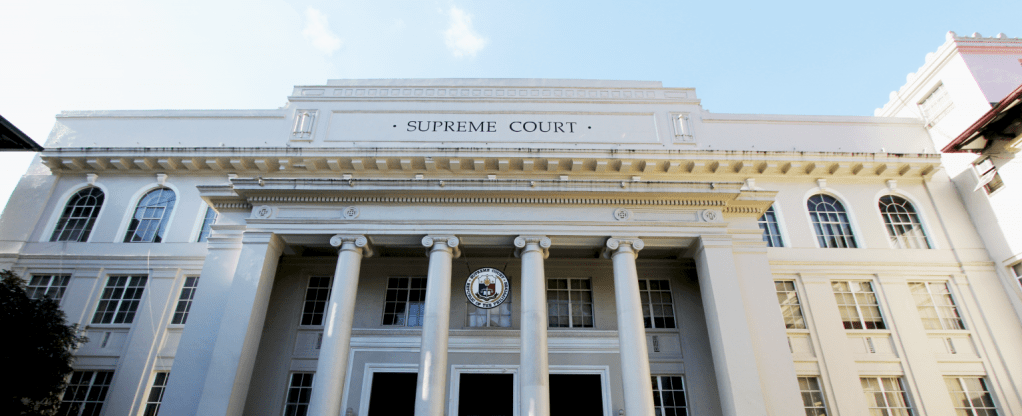
MANILA – The Supreme Court (SC) has acquitted a man convicted of violating the liquor ban during the 2019 elections, ruling that the prosecution failed to prove beyond reasonable doubt that he actually consumed alcohol during the prohibited period.
In a Decision written by Associate Justice Alfredo Benjamin S. Caguioa, the SC Third Division granted the petition of Mcgill Esquillo Omandam and reversed his conviction for violating Section 261(dd)(1) of the Omnibus Election Code(OEC), or the “COMELEC liquor ban.”
Omandam was arrested on the eve of the elections after police responded to reports of rowdiness. Arresting officers said he appeared intoxicated, smelled of alcohol, spoke with a slurred voice and moved groggily.
Police also recovered two empty bottles of Tanduay Rhum near the scene.
Both the Regional Trial Court and the Court of Appeals found Omandam guilty, but the SC ruled that the evidence presented was insufficient to sustain the conviction.
The Court explained that the OEC prohibits the taking of intoxicating liquor during the election liquor ban, which covers the day before the election and election day. Thus, the prosecution must establish that the accused actually consumed alcohol during the prohibited period.
In Omandam’s case, however, none of the arresting officers saw him drinking. The prosecution instead relied entirely on circumstantial evidence.
While circumstantial evidence may be sufficient to support a conviction, the SC said the circumstances must collectively establish guilt beyond reasonable doubt and exclude any reasonable explanation consistent with innocence.
The Court found that the prosecution failed to meet that standard, noting that its case rested on observations of Omandam’s appearance and other unsupported circumstances.
The SC also pointed out that Omandam’s alleged intoxication could have been verified through readily available means, including field sobriety tests, a breath analyzer or chemical testing. None of these were conducted.
Police likewise failed to take photographs or videos documenting the alleged intoxication.
The two empty liquor bottles recovered near the scene also did not establish that Omandam had consumed their contents. Police did not examine the bottles for fingerprints or conduct forensic tests to determine whether Omandam had handled them.
The SC said these investigative omissions undermined the accuracy and fairness of the investigation and, taken together, raised doubts about the reliability and sufficiency of the circumstantial evidence.
The Court stressed:
“The Constitution demands more before liberty may b e curtailed and criminal liability imposed. To affirm a conviction on such frail grounds would not only erode the presumption of innocence but would likewise sanction a standard of proof far beneath that required in criminal prosecutions—a result which the Court cannot and will not countenance.”
(Courtesy of the SC Office of the Spokesperson)
 Republika News
Leave a comment