
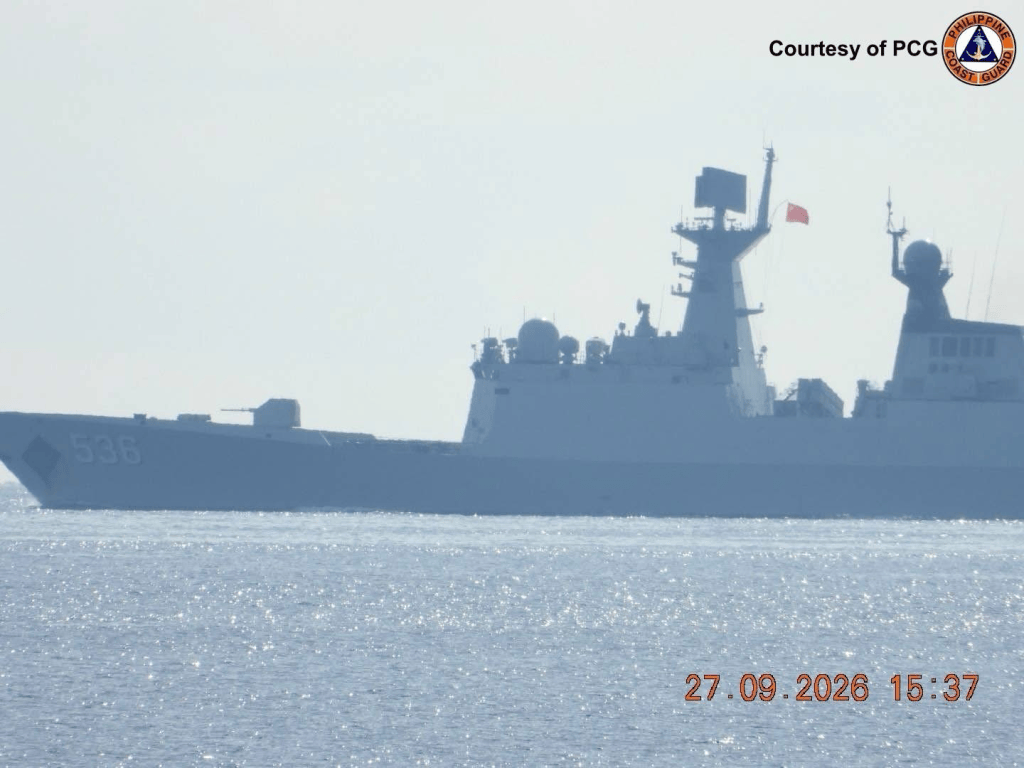
MANILA—The United States condemned China’s interference in a Philippine humanitarian rotation and resupply (RoRe) mission at Ayungin Shoal in the West Philippine Sea, as Manila reiterated its call for disputes to be settled through diplomacy and international law.
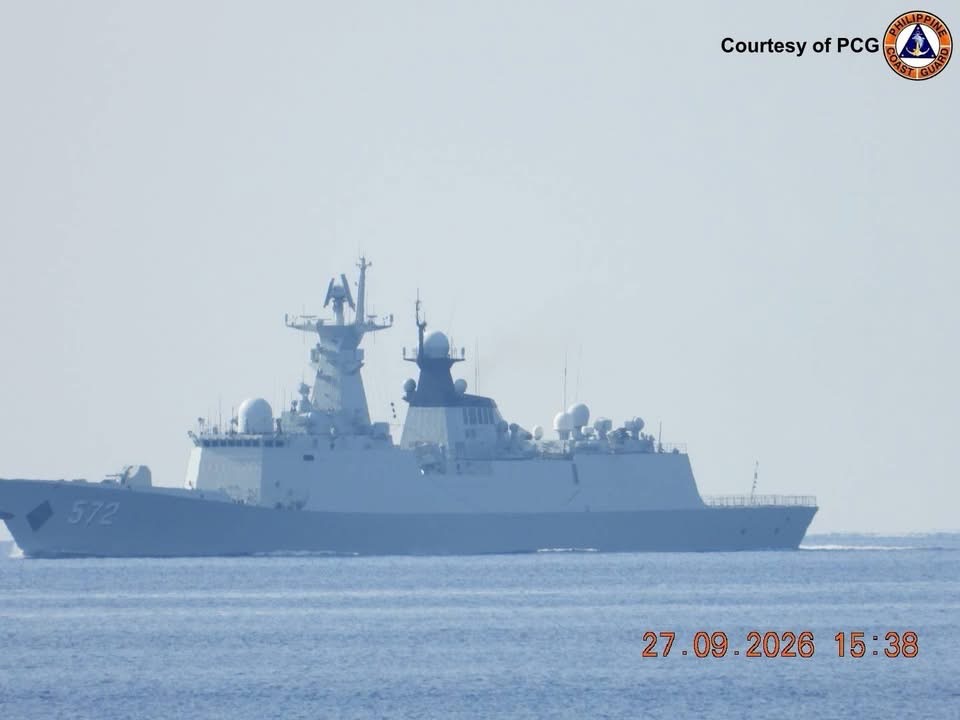
US Ambassador to the Philippines Lee Lipton criticized the maneuvers of the China Coast Guard (CCG) and the People’s Liberation Army Navy (PLAN) during the Philippine mission on Thursday, saying they threatened a collision and prevented the delivery of supplies to Filipino personnel aboard the BRP Sierra Madre.
“We stand by our Philippine allies and laud their professionalism and restraint,” Lipton said.
“We call on the China Coast Guard and PLAN to cease the use of escalatory tactics that threaten the freedom of navigation and a free and open Indo-Pacific.”
The Armed Forces of the Philippines earlier reported that eight Chinese warships and coast guard vessels interfered with the Philippine mission, which involved the M/V Lapu-Lapu and three Philippine Navy and Coast Guard support vessels.
The Philippine vessels were about 60 nautical miles from Ayungin Shoal when the Chinese vessels monitored their movements, made continuous radio calls and approached the Philippine ships, according to the AFP.
The Philippine Coast Guard eventually called off the mission at 11:08 p.m. Thursday for the safety of its personnel. The PCG’s BRP Malabrigo had been deployed to provide security assistance during the operation.
The incident came as Foreign Affairs Secretary Maria Theresa Lazaro urged countries to settle disputes through diplomacy and international law rather than force.
In her address before the 81st United Nations General Assembly at UN headquarters in New York City on Saturday, Lazaro warned that intensifying geopolitical competition and more than 50 conflicts worldwide were putting pressure on multilateral institutions and the global economy.
“When more than 645 million people face hunger, when our climate remains in a state of calamity, and when our collective conscience is stained by humanitarian catastrophes, reflection must give way to urgent, united resolve,” she said.
“We cannot continue down fragmented paths in an interconnected world,” she added.
Lazaro said continued disruptions to maritime traffic in the Middle East could trigger an energy emergency in the Philippines, while the war in Ukraine was worsening the global food crisis and contributing to economic shocks.
“Peace, therefore, is not merely the absence of war. It is our shared and indivisible responsibility,” she said.
On the Gaza conflict, Lazaro reiterated Manila’s call for an immediate and sustained ceasefire, the protection of civilians and the release of all hostages. She also urged the parties to observe international law and return to dialogue.
She reaffirmed the Philippines’ support for the Palestinian people’s right to self-determination and said a two-state solution, with Israel and Palestine living side by side, was the “only viable path to lasting and durable peace.”
Lazaro said the same principles should guide the resolution of maritime disputes, citing international law and the United Nations Convention on the Law of the Sea.
She also invoked the 2016 South China Sea Arbitral Award as an example of how international law can provide peaceful mechanisms for states to clarify rights and resolve differences.
“The Philippines stands firm in its conviction that disputes must be resolved through diplomacy and law, not violence and might,” she said.
China continues to assert its claim over nearly the entire South China Sea, overlapping with the Philippines’ maritime entitlements in the West Philippine Sea. An arbitral tribunal in 2016 ruled that China’s expansive “nine-dash line” claim had no legal basis under international law. Beijing has rejected the ruling, while Manila has maintained that the decision is final and binding.
Lazaro also called for stronger United Nations mechanisms to address threats to international peace and security and supported greater representation at the UN Security Council.
“We need to reflect deeply on the promises of our charter and on the state of our fractured world. We must actively seek collective pathways that transcend borders and bridge divides,” she said.
“And above all, you must always put a face to what we do, remembering that every policy, every treaty, and every institutional reform is ultimately about real human lives.”


Leave a comment