
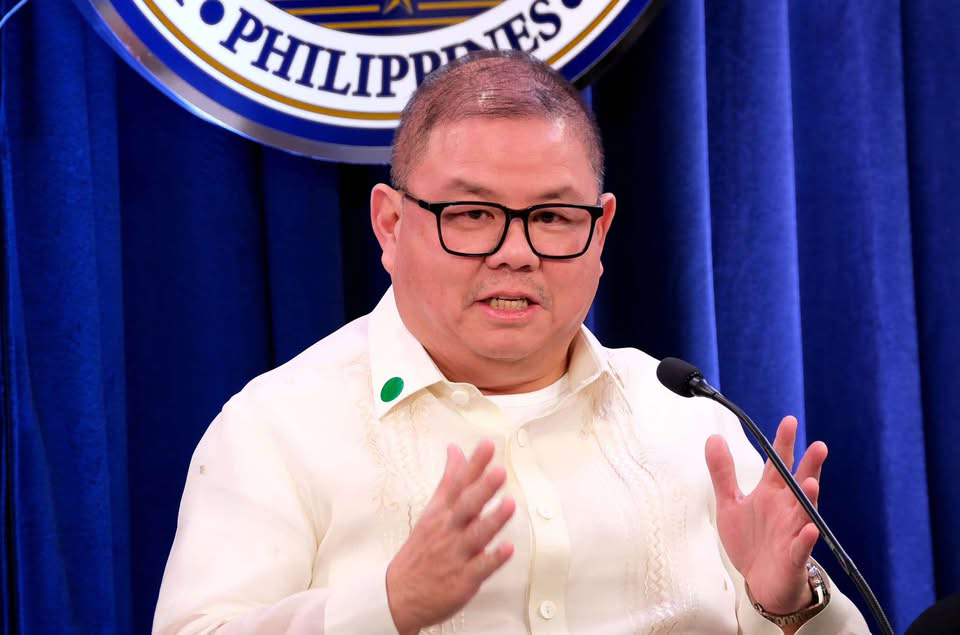
MANILA— The Department of Agriculture (DA) canceled the import permit for a rice shipment aboard MV Tay Son 2 before the vessel reached the Philippines, Agriculture Secretary Francisco P. Tiu Laurel Jr. said, as authorities continue to determine the cargo’s disposition following the ship’s departure from Davao.
Tiu Laurel said Wednesday that he ordered the Bureau of Plant Industry (BPI) to revoke the shipment’s sanitary and phytosanitary import clearance (SPIC) after receiving adverse information about the cargo.
“Critics of the DA are painting a false picture of this incident, suggesting malice and corruption through insinuations that border on libel,” Tiu Laurel said.
“The records will show otherwise. It was the DA, through my office, that stopped the shipment by ordering the Bureau of Plant Industry (BPI) to cancel its sanitary and phytosanitary import clearance, even though the vessel was already on its way to the Philippines,” he added.
According to the agriculture chief, the cancellation was requested by Planters Product Inc. (PPI), the importer, after it learned that the shipment contained 5-percent broken rice instead of the 25-percent broken rice specified in its order.
PPI also informed the DA that the importation contract had expired because the delivery was originally scheduled for July, when domestic rice supply is typically tight.
Based on the import permit application, MV Tay Son 2 was expected to transport 12,480 metric tons of rice from Vietnam, equivalent to about one-third of the country’s daily rice requirement of 37,000 metric tons.
The shipment’s planned arrival in July was also significant because rice supply conditions differed from those in September, when the wet-season harvest was about to begin. The DA said the timing could have placed downward pressure on palay prices.
Under DA regulations, agricultural products brought into the country without a valid import permit may be seized and destroyed, returned to their country of origin, or shipped to a third country to protect public health and safety. Without a valid SPIC, the rice shipment cannot be unloaded.
MV Tay Son 2 arrived at the Port of Davao on Sept. 14, but its captain refused to submit the cargo for BPI inspection, which would have determined whether the rice could enter the country without posing a public health risk.
The vessel left Davao on Sept. 17 while the Bureau of Customs (BOC) was assessing how to handle the shipment.
After learning of the departure, Tiu Laurel directed the DA’s Inspectorate and Enforcement office to issue a hold order against the cargo’s unloading and alert the BOC in case the vessel attempted to unload elsewhere in the country.
The Philippine Navy subsequently intercepted the vessel off Sarangani and brought it to the Port of General Santos City. The captain continued to resist BPI efforts to inspect the shipment.
Authorities eventually ordered the vessel to return to Davao, where it remains while the BOC determines the cargo’s disposition.
Tiu Laurel said the BPI had recommended returning the rice to its country of origin and was awaiting action from the customs bureau.
The BOC could alternatively seize the shipment and impose penalties, depending on its findings and the applicable regulations. The vessel also remains subject to penalties arising from the incident.
The case has drawn attention to the enforcement of agricultural import controls, particularly the DA’s authority to stop shipments after vessels have already departed for the Philippines.
Tiu Laurel maintained that the sequence of events demonstrated the department’s efforts to protect farmers and consumers, emphasizing that the permit had been canceled before the shipment arrived in the country.
He said the controversy should therefore be viewed as an instance of the DA blocking a shipment it considered problematic rather than allowing an approved importation to enter the domestic market.


Leave a Reply