
MANILA— The Office of the Solicitor General (OSG) will advise the Department of Budget and Management (DBM) and the Executive to temporarily refrain from using funds covered by contested provisions of the 2026 General Appropriations Act (GAA) while awaiting further action by the Supreme Court (SC), Solicitor General Darlene Marie Berberabe said Thursday.
Speaking at a Palace press briefing, Berberabe said the OSG expects the high court to prioritize the matter to avoid disrupting the implementation of the remaining national budget for 2026.
“Sa amin po, ang ipapayo po namin sa DBM at sa Ehekutibo ay pumorma na tayo na parang huwag muna tutal aasahan natin na ma-desisyunan ito kaagad (On our part, our advice to the DBM and the Executive would be to proceed cautiously and hold off for the time being, since we expect this matter to be resolved soon),” she said.
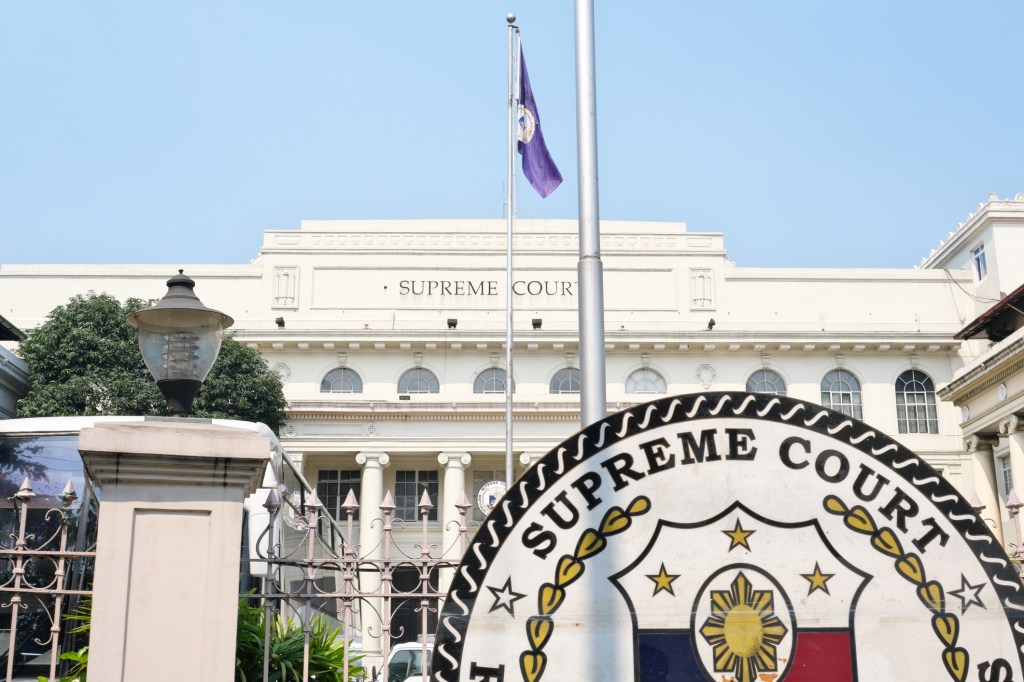
The SC, in a decision released Oct. 20, struck down as “unconstitutional” Special Provisions 1(a) and (b) of Chapter XLIII of the 2026 GAA, which govern unprogrammed appropriations (UAs).
While the tribunal ruled that UAs are “not unconstitutional per se,” it said the provisions in question lacked sufficient safeguards for fiscal discipline, transparency and accountability.
The court described the provisions as “constitutionally infirm” for being overly broad, lacking prioritization standards and partly functioning as prohibited lump-sum appropriations. It also found them inconsistent with the requirement for a coherent fiscal program under Article VII, Section 22 of the Constitution and its ruling in Araullo v. Aquino III.
Berberabe acknowledged that the decision could affect the implementation of the 2026 national budget if the SC rejects the OSG’s planned motion for reconsideration.
“Isa pong implication dito ay iyong sinasabi kong ang maapektuhan po kasi ‘yung 2026 budget (One implication is that the 2026 budget could be affected),” she said.
The OSG intends to ask the high court to reconsider its ruling, arguing that the contested provisions did not violate constitutional requirements or standards. Berberabe said the Constitution empowers Congress to determine through legislation the form, content and manner of preparing the national budget.
She also pointed to changes previously introduced by the Executive and Congress, including the removal of certain lump-sum appropriations and provisions allowing the President to determine the prioritization of unprogrammed appropriations.
Berberabe said budget provisions not covered by the SC ruling could still be implemented, subject to legal guidance from the OSG.
“Kung hindi naman iyan sakop, tutulungan po namin ang executive para makapag-determine, para may legal advice din naman sila (For the items not covered, we will help the Executive determine how to proceed so that it can get legal advice),” she said.
For the proposed 2027 national budget, Berberabe said the allocation for UAs had been “significantly reduced.”
She explained that programmed appropriations finance priority government projects, while UAs serve as standby spending authority that may be used when additional revenues become available and the required conditions are met.
“Mayroon pong mga cash management policies, mayroon pong science behind the management of our budget. Hindi po ganoon kasimple. Hindi po pwedeng lahat programmed appropriation kaya mayroon po lagi silang sinasabing fiscal space (There are cash management policies. And there is a science behind the management of our budget. It is not that simple. Not all expenditures can be classified as programmed appropriations, which is why the government often refers to what is known as fiscal space),” Berberabe said.
She added that the government’s economic team studies these considerations in managing public finances.
“At ito po ay pinag-aaralan ng economic team. So kaya po yung unprogrammed appropriations, hindi po iyon kasama sa programmed sources of funding as well. At hindi po dapat nakakaapekto sa deficit level ng bansa (These matters are carefully studied by the economic team. This is why unprogrammed appropriations are not included among the programmed sources of funding. They should also not affect the country’s deficit level),” she said.(PNA)




Leave a Reply