
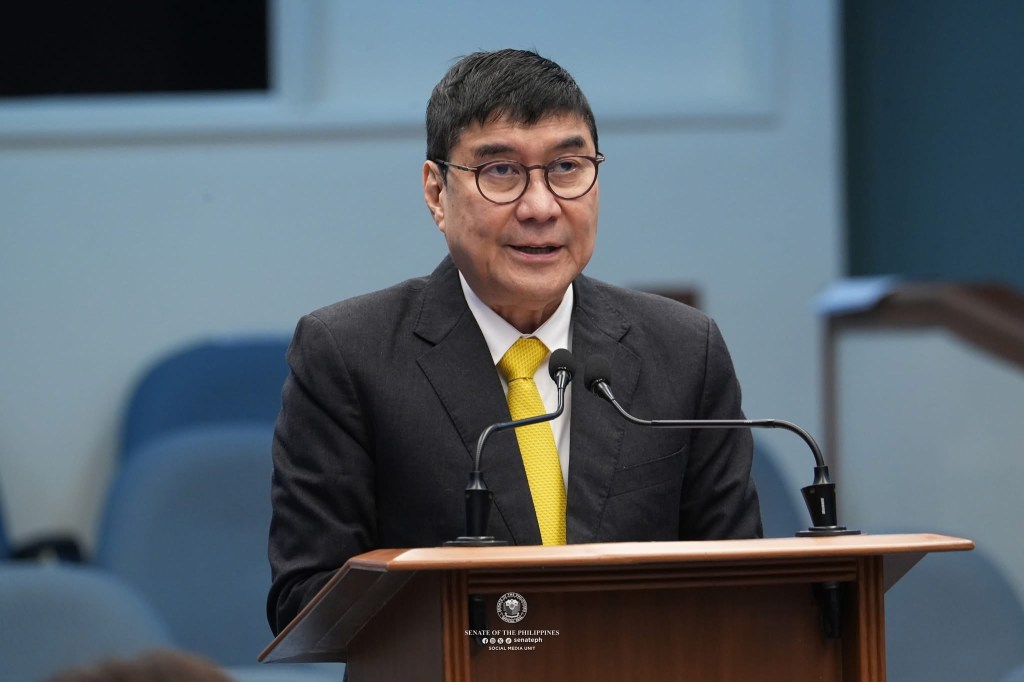
MANILA— Sen. Raffy Tulfo has raised concerns over the widespread sale of fraudulent Persons with Disabilities (PWD) identification cards online, citing potential losses of up to ₱166 billion for business establishments and difficulties in verifying legitimate cardholders.
During the Senate deliberations on the proposed 2027 budget of the Department of Social Welfare and Development (DSWD) on Oct. 21, Tulfo cited Department of Justice (DOJ) data indicating that around eight million PWD IDs are in circulation nationwide, but only two million are legitimate and registered with the National Council on Disability Affairs (NCDA).
The senator said the proliferation of fake IDs has affected businesses, particularly restaurants, while fueling public distrust toward people who present PWD cards to claim discounts, including those who are legitimately entitled to the benefits.
“Talamak ang pagkalat ng mga pekeng PWD IDs na ginagamit upang manloko ng kapwa. Mayroon namang legit na PWD ID pero wala namang sakit at hindi qualified ang cardholder,” he said.
“Ang pinakakawawa dito ay ang mga lehitimong may kapansanan na dapat nakikinabang sa diskwentong 20% at ang mga maliliit na negosyo na pumapasan sa dagdag na gastos,” he added.
In a video interview conducted by Tulfo’s Senate team, David Sison, president of the Restaurant Owners of the Philippines (RESTOPH), recounted an incident in which every member of a family—including the parents, children and household helper—reportedly had a PWD ID.
Sison said RESTOPH coordinated with the NCDA and the Department of Health (DOH) to investigate the issue. Their findings reportedly showed that PWD IDs could be obtained online with alarming ease.
Tulfo also verified reports of PWD IDs being sold through online platforms, including Facebook Marketplace and Carousell.
He noted that verifying the authenticity of PWD IDs remains difficult. Although the DOH maintains an online verification website, its information is reportedly outdated.
More than 2,500 local government units issue PWD IDs nationwide, but differences in card designs, formats and databases complicate efforts to establish a standardized verification system, Tulfo said.
He called for a review of the requirements and procedures for issuing PWD IDs, as well as clearer criteria for determining which disabilities qualify an individual for the card. He said these measures would help prevent abuse and ensure that the benefits reach those who genuinely need them.
“Huwag natin gamitin sa kalokohan ang kalagayan ng ating mga kababayang may kapansanan,” he said.
Despite raising concerns about the misuse of PWD IDs, Tulfo expressed support for the DSWD’s proposed 2027 budget, saying the agency’s programs primarily assist poor and underprivileged Filipinos who depend on government aid.



Leave a Reply