
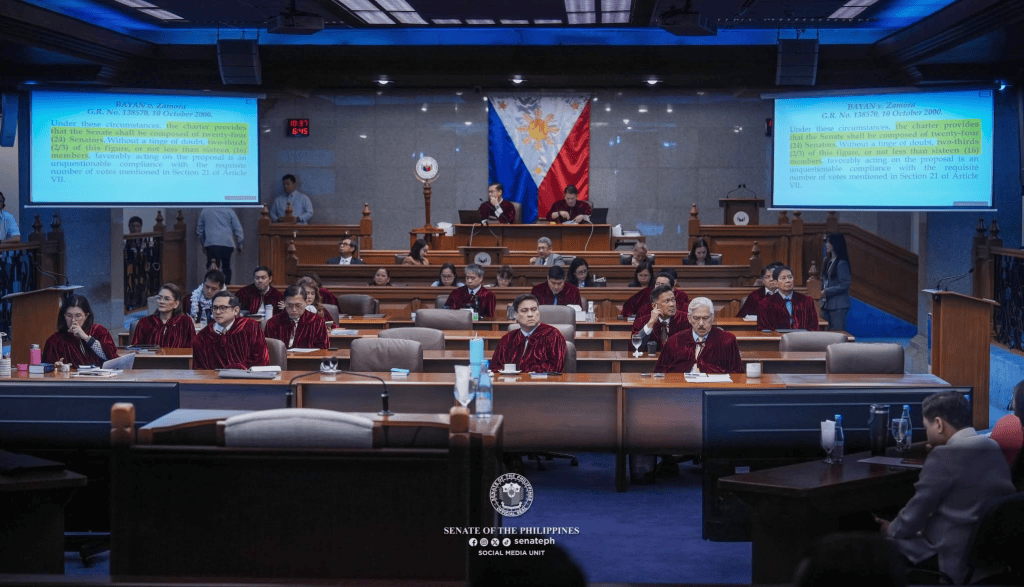
MANILA— The Senate Impeachment Court will proceed with the presentation of Vice President Sara Duterte’s evidence-in-chief on Article II of the Articles of Impeachment on Nov. 9, despite a pending petition before the Supreme Court questioning the Senate’s ruling on the two-thirds voting requirement.
In a statement released Thursday, Senate Impeachment Court spokesperson Atty. Regie Tongol said the court received two formal manifestations from Duterte’s legal team on Nov. 4, requesting subpoenas for witnesses scheduled to testify from Nov. 9 to 13.
The witnesses include legal and corporate experts, city government officials, bank representatives and individuals expected to refute allegations against the respondent.
Among those scheduled to appear on Nov. 9 is Dean Ralph A. Sarmiento, former vice chancellor for administration and law professor of political and constitutional law at the University of St. La Salle in Bacolod City. He is expected to discuss legal and constitutional principles relevant to the impeachment proceedings and Article II.
Other witnesses include corporate counsel Atty. Suzette Balucanag-Punay, who is expected to testify on the business affairs of Gencorp Industries Inc. and Metro City Chow Foods Corp., and the respondent’s alleged interests in the companies.
Davao City Assessor Engr. Jaime G. Adalin and Island Garden City of Samal Assessor Engr. John Kenneth Enumerables are also expected to testify on tax declarations and mapping records involving properties discussed during the prosecution’s presentation.
The respondent’s legal team also requested the appearance of Davao City Accountant Vingelin Bajan to present records concerning Duterte’s remuneration while she held office in the city.
Hon. Cindy Q. Colina is likewise expected to testify on Matina Crossing, including documents concerning its creation, official name and other names by which it is known.
Several representatives of major banks were also included in the subpoena requests to testify on letter-requests submitted in 2026 by Duterte and her husband, Manases R. Carpio, through their legal counsel, Poa Himala and Virtucio Law, as well as the banks’ responses, certifications and related documents.
These include representatives from BDO Unibank Inc., Bank of the Philippine Islands, EastWest Bank, Land Bank of the Philippines, Metropolitan Bank & Trust Co., PSBank, Security Bank and UnionBank.
The subpoena requests also cover Atty. Anel Martin S. Antero of San Jose del Monte, Bulacan; Mr. Chadrin S. Parian of Las Piñas City; and Quezon City Prosecutor Vimar M. Barcellano, who are expected to provide testimony countering allegations and factual assertions against Duterte under Article II.
The court said the presiding officer would evaluate the subpoena requests based on the rules of procedure and standards on relevance and admissibility.
The identities of additional witnesses scheduled to testify on Nov. 19, 20 and 23 will be disclosed in accordance with the five-day notice requirement, Tongol said.
Meanwhile, Duterte’s counsel filed a separate manifestation on Nov. 4 concerning the motion for reconsideration of the court’s Oct. 13 ruling on the relaxation of Rule 18.
According to Tongol, the respondent maintained that she was not waiving Rule 18 despite the prosecution’s withdrawal of three impeachment articles and the court’s decision on lifting the rule.
Duterte also reiterated her opposition to trial by publicity and maintained that the court should enforce the sub judice rule to protect the integrity of the proceedings and respect her constitutional rights.
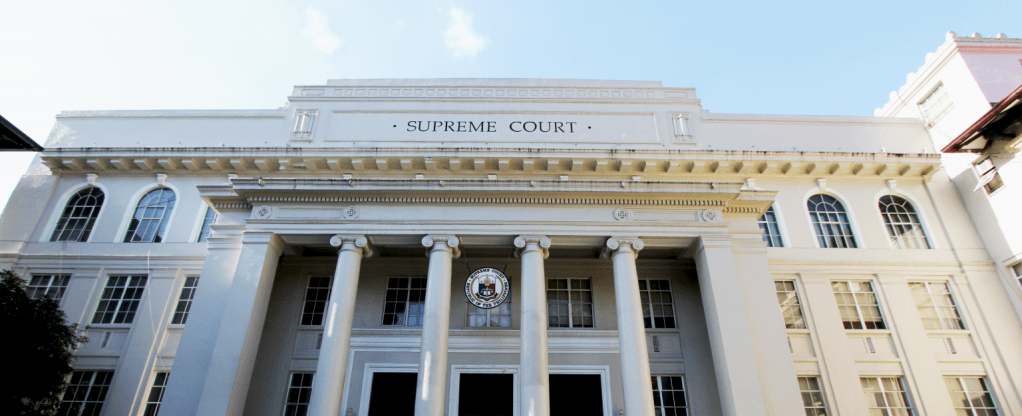
Separately, the Senate Impeachment Court, through the Office of the Solicitor General, filed its comment before the Supreme Court on Nov. 3 in Padilla, et al. v. Senate of the Philippines (G.R. No. E-08751).
The Senate asked the high court to dismiss the petition outright and deny any injunctive relief.
In its comment, the Senate invoked Article XI, Section 3(6) of the Constitution, arguing that its exclusive authority to try and decide impeachment cases includes determining how the two-thirds voting threshold should be calculated when some senator-judges are legally or physically unable to participate.
The Senate maintained that the Impeachment Court did not amend the Constitution but ensured that the verdict would be determined by senator-judges who actually heard the evidence, rather than allowing absent or detained members who did not participate in the trial to cast votes.
It also argued that there was no grave abuse of discretion, noting that the court heard both the prosecution and the respondent, consulted four retired Supreme Court justices appointed as amici curiae with the parties’ agreement, and resolved the matter through an open and recorded vote.
The Senate further described the petition as premature, arguing that its Sept. 23 pro hac vice ruling did not automatically exclude any senator from participating in the proceedings. Requests from detained senators to participate also remain pending, it said.
The court maintained that the voting denominator might not change and that the pending petition should not delay the impeachment trial.
“Bound by the constitutional command that the trial shall forthwith proceed, the Impeachment Court will not be stalled by collateral litigation, and the presentation of the Respondent’s evidence-in-chief on Article Il will proceed as scheduled on Monday, November 9, 2026,” the statement read.


Leave a Reply