
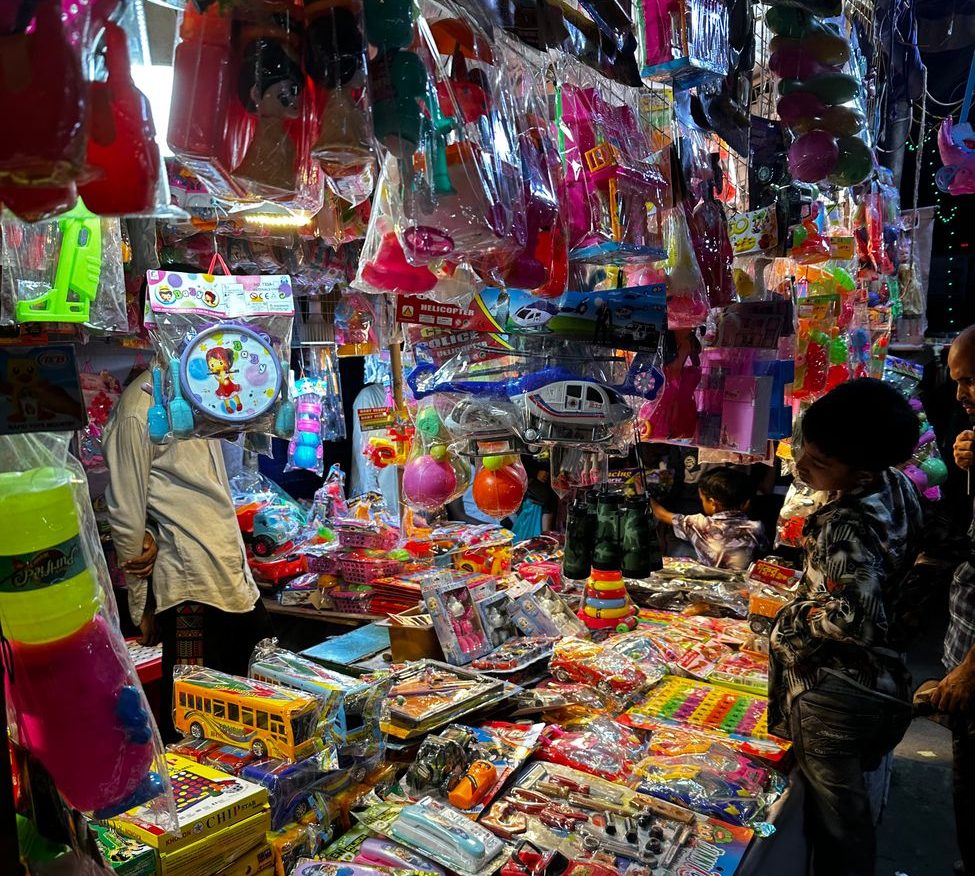
MANILA — Parents are urged to check the safety of toys they buy for children ahead of the Christmas shopping rush after the EcoWaste Coalition detected potentially hazardous chemicals in imitation Rubik’s Cubes sold in Binondo, Manila.
The watchdog group warned that some unauthorized and unlabeled puzzle toys may contain brominated flame retardants (BFRs), chemicals commonly used in the plastic casings of electrical and electronic equipment that could enter consumer products through recycled electronic waste.
Tests on 10 imitation Rubik’s Cubes found that five contained varying levels of bromine, ranging from 112 to 5,666 parts per million (ppm), and antimony, from 52 to 1,525 ppm. Both elements are indicators of possible BFR contamination.
The group also detected lead concentrations ranging from 34 to 128 ppm in the samples, which were sold for ₱25 to ₱100 each.
BFR exposure has been associated with hormone disruption, obesity, cancer, and heart, reproductive and neurological disorders. In children, exposure may affect intelligence, coordination, attention and learning, as well as increase impulsivity. The chemicals can enter the body through ingestion, inhalation and skin absorption.
“While brain-teasers like Rubik’s Cubes are meant to boost a child’s intelligence, recycled e-waste flame retardants in such toys can harm their health instead. Safe e-waste recycling must keep hazardous chemicals out of everyday products, such as toys,” said Aileen Lucero, national coordinator of the EcoWaste Coalition.
Jitka Strakova, global researcher at the International Pollutants Elimination Network (IPEN), said hazardous flame retardants continue to appear in recycled products despite years of scientific warnings about their effects on health and the environment.
“It is frustrating that years after the scientific community and the public reached a consensus that BFRs, such as PBDEs, must be eradicated due to their effects on health and the environment, lax waste legislation means we are still finding them in recycled products, including children’s toys,” Strakova said.
The coalition had previously submitted 10 imitation Rubik’s Cubes to Czechia in 2016 for a global study conducted by Arnika and IPEN. Four samples contained significant levels of polybrominated diphenyl ethers (PBDEs), a major class of BFRs, particularly octaBDE and decaBDE.
One sample had the highest octaBDE concentration among 47 samples examined from 16 countries.
OctaBDE and pentaBDE were listed under the Stockholm Convention on Persistent Organic Pollutants in 2009, while decaBDE was added in 2017. The Philippines is a party to the treaty, which seeks to protect public health and the environment from persistent organic pollutants.
Under Article 6 of the convention, countries must manage waste containing these pollutants in an environmentally sound manner and prevent its recycling or recovery unless the pollutants are permanently destroyed or irreversibly transformed.
The EcoWaste Coalition said its previous tests also found elevated bromine and antimony levels in black plastic components of Christmas decorations, Halloween toys, watercolor palettes, hair accessories and kitchen utensils.
To reduce exposure, the group called for stricter enforcement of rules on electronic waste and other waste containing persistent organic pollutants, a ban on BFRs and other such chemicals in toys and household products, and mandatory disclosure of chemical contents and materials, particularly in products intended for children.




Leave a Reply