
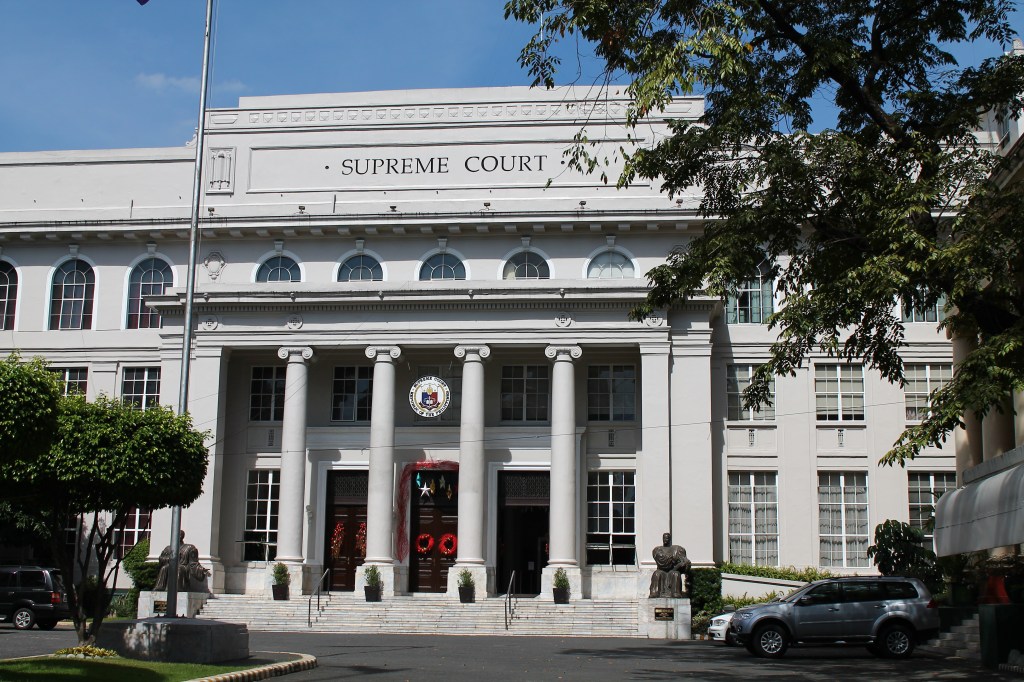
MANILA— The Supreme Court (SC) has affirmed that a child born during a valid marriage is presumed legitimate and has the right to carry the father’s surname, even if the father was not identified in the child’s birth certificate.
In a Decision written by Associate Justice Japar B. Dimaampao, the SC Third Division granted a woman’s petition to correct her birth certificate, directing the Local Civil Registrar to reflect her proper middle name and surname and indicate her parents’ marriage.
The woman was born in 1996, two years after her parents married in 1994. However, her mother registered her birth under her maiden surname, used her own middle name for the child, and left the father’s details blank because the spouses were not on good terms at the time.
Despite the entries in her birth certificate, the woman consistently used her father’s surname in her school and employment records, including her Professional Regulation Commission identification card.
She discovered the discrepancies in her birth certificate in 2017 and subsequently sought its correction. Both the Regional Trial Court and the Court of Appeals dismissed her petition, ruling that her parents’ marriage alone did not establish that the husband was her biological father and that she had failed to prove the questioned entries were erroneous.
The High Court reversed the lower courts’ rulings, citing Article 164 of the Family Code, which considers children conceived or born during a marriage legitimate.
It held that the woman’s birth during her parents’ valid marriage was sufficient to establish the presumption of legitimacy. She was not required to independently prove her relationship with her father, as the law provides that a husband may contest a child’s legitimacy only through the appropriate legal action within the prescribed period.
No such action was filed in the case.
The SC also rejected the lower courts’ reliance on the birth certificate entries indicating that the woman was born out of wedlock.
Under Article 167 of the Family Code, a child remains legitimate even if the mother declares otherwise, including through entries in the child’s birth certificate.
The Court explained that although a birth certificate is presumed accurate until disproved, the legal presumption of legitimacy prevails in this case, consistent with public policy and the best interests of the child.
It further clarified that substantial changes to civil registry records may be pursued under Rule 108 of the Rules of Court through adversarial proceedings, which require notice to interested parties and an opportunity for them to oppose the requested corrections.
The woman complied with these requirements, and no opposition was filed despite the publication and notice given to interested parties.
“Simply stated, the changes will not create legitimacy but merely reflect a legitimacy that already exists under the law,” the Court said.
The SC added that Article 174 of the Family Code entitles legitimate children to use their father’s surname.
In a Concurring Opinion, Associate Justice Maria Filomena D. Singh explained that children may invoke Rule 108 to correct civil registry entries affecting their legitimacy or filiation, even though the Family Code generally reserves the right to challenge a child’s legitimacy to the father or, in certain circumstances, his heirs.
Singh clarified that such corrections are permissible when they merely reflect an existing legal status or fact rather than establish a new one, provided that all affected parties receive notice and an opportunity to be heard.




Leave a Reply