
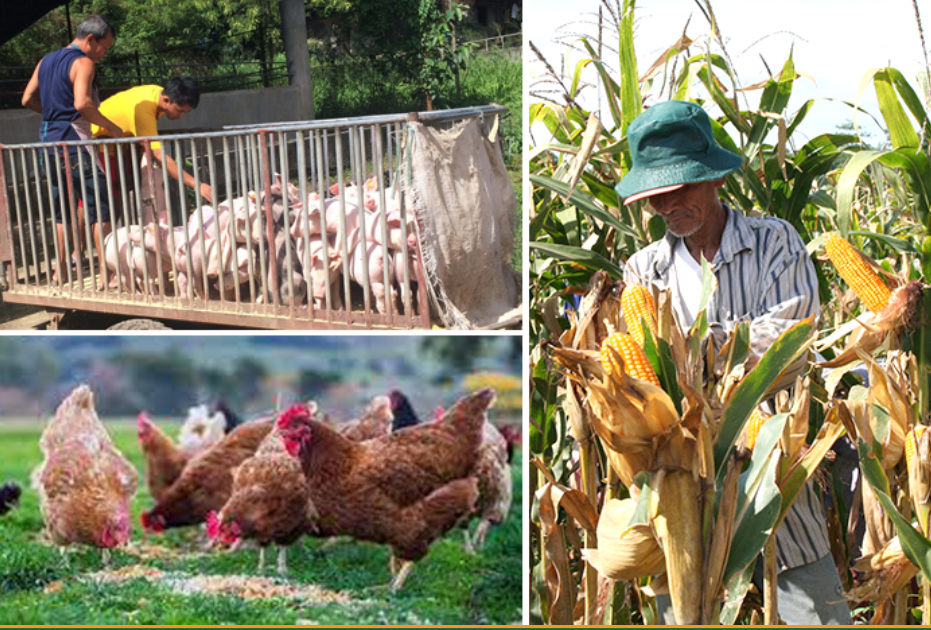
MANILA – The Department of Agriculture (DA) is rolling out a village-based feed ecosystem aimed at increasing corn and livestock production, reducing feed costs, and strengthening rural incomes through cooperative-led agribusiness.
In a memorandum circular signed on February 2, Agriculture Secretary Francisco P. Tiu Laurel Jr. approved the Village-Type Feed Complete Chain Project (VFCCP), a vertically integrated feed system that allows farmer cooperatives and associations to handle corn production, postharvest processing, feed milling, and Total Mixed Ration (TMR) preparation under a single enterprise.
“This is about fixing the weakest link in livestock production—feeds—by putting control back in the hands of farmers,” Tiu Laurel said. “When communities can grow, process, and mill their own feed, we lower costs, raise productivity, and make our food system more resilient.”
The project addresses persistent challenges in the sector, including limited availability of affordable and consistent feed supply, high production costs, and frequent feeding disruptions, especially for smallholder raisers.
Under the VFCCP, the DA will set aside a maximum budget of P40 million per project, depending on components and readiness of the recipient cooperative. Each site will manage up to 25 hectares of corn and forage production, operating mechanized, community-managed feed systems covering crop production, postharvest handling, feed milling, storage, and distribution.
The program incorporates climate-resilient technologies such as solar-powered irrigation, biomass dryers, and mechanized forage production to ensure year-round feed availability.
Financial projections over five years estimate annual revenues of about P38.9 million, operating costs of P30.7 million, and a net cash flow of P8.2 million, with an internal rate of return of 23 percent and a benefit-cost ratio of 1.11.
The DA envisions the VFCCP as a platform for inclusive agribusiness, with revenues from feed sales reinvested into operations and partnerships with LGUs, KADIWA outlets, and private buyers to strengthen market access and build a resilient, community-driven livestock sector.


 Republika News
Leave a comment