
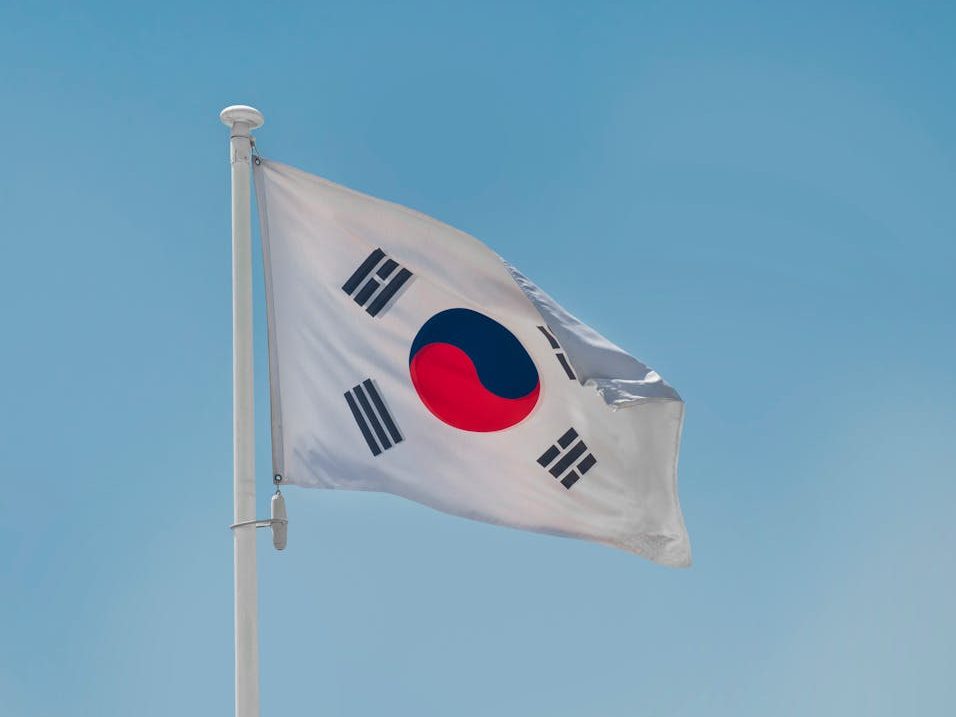
SEOUL – South Korea will soon allow the export of high-precision map data to overseas servers, reversing a two-decade policy that had limited the full functionality of Google Maps in the country.
In a statement, the Ministry of Land, Infrastructure and Transport said the approval was granted “on the condition that strict security requirements are met.”
Under the conditions, military and other sensitive security-related facilities must be blurred. The government will also restrict longitude and latitude coordinates for South Korean territory on platforms such as Google Maps and Google Earth.
South Korea had previously rejected Google’s bids in 2007 and 2016, citing national security concerns due to its technical state of war with North Korea. Authorities had warned that exporting detailed map data could expose sensitive military facilities.
The data involved is 1:5000 scale, meaning one centimeter on the map corresponds to 50 meters in actual distance. Google has maintained that exporting such data is necessary to deliver real-time navigation services globally, including for users researching South Korean destinations from abroad.
The new approval requires Google to process map data on locally based servers and limits exported data to navigation and direction services that have been pre-approved by the government. Authorities also retain the right to request map revisions. In addition, Google must establish a security incident prevention framework to address emergency situations.
Google Vice President Cris Turner welcomed the development.
“We welcome today’s decision and look forward to our ongoing collaboration with local officials to bring a fully functioning Google Maps to Korea,” Turner said in a statement.
The decision is expected to affect local technology firms Naver and Kakao, which currently dominate South Korea’s digital map services market. After the announcement on Friday, Naver’s stock fell 2.3%, while Kakao’s shares rose 1.5%.
Choi Jin-mu, a geography professor at Kyung Hee University, raised concerns about the long-term implications.
“Google can now come in, slash usage fees, and take the market. If Naver and Kakao are weakened or pushed out and Google later raises prices, that becomes a monopoly. Then, even companies that rely on map services — logistics firms, for example — become dependent, and in the long run, even government GIS (geographic information) systems could end up dependent on Google or Apple. That’s the biggest concern,” he said.
The move is also seen as a positive signal to Washington, which had urged Seoul to address what it described as discrimination against US technology companies.
AMCHAM Chairman James Kim said the decision “sends a positive signal about Korea’s commitment to innovation, open markets, and ensuring a level playing field for global companies operating in Korea.”
Google Maps is not banned in South Korea, though its functionality has been limited. Other countries, including mainland China, North Korea, Syria and Vietnam, prohibit the service entirely.




 Republika News
Leave a comment