
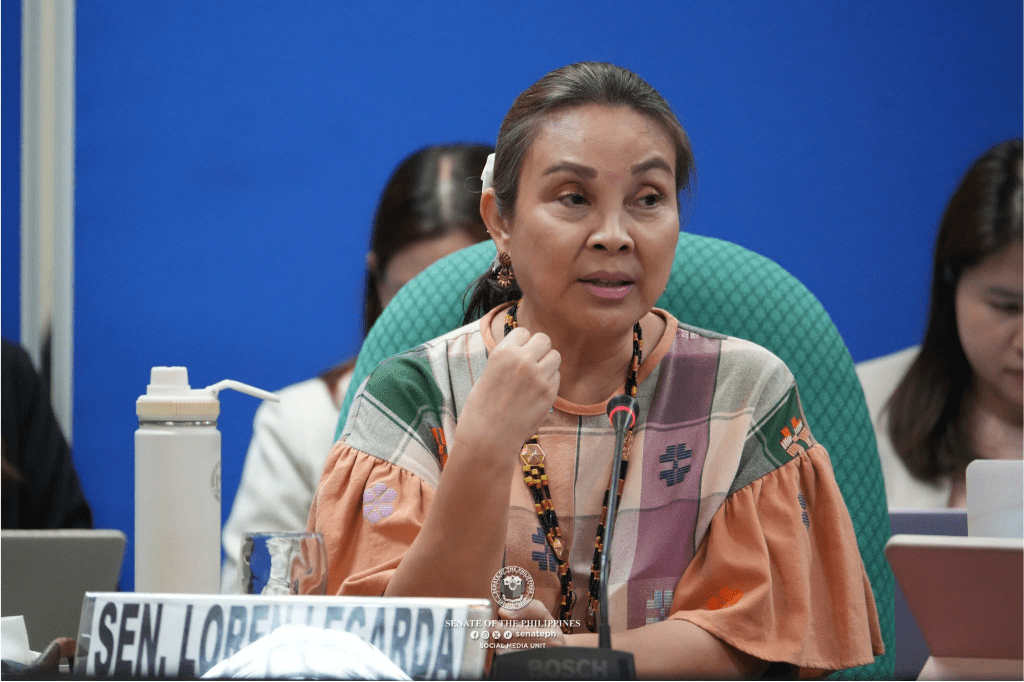
MANILA — Sen. Loren Legarda called for a shift toward proactive climate preparedness, urging the government to adopt anticipatory measures to protect communities before disasters occur.
Legarda made the call during her keynote address at the Asia Conference on Climate Change and Disaster Resilience held on April 30, 2026 at the Asian Institute of Management in Makati City. The event gathered representatives from institutions including the World Bank, Asian Development Bank, Climate Change Commission, and Bangko Sentral ng Pilipinas, along with officials from climate-vulnerable cities.
In her speech, Legarda recalled earlier warnings about the worsening climate crisis and cited António Guterres’ description of “global boiling,” noting that stronger typhoons, rising sea levels, and fertilizer shortages linked to damaged fossil fuel facilities are intensifying global food insecurity.
“We have become experts in counting the dead and repairing the broken, but we have not yet mastered the art of anticipating the blow,” Legarda said, highlighting what she described as a “First Mile/Last Mile disconnect” where funding and policies fail to reach communities on time.
“This disconnect is critical. It is the space where dreams are shattered and lives are lost. We must legislate for anticipation,” she added.
Legarda outlined three key priorities, including the need for legislative reforms that would allow disaster funds to be released based on forecasts instead of waiting for official calamity declarations.
“We must tear down the firewall between relief and readiness,” she said.
She also emphasized the need to center vulnerable sectors in fiscal policy, proposing automatic cash transfers triggered by forecasts from the Philippine Atmospheric, Geophysical and Astronomical Services Administration and integrating anticipatory mechanisms into existing conditional cash transfer programs for women, indigenous peoples, the elderly, persons with disabilities, and isolated communities.
The senator further urged local leaders and development partners to prioritize investments that reduce risks rather than rebuild vulnerable systems.
“If we are serious about resilience, then our financing, both the loans and the GAA, must stop restoring risk and finally start reducing it,” she said.
Legarda also underscored the financial aspect of resilience, stressing the importance of quickly mobilizing resources ahead of disasters.
“Resilience is also financial. It is about liquidity. It is about the speed of the peso moving from the national treasury to a local barangay before the storm makes landfall,” she said. “Anticipatory action is an exercise in risk management; it protects macroeconomic stability, reduces financial shocks, safeguards long-term growth, and is a step towards genuine climate justice.”
She highlighted the role of youth in climate action, urging that they be given access to the People’s Survival Fund and opportunities under the Philippine Ecosystem and Natural Capital Accounting System law, which she authored.
“We must invest in the energies and capacities of our youth. While we rightly discuss the transition to renewable energy sources, we must also recognize the human energy of our youth as our most potent renewable resource,” Legarda said.
Legarda concluded by emphasizing that preparedness should be measured by prevented losses rather than post-disaster recovery, calling for collective action to address the climate crisis.
The conference, themed “From Risk to Readiness: Investing in Climate Futures in Asia,” also featured programs such as graduate scholarships in disaster risk and data science aimed at developing future leaders in the field.




 Republika News
Leave a comment