
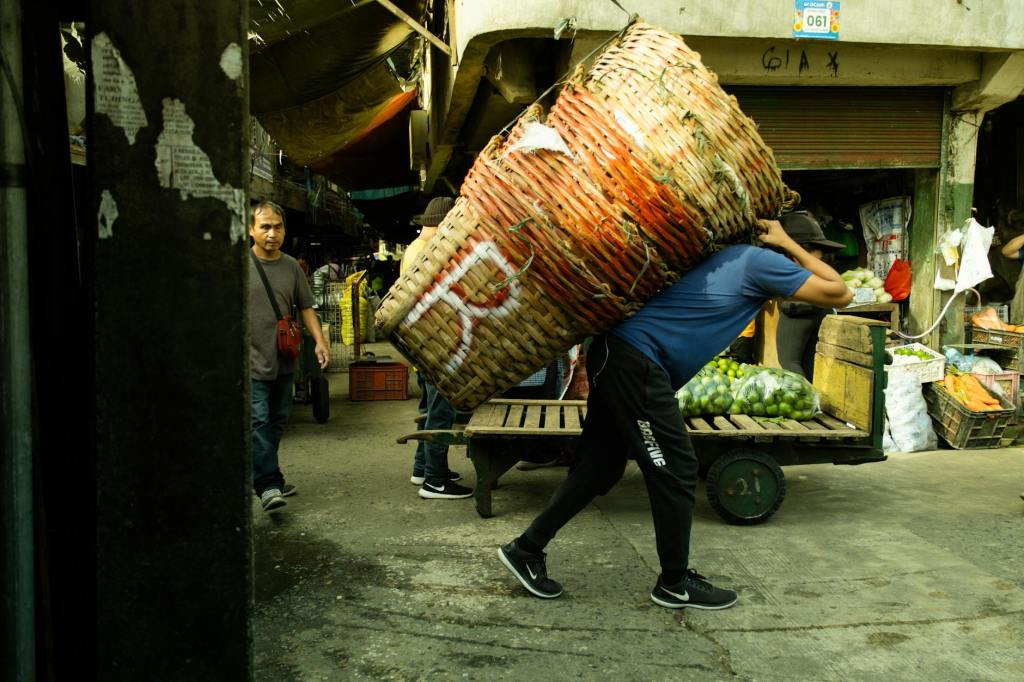
MANILA — The Philippines’ headline inflation surged to 7.2 percent in April 2026, up from 4.1 percent in March, bringing the year-to-date average inflation from January to April to 3.9 percent, according to Philippine Statistics Authority data.
The latest figure marked a sharp increase from the 1.4 percent inflation recorded in April 2025.
The acceleration in overall inflation was mainly driven by faster price increases in key commodity groups, particularly food and non-alcoholic beverages, which rose to 6.0 percent from 2.9 percent in March.
Transport costs also contributed significantly, climbing to 21.4 percent from 9.9 percent in the previous month, while housing, water, electricity, gas and other fuels increased to 8.2 percent from 4.7 percent.
Other commodity groups that recorded faster annual increases included alcoholic beverages and tobacco, clothing and footwear, household furnishings and maintenance, health, information and communication, recreation and culture, restaurants and accommodation services, and personal care and miscellaneous goods and services.
Food and non-alcoholic beverages accounted for the largest share of inflation at 31.9 percent or 2.3 percentage points. This was followed by transport at 27.0 percent or 1.9 percentage points, and housing-related costs at 23.2 percent or 1.7 percentage points.
At the national level, food inflation also picked up to 6.1 percent in April 2026 from 2.7 percent in March, significantly higher than the 0.7 percent recorded in April 2025.
The increase in food inflation was largely attributed to the sharp rise in rice prices, which jumped to 13.7 percent from 3.5 percent in the previous month.
Faster price increases were also observed in corn, flour and other cereal products, fish and seafood, fruits and nuts, vegetables, and ready-made food products.
Meanwhile, meat and sugar posted slower annual declines, while milk, dairy products, eggs, and oils and fats recorded slower increases.
Food inflation contributed 30.2 percent or 2.2 percentage points to overall inflation. Among food groups, cereals and cereal products posted the largest share at 55.6 percent, followed by fish and seafood at 26.6 percent, and vegetables and related crops at 14.2 percent.
Core inflation, which excludes selected food and energy items, also increased to 3.9 percent in April 2026 from 3.2 percent in March. This was higher than the 2.2 percent recorded in April 2025.
In the National Capital Region, inflation rose to 5.5 percent in April 2026 from 3.5 percent in March, and from 2.4 percent in April 2025.
The faster inflation in NCR was primarily driven by higher housing-related costs, which increased to 9.0 percent from 5.9 percent, along with transport, which rose to 18.1 percent from 11.1 percent.
Other commodity groups in the region, including food, clothing, health, and restaurant services, also posted faster annual increases.
Outside NCR, inflation accelerated to 7.7 percent in April 2026 from 4.2 percent in March, significantly higher than the 1.2 percent recorded in April 2025.
The increase was mainly attributed to higher food prices, which rose to 6.5 percent from 3.1 percent, as well as transport and housing costs, which also posted faster increases.
All regions outside NCR recorded higher inflation rates in April. Central Visayas remained the region with the highest inflation at 10.8 percent for the ninth consecutive month, while the Negros Island Region posted the lowest rate at 4.9 percent.



 Republika News
Leave a comment