
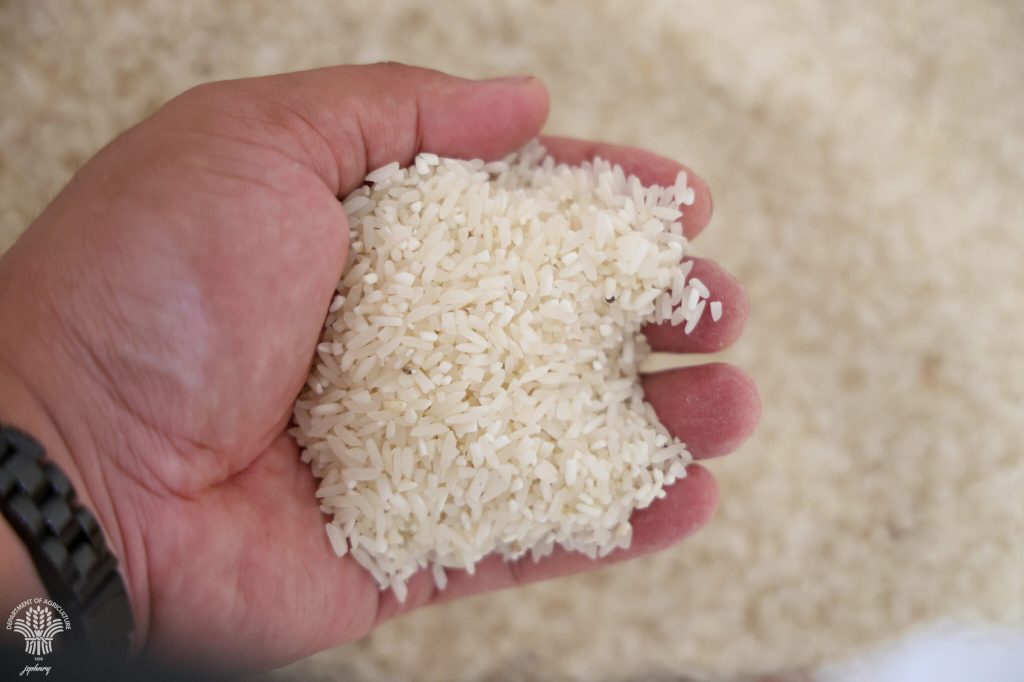
MANILA – The Department of Agriculture (DA) said it is prepared to immediately implement President Ferdinand Marcos Jr.’s executive order imposing a temporary price ceiling on imported rice as the government moves to ease the impact of rising food costs fueled by inflation.
Under Executive Order No. 118, a P50-per-kilo price cap will be imposed on 5 percent broken imported rice for 30 days to curb excessive price increases and protect consumers from market abuse.
The order states that the measure seeks “to address unjustified price increases, prevent market abuse, and ensure the availability of affordable rice while maintaining market stability.” It will take effect immediately after publication in the Official Gazette or a newspaper of general circulation.
“We will implement this immediately once it takes effect to help the general public cope with rising food costs,” Agriculture Secretary Francisco P. Tiu Laurel Jr. said.
Tiu Laurel also warned that the DA would go after traders and groups engaged in illegal market practices, saying the agency has authority under the Price Act and the Anti-Agricultural Economic Sabotage law to pursue hoarders, profiteers, cartels, and market manipulators.
The DA said inflation accelerated following the spike in global oil prices triggered by the conflict in the Middle East that erupted on Feb. 28.
Headline inflation rose to 4.1 percent in March and climbed further to 7.2 percent in April, significantly higher than the 2.4 percent recorded in February and 1.4 percent in April last year.
Food inflation also increased sharply, reaching 6.1 percent in April from 2.7 percent in March, adding pressure on household expenses.
Rice remains a major driver of inflation in the country, accounting for around 9 percent of the consumer basket used to measure price growth. Among the poorest 30 percent of households, rice represents nearly 20 percent of total spending, making increases in rice prices particularly burdensome for low-income families.
The agriculture department said the temporary price ceiling forms part of broader government interventions intended to stabilize food prices and contain inflation.
These measures include the rollout of the government’s P20-per-kilo rice program and the implementation of a maximum suggested retail price mechanism for imported rice, which the DA said previously helped moderate rice prices before the recent inflation surge tied to higher oil costs.
Tiu Laurel said the National Price Coordinating Council would assess the price ceiling within two weeks after its implementation and may recommend adjustments, an extension, or the lifting of the cap depending on prevailing market conditions.
The DA said the temporary measure is a calibrated response to extraordinary market volatility while the government continues initiatives aimed at strengthening local rice production and preventing speculative pricing activities.


 Republika News
Leave a comment