
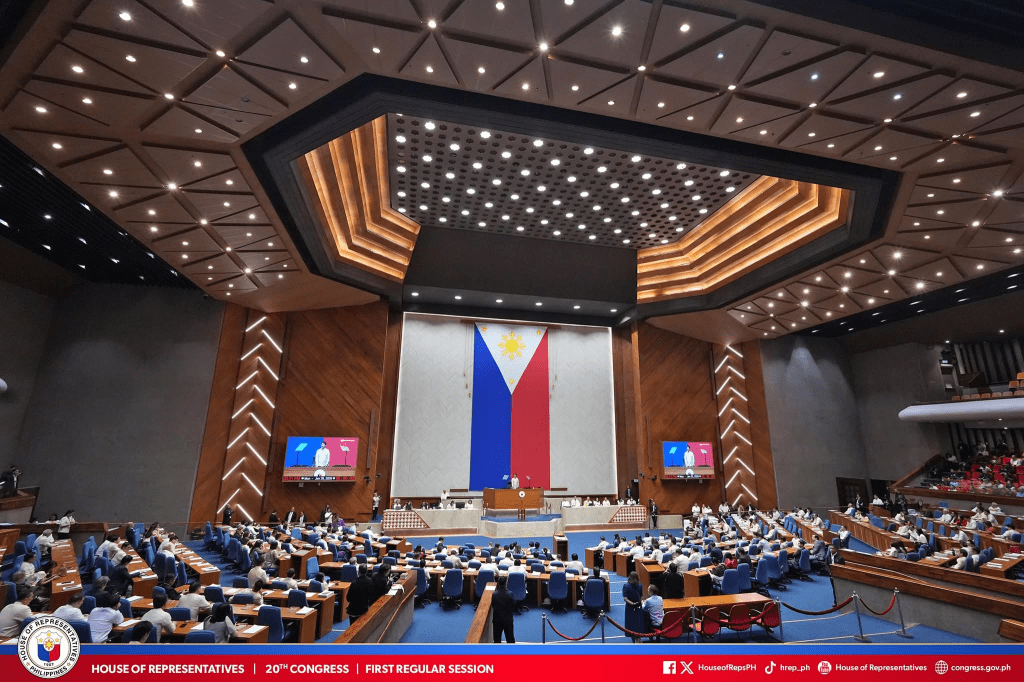
MANILA – The House Committee on Revision of Laws has approved a measure that would prohibit relatives of public officials up to the fourth degree of consanguinity from entering into government contracts, in a move aimed at tightening anti-corruption safeguards in state transactions.
In a media report, the committee said the approval followed a motion to consolidate several related bills, including one filed by House Majority Floor Leader and Ilocos Norte 1st District Rep. Sandro Marcos, son of President Ferdinand Marcos Jr.
Committee chair Rizal Rep. Emigdio Tanjuatco III said the panel was able to refine key provisions of the proposal while balancing anti-corruption goals with operational concerns.
“We were able to harmonize the provisions on post-employment disqualification, beneficial ownership definitions, penalties, subcontracting, and treatment of existing contracts, while at the same time balancing anti-corruption goals with practical considerations for local governments and constitutional concerns,” Tanjuatco said.
The measure defines public officials as heads of agencies, heads of procuring entities, members of governing boards, and other officers or employees performing policy-determining, supervisory, or managerial functions. It covers both career and non-career personnel, including military and uniformed personnel, regardless of compensation.
Under the proposal, relatives up to the fourth civil degree would be barred from securing government contracts. This includes parents, children, siblings, grandchildren, and extended relatives such as cousins and great-uncles or great-aunts.
The bill comes amid continuing scrutiny in Congress and the executive branch over potential conflicts of interest involving lawmakers and contractors engaged in government projects, including infrastructure and flood control programs.
It also expands existing provisions under Republic Act 6713 or the Code of Conduct and Ethical Standards for Public Officials and Employees, which already prohibits officials from having financial or material interest in transactions requiring approval of their office.
The proposed measure defines government contracts as agreements involving supplies, infrastructure projects, joint ventures, public-private partnerships, and similar arrangements entered into by government agencies, government-owned or -controlled corporations, and local government units.
However, the restriction excludes contracts considered highly technical, proprietary, or confidential in nature.
Rep. Marcos said the measure is intended to ensure public funds are used strictly for public interest.
“By closing this loophole, we take another step toward a government that is fair, transparent, and truly for the people,” he said.



 Republika News
Leave a comment