
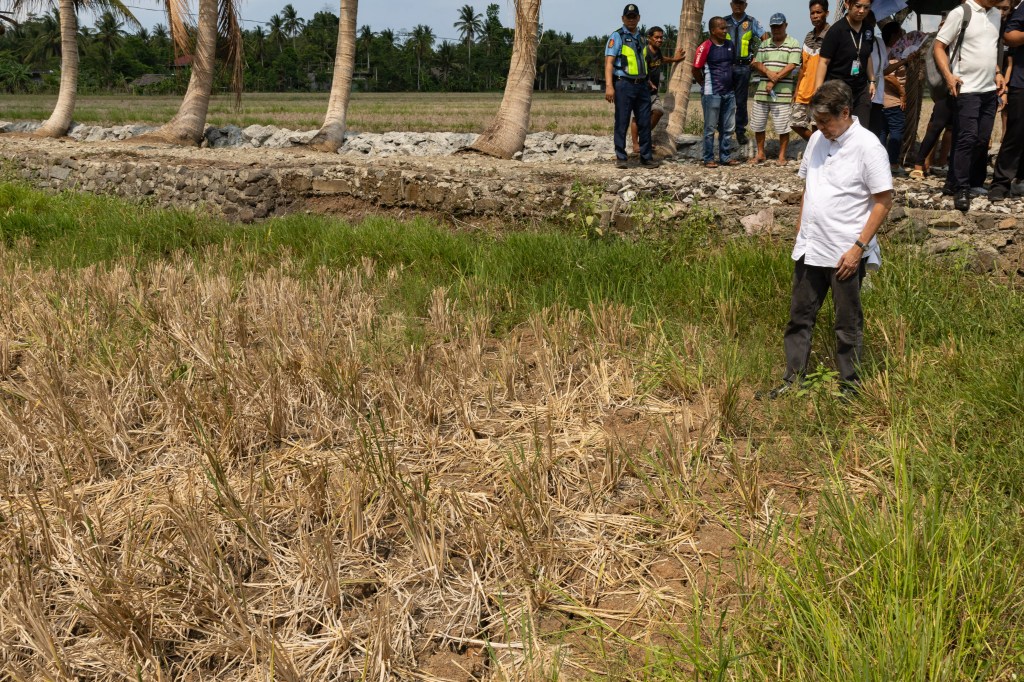
MANILA – Senator Kiko called for what he described as “mega interventions” to prepare the country for a potential super El Niño, warning of its severe impact on food security, livelihoods, and public welfare.
In a statement released June 1, 2026, the senator described the looming weather phenomenon as a global climate emergency that could heavily affect Filipino farmers, fisherfolk, and consumers. He said the government must act quickly to prevent disruptions in food supply and income loss.
“To avoid a disaster in food and livelihood, there must be mega interventions that are people-centered, multi-sectoral, and anchored on national action and international cooperation,” he said.
He urged government agencies to move swiftly to secure both water and food supply, including emergency rehabilitation and desilting of irrigation systems, and the deployment of mobile and communal water facilities for both agricultural and household use. He also called for clear prioritization of potable water and food production.
The senator also pushed for the rapid rollout of climate-resilient seeds and farm inputs, emergency livestock feed support, veterinary assistance, and cash transfers and food aid for vulnerable families in both rural and urban areas.
Describing the super El Niño as a global phenomenon, he said the Philippines should strengthen coordination with United Nations agencies, multilateral banks, climate funds, and humanitarian organizations to support financing and implementation of response measures.
He also called for expedited agreements for emergency seeds and fertilizers, budget support for social protection programs, and technical assistance on drought management and early warning systems, saying international support would complement domestic resources.
Citing guidance from the FAO and UNSDG, he said the country should also use the crisis to address long-standing weaknesses in its food and water systems through medium- and long-term reforms.
These include modernizing water and food systems through integrated river basin management, resilient rural infrastructure, improved storage and cold chains, and stronger domestic seed and input systems.
He also urged investments in climate and hydrological monitoring, stronger disaster and climate risk governance at the local level, and farmer- and fisherfolk-centered planning in local government units.
Other recommendations included scaling up climate-resilient irrigation systems, protecting watersheds, promoting solar-powered pumps, and expanding watershed rehabilitation efforts.
The senator further called for mainstreaming climate-smart agriculture through drought-tolerant crops, diversified farming, soil and water conservation practices, and improved access to credit and public procurement programs that support resilient practices.
He said the Philippines should work with international partners to transform these initiatives into long-term programs aligned with a national El Niño and climate resilience roadmap.
He also stressed the need to expand shock-responsive social protection systems, including cash transfers, food vouchers, and feeding programs that can be quickly scaled up in affected areas.
The senator said the expected super El Niño would be a test for government agencies involved in agriculture and food security, as well as for global cooperation, stressing the need for urgent and long-term action.



 Republika News
Leave a comment