
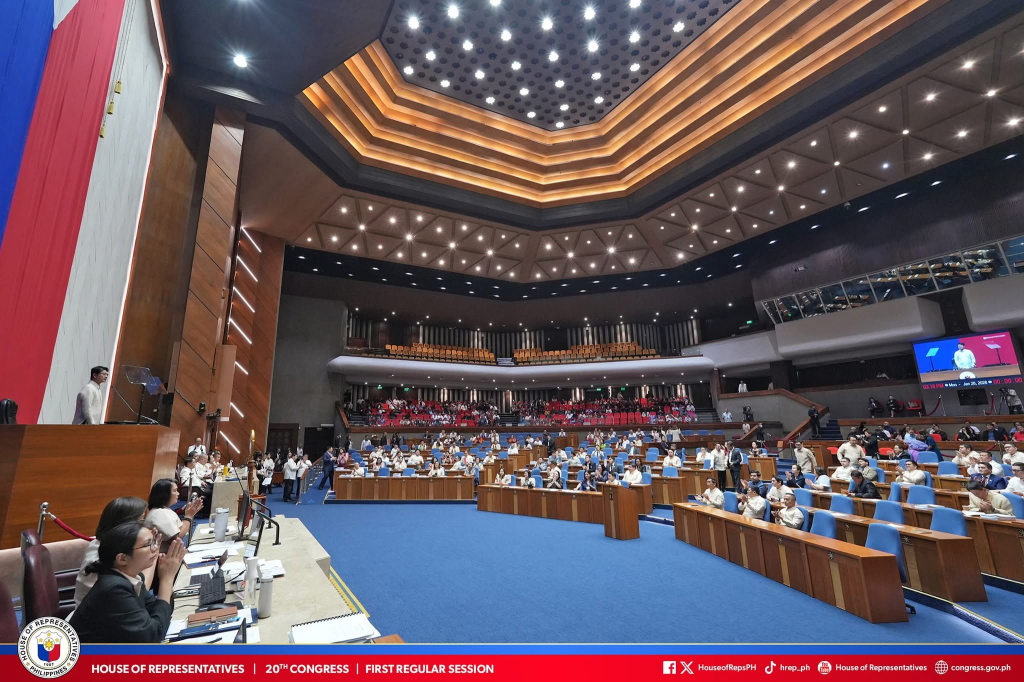
MANILA — A measure approved by the House of Representatives seeking to curb online disinformation and dismantle “troll farms” has drawn concerns from lawmakers and rights groups over possible risks to free expression and legitimate criticism.
In a media report, it said that House Bill No. 9465, or the Digital Media Anti-False Information Act, was approved on third and final reading on Wednesday with 286 affirmative votes, three negative votes, and seven abstentions.
Among those who abstained was Mamamayang Liberal Party-list Rep. Leila de Lima, who said she could not vote against the measure due to the threat posed by disinformation but also withheld support due to concerns over its implementation.
“I cannot vote ‘no’ to this bill because disinformation is a real and urgent threat,” she said Wednesday.
She cited the harmful effects of false information, including impacts on public health, elections, and public trust.
“We have witnessed its destructive power in our own country. False medical advice has endangered lives. Troll farms and bot networks deliberately manipulate public discourse and sow distrust. Coordinated campaigns spread election misinformation, undermine public health efforts, and corrode the common factual ground democracy depends upon.”
De Lima said she understood the need for action against online manipulation but warned the bill could be misused.
“Perhaps more dangerous than what this bill explicitly permits is what it prevents,” she said.
“This bill could silence not just disinformation but also legitimate political opposition, civil society advocacy, and independent journalism,” De Lima added.
The measure penalizes the publication, dissemination, financing, or assistance in spreading false information online, and imposes additional obligations on digital platforms operating in the country. Violators may face six to 12 years’ imprisonment, fines ranging from PHP500,000 to PHP2 million, or both.
The bill also states that it excludes political opinions, criticism of government officials, satire, journalism, investigative reporting, whistleblowing, academic discourse, and other forms of protected expression.
De Lima said lawmakers still have an opportunity to refine the measure to ensure stronger safeguards for free speech and press freedom.
“We can write a disinformation law that is both strong and safe, strong in protecting truth, safe in protecting liberty. We can provide safe harbors for free speech and the press in a way that is unambiguous. We can craft legislation that civil society can endorse and that the international community can respect,” she said.
Ilocos Norte Rep. Sandro Marcos is the principal author of the bill.
Concerns over scope and enforcement
Media organizations and rights groups also raised concerns about the measure’s potential impact on civil liberties.
Alternative media network AlterMidya warned that the bill may give authorities broad discretion in determining what constitutes false information.
“As lawmakers from the Makabayan Bloc have warned, such a measure risks creating a chilling effect, where fear of criminal prosecution discourages people from speaking critically on urgent social and political issues,” the group said.
AlterMidya also questioned the bill’s passage, noting limited debate during its approval process.
The group added that existing exemptions for journalism, satire, and good-faith errors may not be enough protection against possible misuse.
Human Rights Watch, meanwhile, urged lawmakers to withdraw the bill, citing its “vague and overbroad framing” and the imposition of long prison terms.
It warned that provisions penalizing false information that causes “verifiable public harm” or threatens national security could be used against government critics.
The group also raised concerns over provisions requiring digital platforms to coordinate with authorities on content moderation and data access.
Despite her abstention, De Lima reiterated that addressing disinformation remains necessary.
“The Philippines has an opportunity to show the world, and to show ourselves, that we can fight disinformation without surrendering democracy, that we can protect truth without weaponizing the law,” she said.
“We need not choose between security and freedom. We can have both. But only if we have the patience to craft legislation worthy of our democratic ideals,” she added.

 Republika News
Leave a comment