
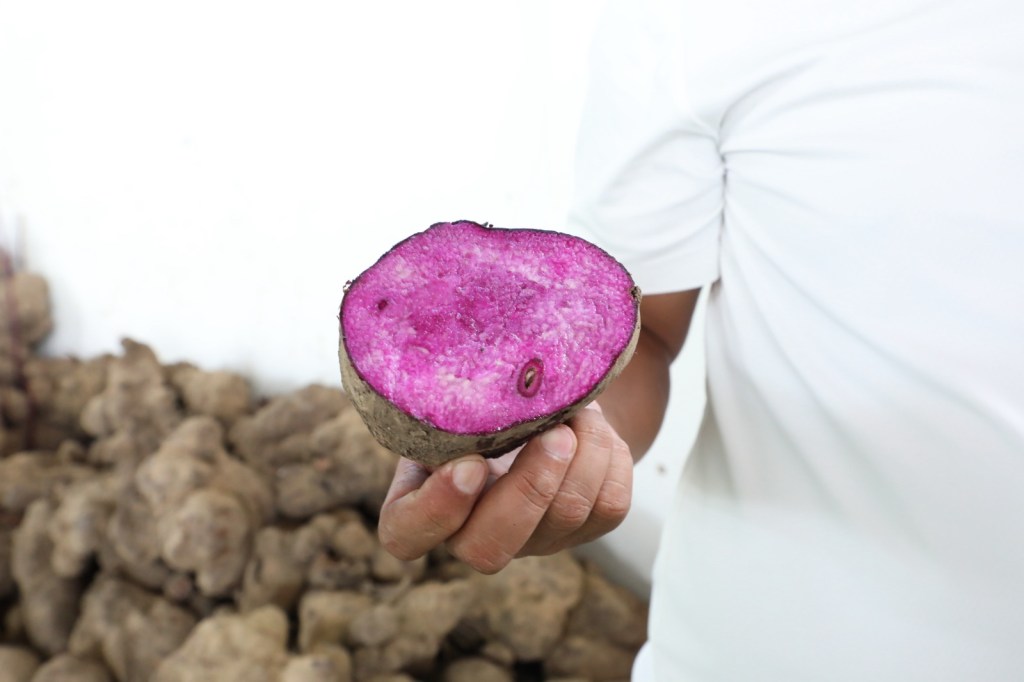
MANILA — The Department of Agriculture (DA) has distributed more than 60,000 ube planting materials to farmers in Leyte and Bohol as part of efforts to expand production of the crop and meet growing demand in local and international markets.
The initiative was implemented by the Bureau of Plant Industry (BPI) in partnership with the Philippine Root Crop Research and Training Center (PhilRootcrops) under the DA’s High Value Crops Development Program (HVCDP).
From June 15 to 17, teams from BPI and PhilRootcrops conducted field monitoring and validation activities to evaluate the use of the distributed planting materials and gather feedback from beneficiaries.
A total of 900 farmers belonging to more than 60 farmer groups in major ube-producing areas in the Visayas received the planting materials.
In Bohol, beneficiaries came from the municipalities of Dagohoy, San Isidro, Lila, Cortes, and Albuquerque. In Leyte, recipients were located in Abuyog, Tacloban, Baybay, Bato, Maasin, Ormoc, Carigara, Mayorga, Palompon, Naval, Mahaplag, Kananga, Burauen, Calubian, and Inopacan.
The planting materials, valued at nearly P2.6 million, represent the first large-scale distribution program for ube planting materials undertaken by the BPI.
The agency said the project aims to increase production of the root crop and improve the income of farmers amid rising global interest in ube-based products.
“As ube gains worldwide recognition, we must ensure Filipino farmers are positioned to take advantage of the opportunities it creates,” BPI Director Glenn Panganiban said. “This initiative helps provide the foundation for increased production, higher incomes, and a stronger domestic ube industry.”
According to BPI, the monitoring activities are intended to ensure that government support reaches intended beneficiaries and contributes to improvements in farm productivity and earnings.
Field validation teams composed of personnel from the agency’s Crop Research and Production Support Division, Property and Supply Section, and Internal Audit Unit visited beneficiary communities to document initial outcomes, identify challenges, and collect information for future interventions.
The agency added that it continues to provide technical assistance and capacity-building programs to help farmers improve production and take advantage of emerging market opportunities.
Agriculture Secretary Francisco P. Tiu Laurel Jr. said the government is looking at agricultural products with strong export potential that can generate higher incomes for farmers and help reduce the country’s agricultural trade deficit.
“President Ferdinand Marcos Jr. has tasked us to develop more export winners that can raise farmers’ incomes and create greater value for the economy,” Tiu Laurel said. “With ube now enjoying global recognition, we see an opportunity to expand production, increase exports, and help reduce the country’s more than USD10-billion annual agricultural trade deficit.”
Agriculture officials said increasing ube production is expected to strengthen the crop’s value chain, support rural livelihoods, boost export earnings, and improve the competitiveness of Philippine agriculture as global demand continues to grow.




Leave a comment