
MANILA — The government is now projecting slower economic growth of 3.5 percent to 4.5 percent this year, citing the impact of the Middle East conflict and lingering effects of the flood control controversy, according to the Department of Economy, Planning and Development (DEPDev).
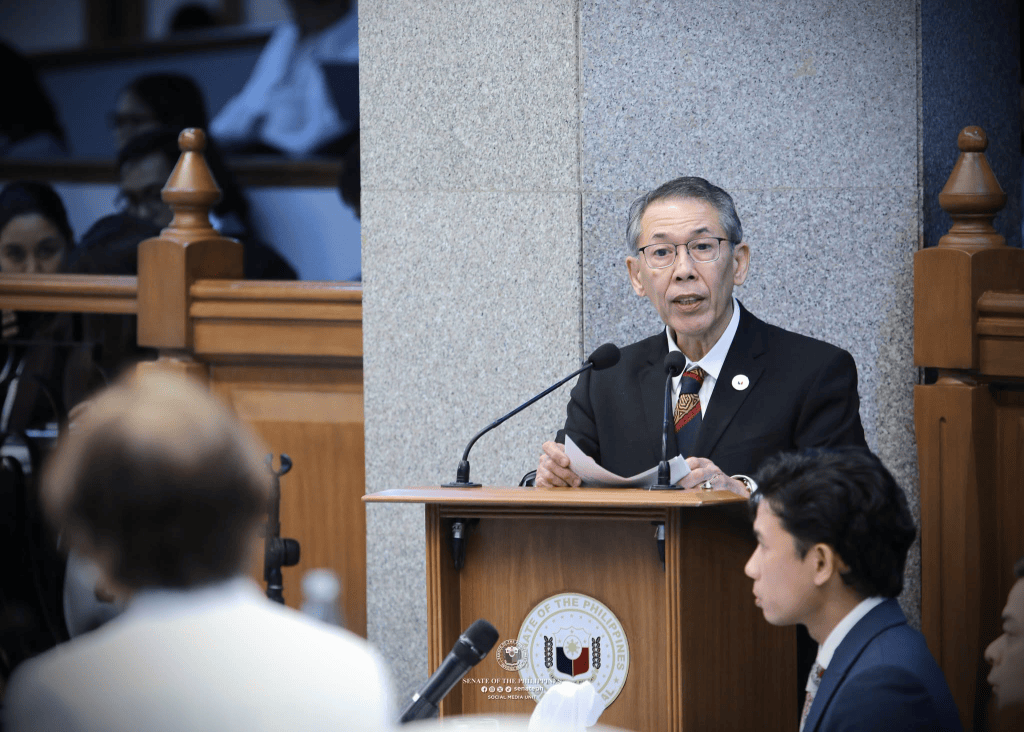
In a report, it said that DEPDev Secretary Arsenio Balisacan said the revised outlook was discussed following a recent meeting of the Development Budget Coordination Committee (DBCC), which is responsible for setting the country’s macroeconomic assumptions.
“We hope to achieve, at least in 2026, 3.5 (percent) to 4.5 (percent) with all these changes,” Balisacan said in an interview on “Money Talks” aired over One News.
The new projection marks a downward adjustment from the government’s earlier target of 5 percent to 6 percent gross domestic product (GDP) growth for the year.
Balisacan said the updated assumptions will be officially released within the week by the Department of Budget and Management (DBM), which chairs the DBCC.
“DBM (Department of Budget and Management), as the chair of the DBCC, will be releasing the DBCC decisions,” he said in a Viber message.
The Philippine economy expanded by 2.8 percent in the first quarter, its weakest performance in five years, as higher fuel prices linked to the Middle East conflict and reduced infrastructure spending due to issues involving flood control weighed on growth.
Balisacan said the second quarter could still show weak performance.
“We still see some lag effects of the previous quarter and the last half of last year’s effects coming in,” he said.
He added, however, that economic activity is expected to improve in the second half of the year as government spending picks up.
The economic planning chief also stressed the need to strengthen governance and accountability to restore investor confidence.
“We have to improve and recover trust and confidence in public policy and governance. And that’s why we have been too preoccupied, very much preoccupied in the last couple of months,” Balisacan said.
He said rebuilding trust is crucial to attracting investments that can generate jobs and support growth.
Despite external shocks, particularly tensions in the Middle East, Balisacan said the country’s overall growth outlook remains intact.
“I am hopeful that we are able to navigate well this crisis and, of course, our domestic issues, too, because we have still those lingering. We should be able to get back to that high growth scenario,” he said.
“But even more important than high growth is the inclusivity of that growth, that we see poverty reduced,” Balisacan added.



Leave a comment