
MANILA – The House prosecution panel disputed Vice President Sara Duterte’s assertion that her alleged threat against President Ferdinand Marcos Jr. was protected by freedom of expression, arguing that constitutional rights are subject to limitations and that the issue should ultimately be resolved by the Senate impeachment court.
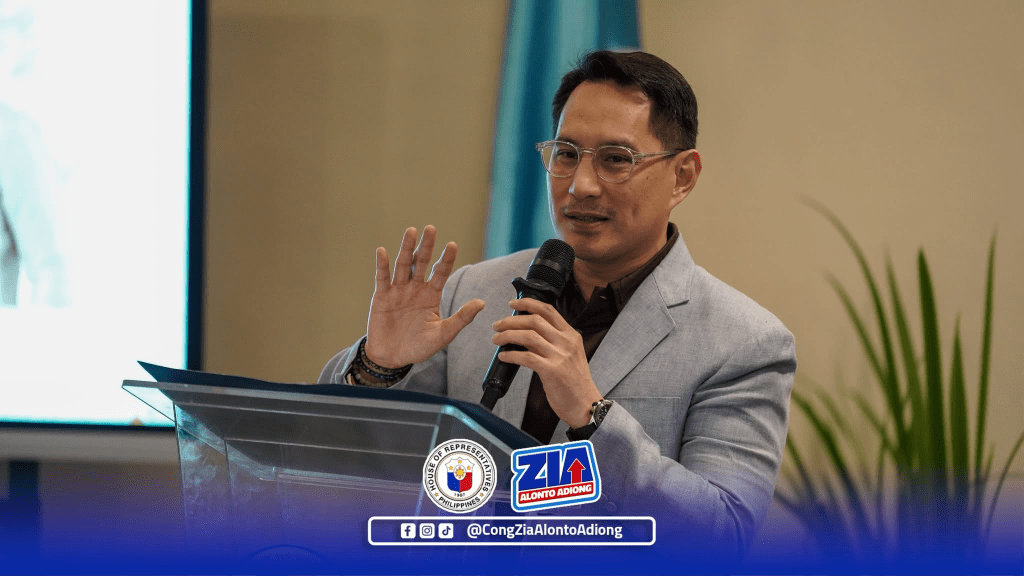
House prosecution spokesperson and Lanao del Sur 1st District Rep. Zia Alonto Adiong made the remarks after Duterte’s legal team argued in its answer before the impeachment tribunal that her statements were protected under the constitutional guarantee of free speech.
“You know, all lawyers would agree that there’s no such thing as absolute freedom. All freedoms are also subject to some regulation,” Alonto Adiong said during the Saturday News Forum in Quezon City.
“One cannot go around the streets accusing anybody of something without the necessary consequence of that action, either verbally or acted upon,” he added.
In an online press conference in November 2024, Duterte said she had instructed someone to kill President Marcos, First Lady Liza Araneta-Marcos and then-Speaker Ferdinand Martin Romualdez if an alleged plot against her succeeded.
She later stressed that the statement was “no joke,” prompting congressional inquiries and eventually becoming one of the Articles of Impeachment approved by the House of Representatives.
Alonto Adiong said the prosecution believes the case should be assessed based on the effect of Duterte’s remarks on those allegedly threatened.
“It’s not actually her utterance that should be focused on. It’s the effect of that utterance on the person that is being threatened,” he said.
He also cited Duterte’s own clarification as an indication that her statement was intended to be taken seriously.
“She herself qualified the degree of threat by actually saying these words. Siya mismo ang nagsabi (She herself said): ‘no joke, no joke,’” Alonto Adiong said.
“So, it’s for the court’s appreciation. That’s why we have forwarded this to the Senate, so that the Senate, acting as impeachment court, can actually and finally settle whether our claim in our allegation that this is indeed constitute betrayal of public trust, this would constitute high crimes,” he added.
Meanwhile, Alonto Adiong said it would be up to the Senate impeachment court to determine whether former Davao City court sheriff Abe Andres should testify after he requested to be excluded from the proceedings.
Andres, one of the prosecution’s listed witnesses, appealed to be excused from what he described as “partisan political matters.”
He is the former court sheriff whom Duterte punched during a demolition operation involving informal settlers in 2011 while she was serving as Davao City vice mayor. Andres now serves as a human resource management officer at the Supreme Court.
Alonto Adiong said the prosecution understands Andres’ hesitation to relive the incident.
“We understand the apprehension of Mr. Abe. That’s a raw emotion dahil iyong na-experience po niya kay Vice President ay (because what he experienced from Duterte is), for a person, it is not something worthy to relive, too,” he said.
“I mean, at the very least, it’s an embarrassing event on a personal level na nakatanggap ng ganong klaseng treatment sa Vice President na ang kanya lang kasalanan ay ginawa niya ang pag-uutos ng korte sa kanya (for receiving such treatment from the Vice President while executing an order of the court),” he added.
Alonto Adiong said the prosecution merely complied with the impeachment court’s directive by submitting a list of potential witnesses and evidence.
“As a matter of compliance, again, we submitted a list of potential evidence. These are potential evidence. At the end of the day, it is the impeachment court that will issue invitation in subpoena,” he said.
“Once the court issues subpoena or invitation, the choice whether to appear or not would not no longer be, you know, will no longer be relevant, especially if it’s a subpoena coming from the court.”
He also rejected claims that the impeachment proceedings are driven by partisan politics, saying the Senate is carrying out its constitutional responsibility.
“What I’m trying to say is that the court is actually a non-partisan, non-partisan venue to discuss accountability mechanism of the constitution. The constitution speaks in a manner that does not actually see these charges associated with political partisanship or preferences,” he said.
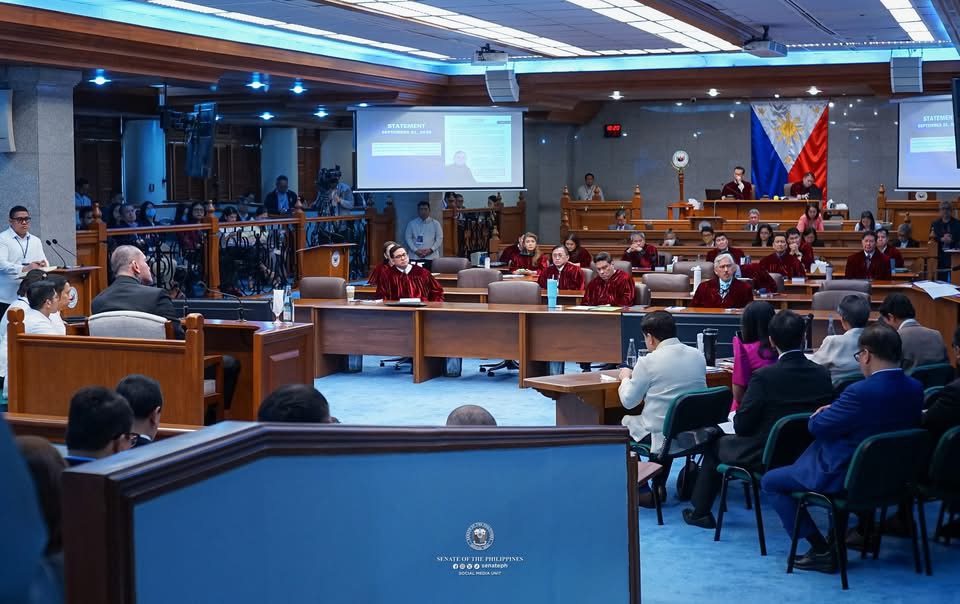
The Senate impeachment court is scheduled to begin the trial on July 6 after completing pre-trial proceedings on June 25.



Leave a comment