
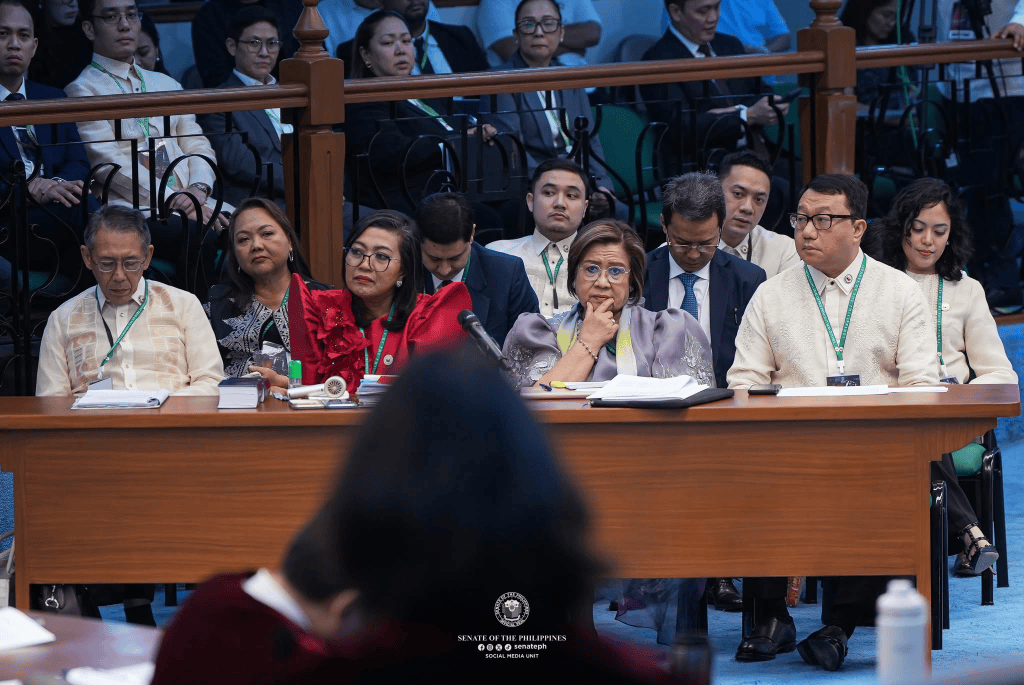
MANILA – The House prosecution panel opened its impeachment case against Vice President Sara Duterte, arguing before the Senate impeachment court that she betrayed public trust through alleged threats of violence, misuse of confidential funds, and other acts outlined in the Articles of Impeachment.
Delivering the prosecution’s opening statement, House lead prosecutor and Batangas 2nd District Rep. Gerville Luistro said the case centers on the accountability of public officials under the Constitution.
“Your Honors, at the center of this case lies a simple question—perhaps the most important question in any republic. When the people entrust power to a public official, does that official remain accountable to the people? Or do the people become accountable to the official?” Luistro said.
“The Constitution’s answer is clear. Power belongs to the people. Public office is merely borrowed. And every borrowed power carries an obligation to account for its use,” she added.
Luistro argued that the Constitution provides legal means to resolve political conflicts and does not allow threats or violence.
“The Constitution provides many means on how to resolve political conflict—elections, legislation, public debate, judicial review, and even impeachment. But it does not permit threats. It does not permit violence,” she said.
“It does not permit those entrusted with public power to place themselves above constitutional restraint,” Luistro added.
Referring to Duterte’s November 2024 online press conference, Luistro said: “In the history of our republic, walang bise presidente na may kaibigang hitman, ngayon lang. Walang bise presidente na handang magpapatay para makaupo sa puwesto, ngayon lang.”
The prosecution cited Duterte’s previous public remarks in which she said:
“P*t** ina ninyong lahat—Martin Romualdez, Liza Marcos, Bongbong Marcos. Huwag kang mag-alala, Ma’am, sa security ko, kasi may kinausap na ako na tao. Sabi ko sa kanya, kapag pinatay ako, patayin mo si BBM, si Liza Araneta, at si Martin Romualdez.”
“No joke, no joke. Nagbilin na ako, Ma’am. ‘Pag mamatay ako, sabi ko, huwag ka tumigil hanggang hindi mo mapatay sila.”
Aside from the alleged threats against President Ferdinand Marcos Jr., First Lady Liza Araneta-Marcos, and former Speaker Martin Romualdez, the Articles of Impeachment accuse Duterte of systematically misusing, misappropriating, and irregularly liquidating P500 million in confidential funds under the Office of the Vice President and P112.5 million under the Department of Education during her tenure as education secretary.
The Articles also allege that Duterte amassed unexplained wealth disproportionate to her lawful income, failed to fully disclose her assets and liabilities in her Statements of Assets, Liabilities and Net Worth from 2022 to 2024, failed to divest from business interests while serving as vice president, and gave monetary gifts to Department of Education officials to induce violations of procurement laws.
Luistro said no public official should be beyond accountability.
“If a barangay treasurer must account for public funds, then so must a Vice President. If an ordinary public servant can be investigated, then so can the highest officials of government,” she said.
She also warned against applying different standards to powerful officials.
“If ordinary Filipinos are expected to obey the law, then surely those who govern them must obey it first. Otherwise, what lesson do we teach our children?” Luistro said.
“That there is one law for the powerful and another for everyone else? That accountability exists only for the weak? That public office grants immunity from public trust? That is not the republic envisioned by our Constitution. And that is not the republic the Filipino people deserve,” she added.
In closing, Luistro urged senator-judges to decide the case based on the Constitution and the evidence presented.
“[We appeal that you] judge this case not by politics, not by popularity, not by fear, not by loyalty, but by the Constitution,” she said.
During the opening day of the trial, the prosecution also sought to have the Articles of Impeachment read and for Duterte to be arraigned under the Senate impeachment rules.
“Your Honor, before I proceed, the prosecution respectfully moves for the reading of the four Articles of Impeachment, and the entry of the corresponding answer or plea for each Article of Impeachment, Your Honor,” Luistro said.
She argued that the request was consistent with Rule No. 7 of the Senate rules on impeachment.
Duterte’s counsel, Sheila Sison, opposed the motion, arguing that Rule No. 7 applies only when the respondent fails to appear or file an answer. She noted that Duterte had already appeared through counsel and had filed an answer to the Articles of Impeachment.
“I would like to ask her for the legal basis for requiring the respondent to be arraigned today,” Sison said.
“Well, this rule is clear; it does not talk about any arraignment, and if you take a look at this sentence, everything here has been satisfied: the respondent accused is here, has attended through counsel. She may not be in person, but the notice given to the defense is that she may appear through counsel. The second thing is that the respondent accused was also able to file her answer, and so Rule No. 7 does not support the request of the lead prosecutor,” she added.
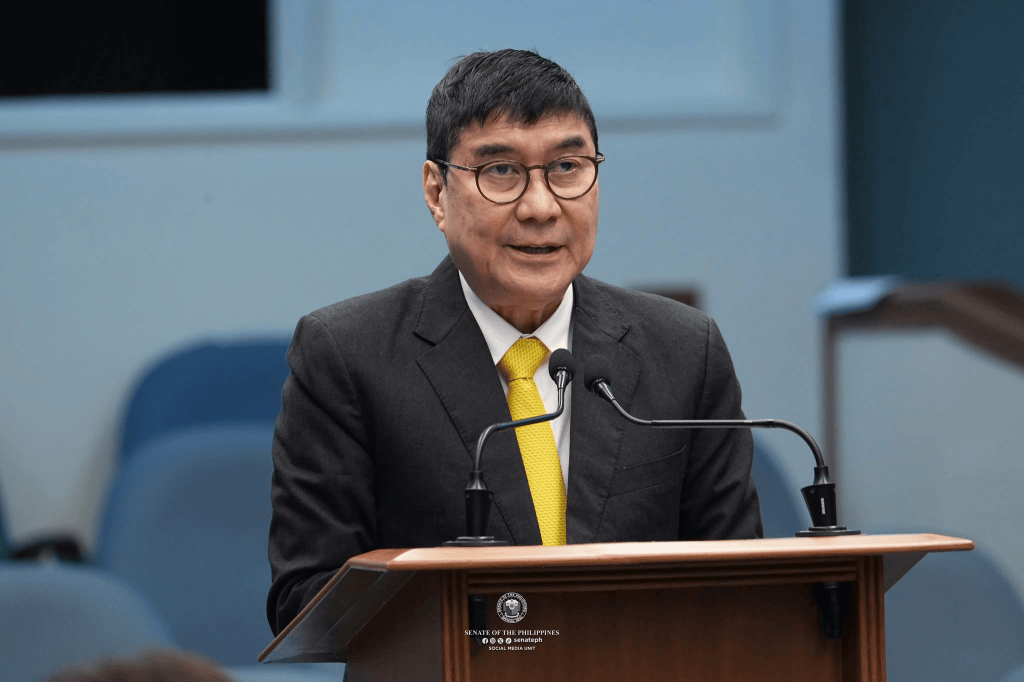
Presiding officer and Senate President Francis Escudero denied the prosecution’s motion.
“The Articles of Impeachment were deemed read and spread into the records when it was referred by the Senate to the committee on justice for the proper issuance of summons, and a plea of not guilty will only be entered in accordance with our rules, in behalf of the Vice President, if she does not file an answer,” Escudero said.
“But in this case she has filed an answer, and in fact has appeared through counsel. Insofar as the readings of the Articles of Impeachment are concerned, it will be done at the final resolution of this case […] For those reasons, the motion is denied,” he added.
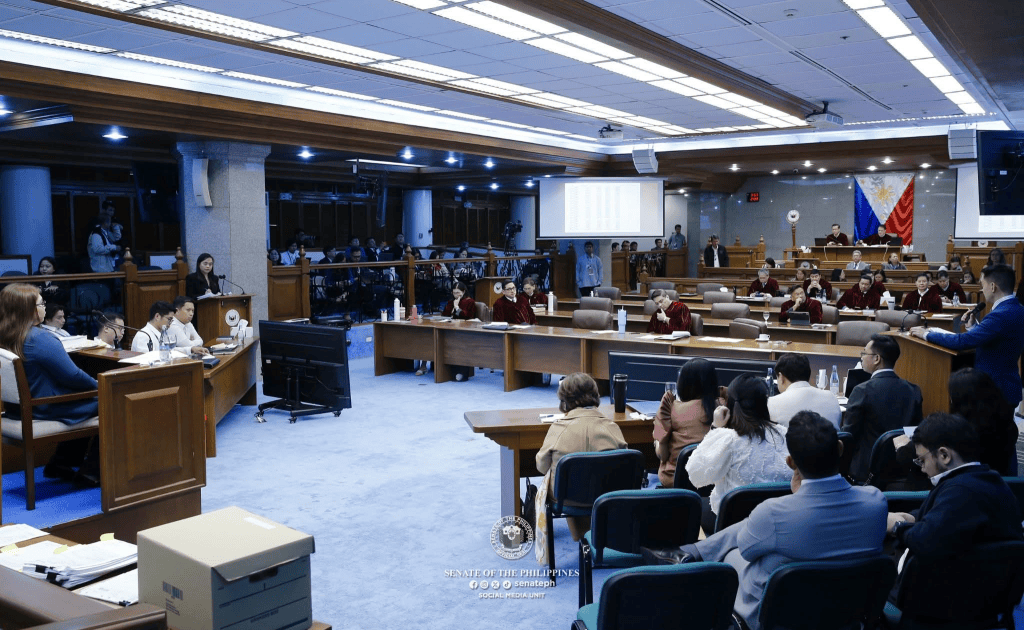
The Senate impeachment court formally convened Monday to begin Duterte’s trial after the House of Representatives approved the Articles of Impeachment through House Resolution No. 989, with 257 lawmakers voting in favor, 25 against, and nine abstaining. The Articles contain four grounds: alleged misuse of confidential funds, unexplained wealth, alleged bribery involving Department of Education officials, and alleged grave threats and betrayal of public trust.


Leave a Reply