

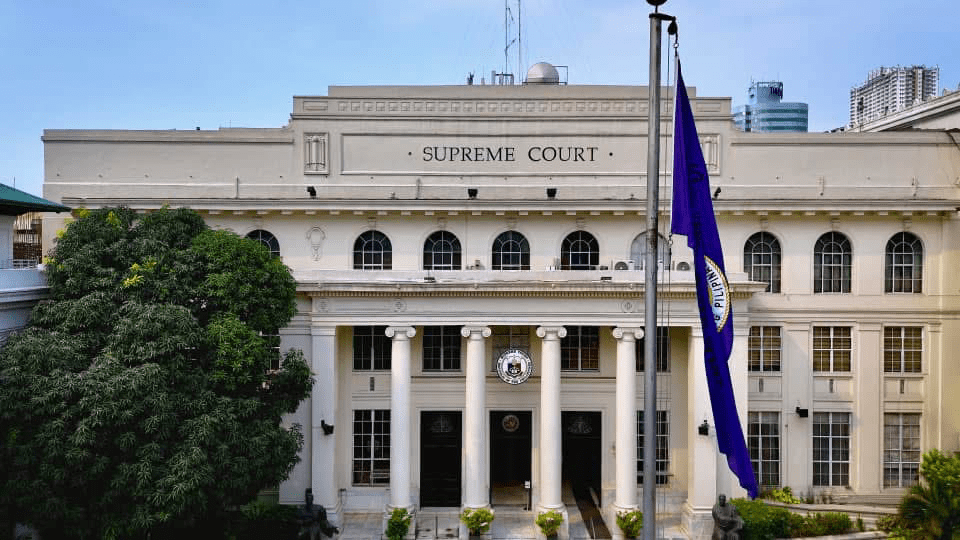
MANILA – The Supreme Court (SC) has dismissed the consolidated petitions questioning the validity of the No Contact Apprehension Program (NCAP) in Metro Manila, citing the implementation of a new and uniform traffic enforcement framework under the Metro Manila Traffic Code of 2023 (MMTC 2023).
In a statement, the SC said the issues raised in the petitions had become moot following the adoption of the MMTC 2023. It also said the petitions were dismissed because the petitioners lacked legal standing, failed to exhaust available administrative remedies before going to court, disregarded the hierarchy of courts, and violated the rule against forum-shopping.
The ruling, penned by Associate Justice Rodil Zalameda, covered the consolidated petitions filed by Kilusan sa Pagbabago ng Industriya ng Transportasyon and others. The petitioners sought to have declared unconstitutional the ordinances of Muntinlupa, Parañaque, Quezon City, Valenzuela, and the City of Manila implementing Metro Manila Development Authority Resolution No. 16-01, which established the NCAP through the use of digital cameras to detect traffic violations.
The petitioners argued that the NCAP was inconsistent with Republic Act No. 4136, or the Land Transportation and Traffic Code, claiming the law requires face-to-face apprehension of violators and holds the actual driver, rather than the registered vehicle owner, liable for traffic violations.
They also maintained that the system violated motorists’ right to due process because penalties could be imposed without immediate notice, preventing drivers from promptly contesting violations and allowing fines to accumulate before they were informed.
In its decision, the SC said the issues raised in the petitions had been overtaken by subsequent developments, noting that the MMTC 2023 now establishes a uniform traffic adjudication system, procedures before traffic adjudication boards, timelines for settling notices of violation, guidelines for tagging violations in the Land Transportation Office’s Land Transportation Management System, data privacy safeguards, standardized fines and penalties, recognized online payment platforms, and rules on the mandatory authorization process.
According to the Court, these provisions effectively replaced the separate NCAP systems that were being challenged in the petitions.
The SC added that because neither the MMTC 2023 nor the new implementing ordinances were being questioned before the Court, any ruling on the validity of the previous ordinances would no longer have any practical or legal effect.
The Court also lifted the temporary restraining order it issued on Aug. 30, 2022 against the implementation of the NCAP in the cities of Manila, Quezon, Valenzuela, Parañaque, and Muntinlupa, as well as against the Land Transportation Office.



Leave a Reply