
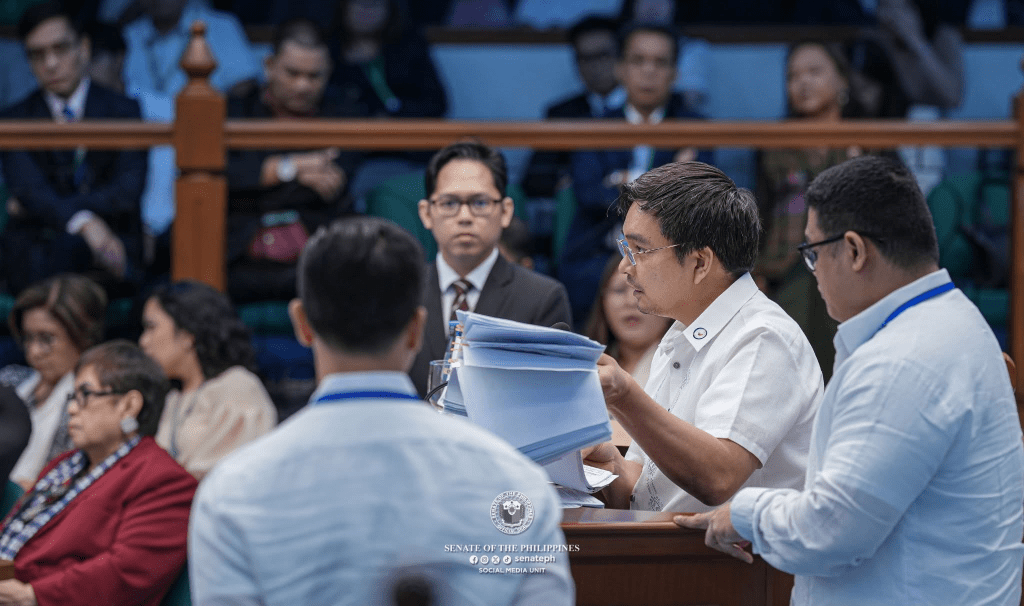
MANILA – House impeachment adviser and spokesperson Robert Ace Barbers on Tuesday called on the public to focus on the evidence presented before the Senate impeachment court, saying the case against Vice President Sara Duterte should be decided based on the facts and the Constitution rather than alleged clerical errors in investigative documents.
In a statement, Barbers said typographical and spelling errors should not distract from the evidence presented during the proceedings.
“Hindi po spelling contest ang impeachment trial. Ang tanong ay hindi kung may typo. Ang tanong ay kung naapektuhan ba nito ang ebidensiya [The impeachment trial is not a spelling contest. What matters is not whether there is a typo but whether it affects the evidence],” Barbers said.
“Hindi nagbabago ang katotohanan dahil lamang sa isang maling spelling o clerical error [The truth does not change just because of a spelling or clerical error]. The defense is entitled to examine every document and raise every legal issue it believes is relevant. That is how due process works.”
Barbers said the discussion should remain centered on whether the alleged discrepancies have any material effect on the case.
“The real question is whether the alleged discrepancies are material. Did they change the facts? Did they alter the evidence? Did they affect the integrity of the investigation or prejudice the respondent’s rights? Those are the questions that matter,” he said.
He also cautioned against treating alleged clerical mistakes as defects in the evidence itself, stressing that the recordings and other evidence presented before the impeachment court should be assessed independently of the investigative documents.
“The recordings and other evidence presented before the Impeachment Court stand on their own. Questions about the preparation of investigative documents should not be confused with the evidence itself. Those are separate matters and must be evaluated separately,” Barbers said.
In a separate statement, Deputy Speaker Paolo Ortega V of La Union said the defense has the right to challenge official records during cross-examination but must also respond to the substance of the testimony presented by the National Bureau of Investigation (NBI).
“The defense has every right to question every date, entry and document presented before the court. But after pointing out those mistakes, it must still answer the testimony and the evidence behind it,” Ortega said.
Ortega was referring to the testimony of former NBI Cybercrime Division chief Jeremy Lotoc, who told the impeachment court that investigators found prima facie evidence with reasonable certainty of conviction to recommend filing three counts of grave threats and one count of inciting to sedition against Duterte.
He said Lotoc’s sworn testimony remains part of the record unless the defense can establish that the questioned discrepancies changed the investigation, affected its conclusions or contradicted the witness’ testimony.
According to Ortega, clerical errors become significant only if they alter relevant facts, affect the reliability of the evidence or prevent the respondent from adequately responding to the allegations.
“A typo is not meaningless, but neither is it automatically fatal to the case. The defense must establish what the error changed and why that change should affect the court’s appreciation of the evidence,” he added.
Ortega also urged the public to distinguish between errors in the preparation of documents and inconsistencies that directly undermine the substance or credibility of sworn testimony.
He maintained that senator-judges should evaluate objections based on their actual impact on the case rather than on the attention they receive during the impeachment proceedings.(PNA)


Leave a Reply