
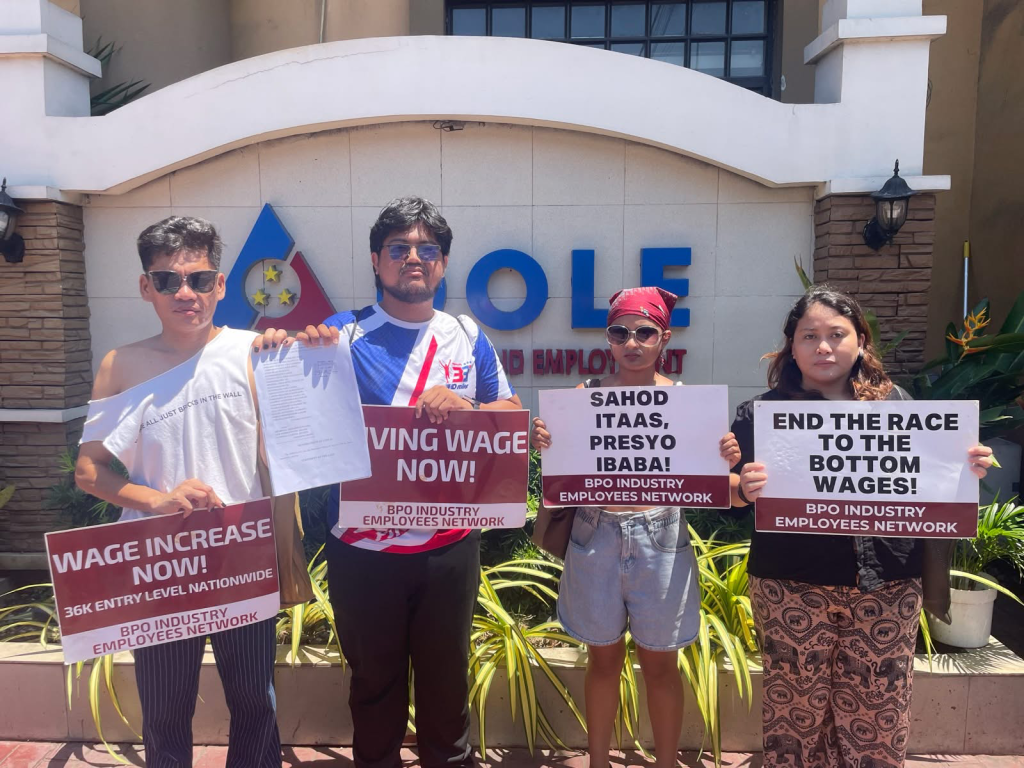
MANILA — The BPO Industry Employees Network (BIEN) opposed the Foundation for Economic Freedom’s proposal to suspend the implementation of the P85 daily minimum wage increase in Metro Manila, saying workers’ wages should not be blamed for the country’s economic problems.
BIEN President Mylene Cabalona said the group’s argument that the wage hike would lead to inflation, layoffs, business closures, and reduced investments ignores the conditions workers have long faced.
“The premise itself is false. Inflation, mass layoffs, account pullouts, and even business closures have been happening long before this wage increase. BPO workers have endured retrenchments, automation, client pullouts, and unstable employment despite years of depressed wages. It is dishonest to blame workers’ wages for problems that already exist.”
Cabalona said similar warnings have accompanied previous wage increases but have not materialized as predicted.
“Every wage increase has been met with warnings that businesses will collapse and prices will skyrocket. Those scare tactics have never materialized in the way employers claim. What has remained constant is that workers’ wages continue to lag far behind the rising cost of living.”
According to BIEN, inflation is primarily driven by government shortcomings and corporate profiteering rather than wage adjustments.
“If government and business are serious about controlling inflation, they should stop blaming workers and start addressing the real problems. Sky-high electricity rates, unchecked fuel price increases, expensive utilities, and the lack of effective regulation in the energy sector continue to drive up the prices of goods and services. Oil companies are allowed to impose successive price hikes while ordinary Filipinos are left to shoulder the burden.”
Cabalona also linked corruption to the country’s economic challenges.
“Billions of pesos have been lost to corruption, including anomalous flood control projects that fail to protect communities despite massive public spending. Public funds that should strengthen infrastructure, support MSMEs, improve public transportation, and reduce the cost of doing business are instead wasted or stolen. Workers should not be made to pay for government corruption through permanently low wages.”
BIEN also rejected claims that wage increases would hurt micro, small, and medium enterprises (MSMEs), saying their struggles stem from high operating costs and limited government support.
“MSMEs are not struggling because workers earn too much. They are struggling because they face soaring electricity bills, expensive fuel, high borrowing costs, weak domestic demand, and insufficient government support. Keeping workers poor will not save small businesses. Lowering energy costs, fighting corruption, and providing genuine assistance to MSMEs will.”
Cabalona said raising wages helps stimulate economic activity by increasing workers’ purchasing power.
“The government itself recognizes that increasing purchasing power stimulates economic activity. That is why it distributes cash assistance worth ₱2,000, ₱10,000, or ₱12,000 to poor families. If increasing purchasing power is considered good policy through ayuda, why is it suddenly treated as dangerous when workers earn that additional income through their own labor?”
“The best social protection is not occasional cash assistance. It is a living wage that allows workers to meet their daily needs with dignity while strengthening the domestic economy.”
She added that the P85 daily wage increase remains below the level needed to provide workers with a living wage.
“Even after this increase, workers remain far from receiving a living wage. Instead of trying to suspend a modest wage increase, government should focus on lowering electricity and fuel prices, ending corruption, regulating essential industries, supporting MSMEs, and ensuring that economic growth benefits the workers who create it.”
BIEN called on the Department of Labor and Employment to reject proposals to suspend Wage Order No. 27 and instead adopt policies aimed at increasing workers’ incomes, regulating the energy sector, addressing corruption, and supporting working Filipinos.




 Republika News
Leave a comment