
MANILA – Filipino consumers are tightening their budgets and exploring more shopping options as rising fuel and commodity prices linked to the Middle East conflict weigh on household finances, according to a consumer survey.
The Shopperscope 2026 survey by Worldpanel by Numerator, conducted during the first four months of the year, showed a deterioration in Filipinos’ outlook for their household finances and socioeconomic conditions over the next 12 months.
Before the conflict, about 49 percent of respondents expected their household financial situation to remain the same over the next year. That share dropped to 34 percent after the conflict began.
Those who expected their finances to “greatly improve” declined from 14 percent before the conflict to 11 percent during the ongoing war, while those expecting their situation to “somewhat improve” fell from 32 percent to 24 percent.
Meanwhile, respondents expecting their finances to “somewhat worsen” rose from 4 percent to 25 percent, while those expecting them to “greatly worsen” increased from 1 percent to 6 percent.
Laurice Obana, Shopper Insights Director at Worldpanel by Numerator, said the deterioration came after Filipino households had shown signs of financial improvement the previous year.
“Although the direct impact may vary, Filipino households are feeling intensified pressure by ongoing global challenges,” Obana said during a briefing.
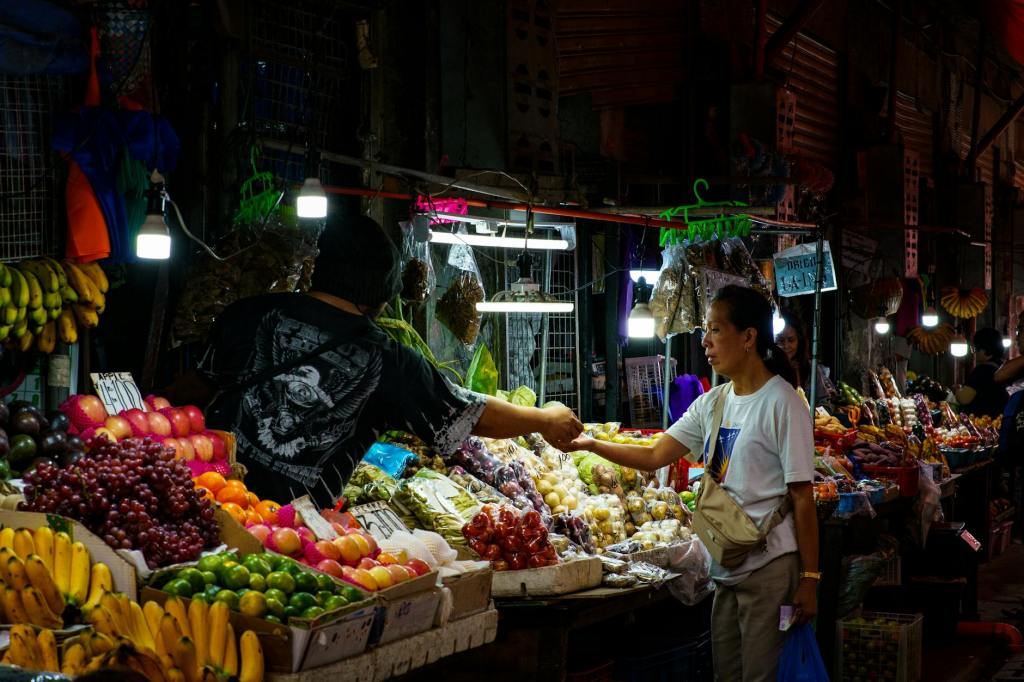
The survey also showed that consumers are diversifying where they purchase household essentials, increasingly looking beyond traditional supermarkets for discounts and promotions.
Sari-sari stores remained the leading shopping channel in the second quarter, accounting for 41 percent of purchases, up three percentage points from the same period in 2025.
Supermarkets and hypermarkets maintained a 26-percent share, while market stalls remained at 7 percent.
Purchases from groceries and drugstores, however, declined by seven percent each, accounting for 6 percent and 3 percent of the total, respectively.
Meanwhile, discount retailers such as Dali and O!Save posted the biggest increase, with their share rising 44 percent to 3 percent.
Online shops recorded a 9-percent increase, reaching a 1-percent share, while convenience stores rose 12 percent, also accounting for 1 percent of purchases.
Obana said retailers must adjust to changing consumer behavior as Filipino shoppers become increasingly conscious of value.
“Retailers can no longer rely on old habits to attract shoppers. It is important to understand how and why Filipinos choose where they buy their essentials,” she said.
While proximity remains an important consideration, Obana said consumers are also looking at the completeness of product offerings and the value they receive amid difficult economic conditions./PNA





Leave a comment