
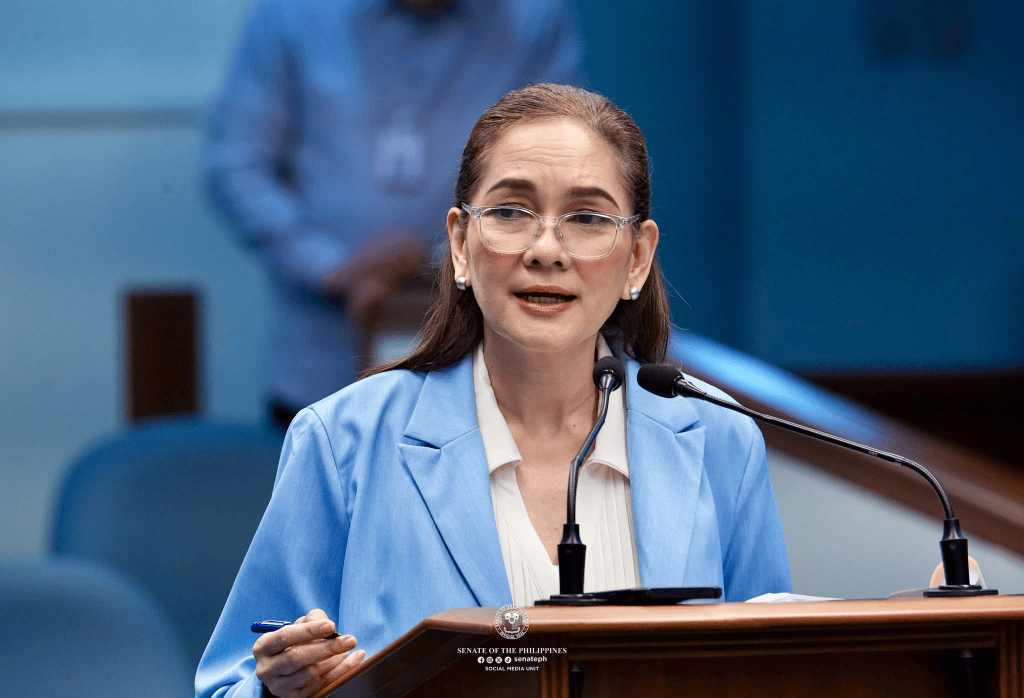
MANILA – Sen. Risa Hontiveros has called on Philippine authorities to ensure the safety and welfare of more than 100 Filipinos reportedly arrested in China for alleged immigration and labor violations, while raising the possibility that the arrests could be connected to Philippine enforcement operations against Chinese-run steel facilities.
In a privilege speech, Hontiveros said the Department of Foreign Affairs (DFA), including the Philippine Embassy in Beijing and consular posts in China, as well as the Department of Migrant Workers (DMW), should determine the status of the arrested Filipinos and provide assistance, including legal services, if necessary.
Kung routine ang pag-arestong ito, Mr. President — kung bahagi ito ng normal na paghuli sa mga taong walang sapat na dokumento at permiso para magtrabaho sa Tsina, then all we ask is that Filipinos be treated fairly and humanely. After all, Filipinos in China are entitled to the protection of Chinese law, just as Chinese nationals in the Philippines are entitled to the protection of Philippine law.
Hontiveros said the situation warrants closer scrutiny following testimony by Philippine Anti-Organized Crime Commission Undersecretary Benjamin Acorda during a Senate Committee on Economic Affairs hearing on the operations of Philippine Sanjia Steel Corporation in Misamis Oriental.
According to Hontiveros, Acorda testified about a meeting with representatives of the Chinese Embassy in which a warning was allegedly conveyed that intensified Philippine action against illegal operations of Chinese companies could put Filipino workers in China at risk.
She then detailed the findings of Philippine authorities during an operation against Sanjia Steel, which was conducted under a warrant issued by Philippine courts.
Acting on a warrant issued by our own courts, nakahanap sila ng hazardous chemicals at radioactive scrap metal sa Philippine Sanjia Steel Corporation. Nahuli nila ang mga dayuhang trabahador na nag-o-operate ng induction furnaces malapit sa lugar kung saan may planong ipatayong dry dock ang ating Navy.
Hontiveros said testimony before the committee indicated that the company was involved in the manufacture, processing and distribution of radioactive and substandard steel bars. Filipino workers were allegedly exposed to contaminated dust, while the company reportedly lacked the required licenses and permits for handling radioactive materials.
She also raised concerns that Sanjia products may have already entered the Philippine supply chain.
Pinakamalala, Mr. President: Nakapasok na sa supply chain ng Pilipinas ang produkto ng Sanjia. This raises the possibility that contaminated and substandard rebars have already found their way into our homes, schools, hospitals, bridges, and government infrastructure. Iniimbestigahan na nga ang posibilidad na substandard steel ang dahilan ng pagbagsak ng mga gusali sa Pampanga at Mindanao.
Hontiveros said the company had previously faced regulatory concerns, noting that the Department of Trade and Industry had rejected the registration of Sanjia Steel’s PHP800 million operation because of its technology, which she said was outdated and polluting and produced substandard steel.
She added that China had banned the use of induction furnaces for steelmaking in 2017 for similar reasons, with the equipment subsequently sold abroad as second-hand machinery.
2017 pa lang, ang Tsina mismo, nagdeklara ng ban sa mga induction furnace sa paggawa ng bakal dahil sa parehong kadahilanan. Saan napunta ang mga makina noong ipinagbawal nila ito? Ibinenta abroad bilang second-hand equipment. At dito lumapag ang mga induction furnace na iyon, Mr. President.
The senator said the issue had also been raised by the ASEAN Iron and Steel Council and that testimony before the Senate committee indicated such furnaces had been entering the Philippines for nearly a decade.
Hontiveros also pointed to similar cases involving other steel facilities. At Philippine Bornway Manufacturing Industrial Corporation in San Simon, Pampanga, she said authorities found radioactive industrial waste and controlled and hazardous substances, with 33 Filipino workers reportedly placed at risk.
At Chuang Shing Steel Incorporated in Magalang, Pampanga, she said authorities also found the manufacture and distribution of radioactive and substandard steel bars. She added that an operation involving a similar concern was underway in Davao on the day of the Senate hearing.
The senator also cited other cases that she said raised national security concerns, including the January 2025 arrest of Chinese national Deng Yuanqing over alleged espionage activities involving the mapping of critical infrastructure, including military buildings. Eleven other Chinese nationals were subsequently arrested in related operations, she said.
She also mentioned the 2026 arrests of three Filipinos from the Department of National Defense, Philippine Navy and Philippine Coast Guard over allegations that they passed information about Philippine resupply missions in the South China Sea to Chinese intelligence handlers.
Hontiveros further recalled investigations into Philippine offshore gaming operators, or POGOs, which she said involved concerns extending beyond criminal activities to national security.
The senator also linked Sanjia Steel to Tony Yang, also known as Antonio Lim, whom she said was identified as one of the company’s directors in its general information sheet (GIS).
Mr. President, I also cannot ignore the fact that Sanjia steel was the subject of a hearing I chaired in September 2024 in which I showed evidence demonstrating that Tony Yang a.k.a. Antonio Lim is one of the directors of Sanjia Steel. Doon sa GIS nakalagay na Filipino citizen siya pero sa hearing din ng Committee on Women niya mismo inamin na siya ay Tsino.
Hontiveros said Yang also signed on behalf of Sanjia Steel in an Oct. 8 hearing involving its contract with the Phividec Industrial Authority. She further cited previous Senate hearings on the possible involvement of Yang’s brothers in the united front work of the Chinese Communist Party.
The senator said the cases, taken together, pointed to broader concerns over foreign companies allegedly bringing prohibited or outdated practices and equipment into the Philippines.
Connecting the dots and taking all these together, Mr. President, nakikita natin ang kabuuang litrato. Ang prosesong masama sa kalusugan at kapaligiran gaya ng induction furnace, at ang produkto nitong substandard steel — banned sa Tsina, kaya dito nagtayo ng operasyon. Ang POGO, ayaw nila sa Tsina, kaya dito nila hinayaang mamayagpag. Ang bawal doon, dito dinala. Ang basura nila, dito itinapon. Ang tingin ng mga operator na ito sa bansa natin — tapunan, dumpsite, wild, wild, west kung saan magagawan ng paraan ang mga bagay na banned sa sarili nilang bansa.
Hontiveros stressed that Philippine authorities must enforce domestic laws while protecting workers and consumers from potential harm.
Hindi komplikado ang konsepto ng soberanya, Mr. President: Sa Pilipinas, batas ng Pilipinas ang masusunod; kapakanan ng Pilipino ang mauuna. We owe that vigilance to every worker who enters a factory believing it is safe; to every family who builds a home believing the steel will hold; to every Filipino who trusts that government will stand between them and those who would put them at risk.
She then questioned whether the reported arrests in China were related to the Philippine operations against Chinese-operated steel facilities.
Kung magkaugnay nga ang raid sa mga Chinese-operated steel manufacturing facilities at itong nangyaring pag-aresto ng mahigit isandaang Pilipino sa Tsina, ang tanong ko nga: Para saan pa? What purpose does this escalation serve? Why should Filipino workers in China now find themselves caught in the middle of this issue?
Hontiveros said disputes between the two countries should instead be addressed through established diplomatic and legal mechanisms.
She stressed that Filipino workers should not become collateral in disputes between governments and warned against allowing tensions to affect the Philippines’ responsibility to enforce its laws.
Hindi po piyesa sa isang geopolitical chessboard ang mga taong apektado dito. Sa bawat escalation, dumadami lang ang maaaring madawit at masaktan sa mga desisyon at pangyayaring wala naman silang kinalaman. An eye for an eye cannot be the organizing principle of relations between two nations. Genuine dialogue cannot take place under threat. Productive relations between nations cannot mean that one must look the other way when its laws are violated. And our willingness to keep diplomatic channels open should never be mistaken for a willingness to bargain away our duty to protect our country.
Hontiveros said the Philippines should maintain diplomatic engagement while firmly upholding its sovereignty and protecting its citizens.
Hindi naghahanap ng away ang Pilipinas at mga Pilipino, Mr. President. We ask only for the respect between nations that we ourselves are prepared to give: respect for our laws, respect for our sovereignty, and above all, respect for the dignity and safety of our people.



Leave a comment