

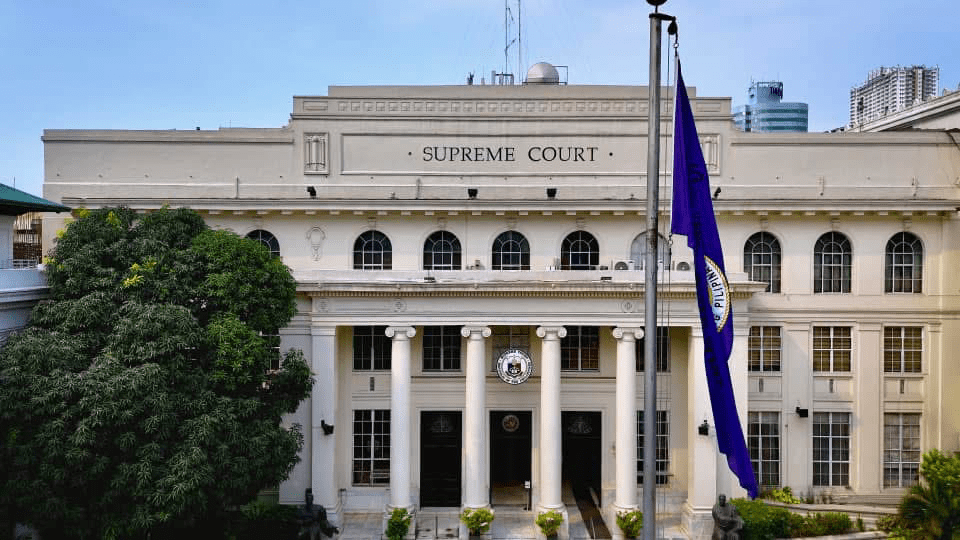
MANILA – The Supreme Court (SC) has acquitted a man convicted of illegal drug sale and possession after finding that the required insulating witnesses were called only after a buy-bust operation had already resulted in his arrest and the seizure of suspected shabu.
In a 21-page decision authored by Associate Justice Maria Filomena Singh, the SC Third Division granted the appeal of Katchan Irizumi and effectively overturned his convictions for violating Sections 5 and 11 of Republic Act No. 9165, or the Comprehensive Dangerous Drugs Act of 2002.
Irizumi was arrested during a buy-bust operation in Batangas City and was charged with selling 0.22 gram and possessing 56.23 grams of shabu.
During the operation, the elected barangay captain declined to accompany the police team because of safety concerns. She instead remained at the barangay hall and was contacted only after the operation had produced a positive result.
Police recovered 14 heat-sealed transparent sachets containing suspected shabu from Irizumi.
The SC said Section 21 of RA 9165 requires three insulating witnesses—a representative of the National Prosecution Service of the Department of Justice, a media representative and an elected public official—to be present at or near the place of apprehension or within its immediate vicinity during the required inventory and photographing of seized drugs.
The court ruled that summoning such witnesses only after the seizure and arrest had already taken place constituted a fatal defect in the chain of custody.
According to the SC, the late presence of the witnesses increased the possibility of evidence being planted, a risk that remains relevant in buy-bust operations.
The court also identified other deficiencies in the handling of the seized drugs.
The markings placed on the sachets did not indicate the time and place of seizure as required under the Philippine National Police Manual.
The request for laboratory examination also failed to specify the weights of the seized drug items.
Meanwhile, the stipulated testimony of the evidence custodian did not explain how the seized items were preserved and protected while in storage.
The Regional Trial Court and the Court of Appeals had both convicted Irizumi, prompting him to bring the case before the SC.
The high court rejected the police officers’ reliance on the COVID-19 pandemic as an explanation for their failure to comply with the chain-of-custody requirements.
“The bare invocation of the COVID-19 pandemic, without indicating with specificity why the pandemic substantially obstructed the police officers’ strict compliance with the law, cannot be accepted. Invoking the COVID-19 pandemic is not a panacea which would automatically cure police officers’ non-compliance with the chain of custody rule, especially considering the facility by which this excuse can be made,” the Supreme Court said.
The SC said the combined lapses undermined the identity and integrity of the drugs presented as evidence, creating reasonable doubt that the seized substances were the same items allegedly recovered from Irizumi.
The court emphasized that strict compliance with the chain-of-custody requirements remains essential despite the government’s campaign against illegal drugs.
“The Court recognizes the zeal by which the authorities are battling the scourge of dangerous drugs plaguing our country. However, authorities should be careful not to let their zeal obfuscate their greater duty of adhering to the strictures of the law,” the high court stressed.
The SC therefore acquitted Irizumi of the charges.


Leave a Reply