
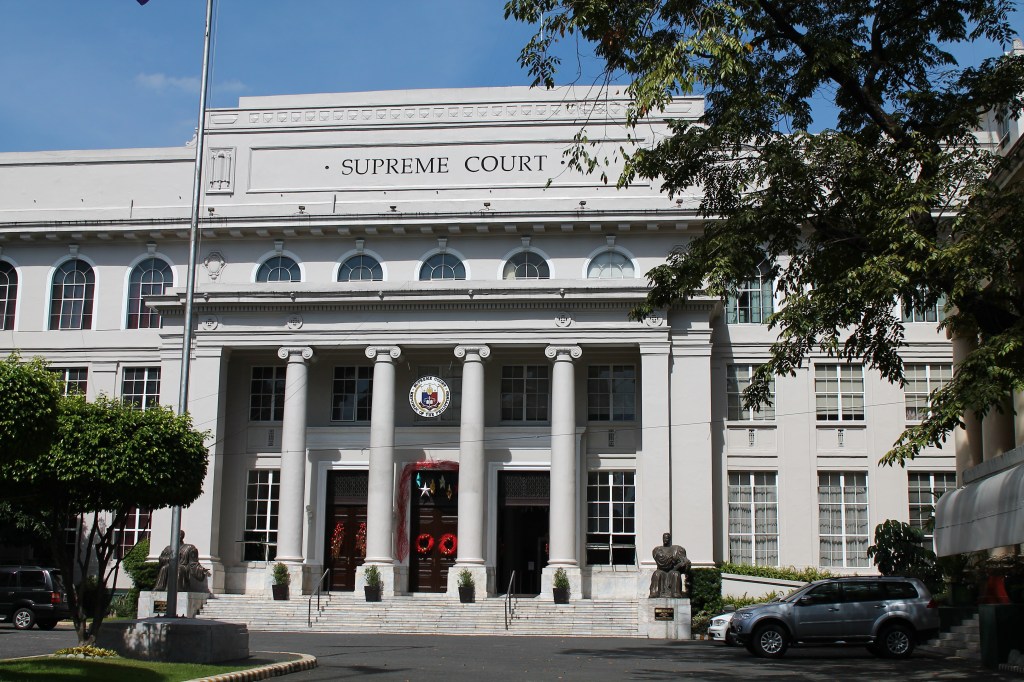
MANILA — The Supreme Court (SC) has upheld with finality its ruling abandoning the so-called “second placer rule” in local elections, ruling that a vice governor should succeed a winning candidate later found ineligible to hold office.
In a resolution involving G.R. Nos. 260219 and 260231, Datu Pax Ali S. Mangudadatu v. Commission on Elections, et al., the SC denied with finality Mangudadatu’s motion for reconsideration and affirmed the cancellation of his certificate of candidacy for governor of Sultan Kudarat.
The Court held that the resulting vacancy should be filled through the succession provisions of the Local Government Code (LGC), rather than by proclaiming the candidate who received the second-highest number of votes.
The “second placer rule” refers to the practice of declaring the candidate who placed second as the winner when the candidate who obtained the highest number of votes is later disqualified or found ineligible.
The SC said no law authorizes such a rule, stressing that the Constitution recognizes as elected the candidate who receives the highest number of votes.
When a winning candidate is subsequently found ineligible to hold office, the Court said, a permanent vacancy arises. For local elective positions covered by the LGC, the vacancy must be addressed through the law’s established succession mechanism.
Under this framework, the vice governor succeeds to the governorship for the remainder of the term.
The Court emphasized that its ruling is limited to local elective positions covered by the LGC. It did not rule on whether the second placer rule or similar succession principles apply to national elective positions because those issues were not raised in the case.
The SC, however, noted that succession to national positions such as President and Vice-President is governed by Article VII, Sections 7 and 8 of the Constitution, which provide the applicable order of succession in cases where the President or Vice-President fails to qualify, dies, becomes permanently disabled, is removed from office, or resigns.
The Court also said the ruling applies to pending cases, noting that second placers do not acquire a vested right or entitlement to be proclaimed winners.
“The second placer lost in the elections. He or she was not the choice of the people,” the SC said.





Leave a Reply