
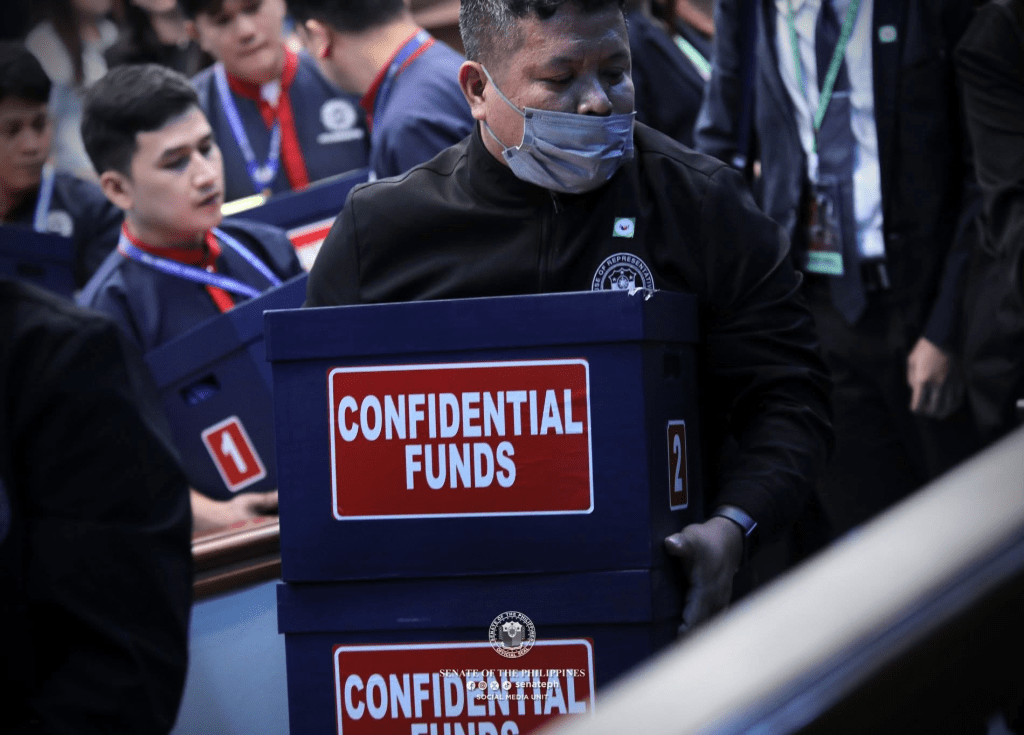
MANILA—Following developments in Vice President Sara Z. Duterte’s ongoing impeachment proceedings, House prosecutors are considering a new bill to overhaul regulations surrounding secret government spending and place tighter controls on confidential funds.
Bicol Saro Party-list Rep. Terry Ridon, a House impeachment prosecutor and chairman of the House Committee on Public Accounts, announced Thursday that members of the panel are working on the Confidential and Intelligence Fund Integrity Bill. The measure aims to write existing Commission on Audit (COA) rules into statutory law and reinforce institutional oversight.
Ridon stated that the legislation could be ready for filing within two weeks, timed with the conclusion of the prosecution’s evidence concerning Duterte’s alleged misuse of P612.5 million in confidential funds across the Office of the Vice President (OVP) and the Department of Education (DepEd).
“Pinag-aaralan din po ng ilan sa mga miyembro po ng panel ’yun pong pag-file ng Confidential and Intelligence Fund Integrity Bill,” Ridon said during a press briefing. “Hopefully, within the next two weeks, as soon as we wrap up ’yung confidential funds, that is something that can be submitted as legislation.”
He added, “I think kailangan po talaga na may legislative output itong bahaging ito ng ating paglilitis.”
The initiative addresses critical procedural vulnerabilities exposed during the trial, including the deployment of fictitious names on transaction papers. Oversight verifications revealed that several acknowledgment receipts presented to COA—signed under names like “Mary Grace Piattos,” “Antonio Pagong,” and “Timon Andrew Pusa”—lacked official birth records.
Under the proposed reform, agencies conducting sensitive security operations may still utilize operational aliases, but the true identity of every recipient must be logged with the agency and remain subject to official audit verification.
“We don’t want to intrude into how the security sector is actually undertaking their operations. Pero there should still be a little bit of semblance of transparency and accountability there,” Ridon remarked. “I don’t think we will require names for aliases, pero the real names should still be disclosed to the agency itself.”
The draft law also seeks to regulate who can manage secret disbursements. Testimony from former OVP special disbursing officer (SDO) Gina Acosta revealed that she surrendered four P125-million allocations of confidential funds to security officer Col. Raymund Dante Lachica on Duterte’s direct orders, even though Lachica was neither an SDO nor fidelity-bonded. To prevent similar transfers, the proposed framework will require any non-SDO handling secret funds to be an organic agency staff member and bound by a fidelity bond.
Additionally, the bill will introduce clear definitions for valid safe-house expenses, establish explicit guidelines for allowable expenditures, and introduce penal sanctions exceeding standard administrative audit remedies. Prosecutors are further exploring whether offenses involving intelligence assets should act as an aggravating factor in malversation charges.
Simultaneously, the prosecution team asserted that testimony from former administration officials leaves the Vice President as the sole authority capable of accounting for the missing money.
House impeachment team spokesperson and Lanao del Sur Rep. Zia Alonto Adiong emphasized that key aides—including Acosta, OVP Assistant Secretary Lemuel Ortonio, and former DepEd undersecretary Michael Wesley Poa—testified they possessed no direct knowledge of how the funds were ultimately disbursed or spent. Acosta noted she did not witness the final distribution after handing the money to Lachica, violating the 2015 Joint Circular that prohibits transferring secret funds between officers.
“So I think it leaves us with no one to explain what happened to the confidential funds but the Vice President alone. Klaro po ’yan,” Alonto Adiong said during the briefing.
Adiong rejected defense arguments that Duterte’s attendance at the Senate trial is unnecessary due to her legal representation.
“May option naman din ang Vice President, di ba, na hindi pumunta. Pero parati po nating sinasabi, trial po niya ito,” Alonto Adiong noted. “At base po sa mga naging testigo, ’yung mga inutusan niya na mag-violate, na hindi sumunod sa joint circular, lahat sila sinasabi hindi nila alam, hindi nila alam paano ginasta.”
“So that leaves only one person to explain to the public: Saan napunta? Bakit ’yun ang utos niya? Saan napunta ’yung confidential funds na ito?” he continued, adding, “Wala daw silang alam, eh. So that leaves the Vice President the only, I think, authority, or the only person or official, accountable official, to explain to the public kung saan napunta ang pera ng taumbayan.”
Adiong emphasized that if the Vice President maintains she has done nothing wrong, she should present her defense in person: “The more reason for her to clear her name by coming out and explaining what happened to the confidential funds — saan napunta, bakit ganito.”
Ridon also criticized Duterte’s absence over 21 trial days, characterising it as an effort to evade the process.
“From yesterday, week nine, day 21, there is no Vice President Sara Duterte in sight,” Ridon said. “At wala akong problema roon. Ang pagtingin namin, ito po ay pag-iwas dito po sa pagharap po sa paglilitis.”
While conceding her legal right to stay away, Ridon asserted the prosecution’s right to track her non-attendance. “Tama naman po ’yung binabanggit ng defense panel na hindi pwedeng ma-compel at karapatan ng Pangalawang Pangulo na hindi magpakita kung ayaw niyang magpakita,” he said. “Pero alam po ninyo, may karapatan din po kaming gumawa ng tara kung ilang araw na ’yung hindi pagsipot ng ating Pangalawang Pangulo.”


Leave a Reply