
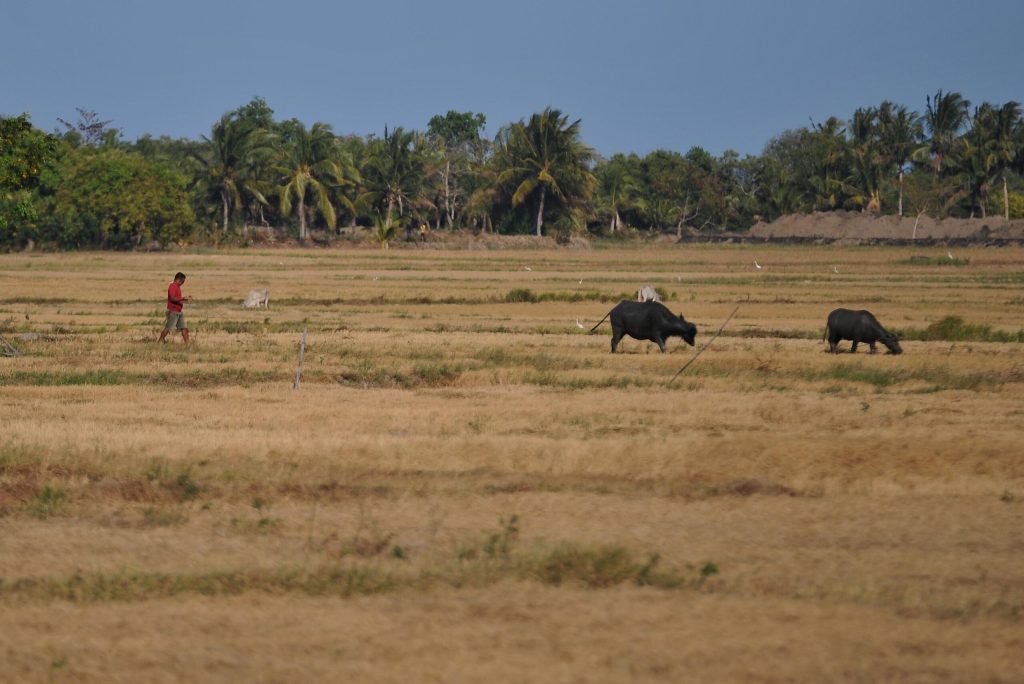
MANILA— The Department of Agriculture (DA) is strengthening its preparations for an anticipated super-strong El Niño, using lessons from the previous drought to protect agricultural production and help farmers and fisherfolk withstand its effects.
Agriculture Secretary Francisco P. Tiu Laurel Jr. said in a television interview on Thursday that his experience since entering government in November 2023—when the country was beginning to experience El Niño—provided firsthand lessons on managing prolonged dry conditions.
“We are now more prepared,” Tiu Laurel said, noting that the DA has already made advance purchases of rice, fertilizer and other agricultural inputs.
The agency is also expanding storage capacity and preparing targeted interventions for areas expected to be most affected by the drought.
El Niño is expected to continue until the first half of 2027, with weather-related shocks projected to affect fisheries, livestock and crops. The DA expects the phenomenon to reduce projected palay production during the main harvest in the second half of the year by around 700,000 metric tons.
The administration of President Ferdinand Marcos Jr. has also allocated an additional P6.2 billion to the DA for fuel subsidies and other assistance for farmers, fisherfolk and agricultural truckers. The funding is intended to help them cope with higher fuel costs caused by the conflict in the Middle East and the initial effects of El Niño later this year.
The DA is adjusting its agricultural interventions by shifting toward foliar and soil ameliorants, including bio-based and non-urea products, while taking local conditions into account.
Tiu Laurel noted that El Niño would not necessarily result in dry conditions everywhere, as some areas could instead experience excessive water.
The department plans to increase fertilizer application and seed intensity in areas where conditions require it, while preparing for the most severe scenario.
“At the end of the day, we are looking at the worst-case scenario, so we expect that overall production will still be lower,” he said.
The government is also building up its food reserves ahead of possible supply disruptions.
Tiu Laurel said the National Food Authority now has 365 active warehouses, compared with about 300 previously, after it rented an additional 165 facilities. The expanded network includes silos and other warehouses intended to provide a larger buffer against potential disruptions.
The DA is likewise opening new cold storage facilities to increase the country’s capacity to preserve meat and vegetables and extend their shelf life.
Cloud seeding operations have already started in drought-hit areas such as Isabela and Negros. Tiu Laurel said the DA would conduct cloud seeding whenever cloud formations contain sufficient moisture to produce rain.
“We will do anything that is needed to help the situation,” he said.
On irrigation, Tiu Laurel said the DA continues to coordinate with the Office of the President, which oversees the program.
He also pointed to recent heavy monsoon rains as a positive development, saying the rains had replenished major dams and could provide irrigated areas with sufficient water for the next planting season.
The improved water levels in major reservoirs provide some relief as the country prepares for the expected El Niño, but Tiu Laurel said the experience from the previous drought underscored the need for early preparation.




Leave a comment