
MANILA— The Supreme Court (SC) has cautioned legal professionals and other stakeholders against relying on artificial intelligence (AI) without proper consideration, warning that its unmindful use could lead to injustice.
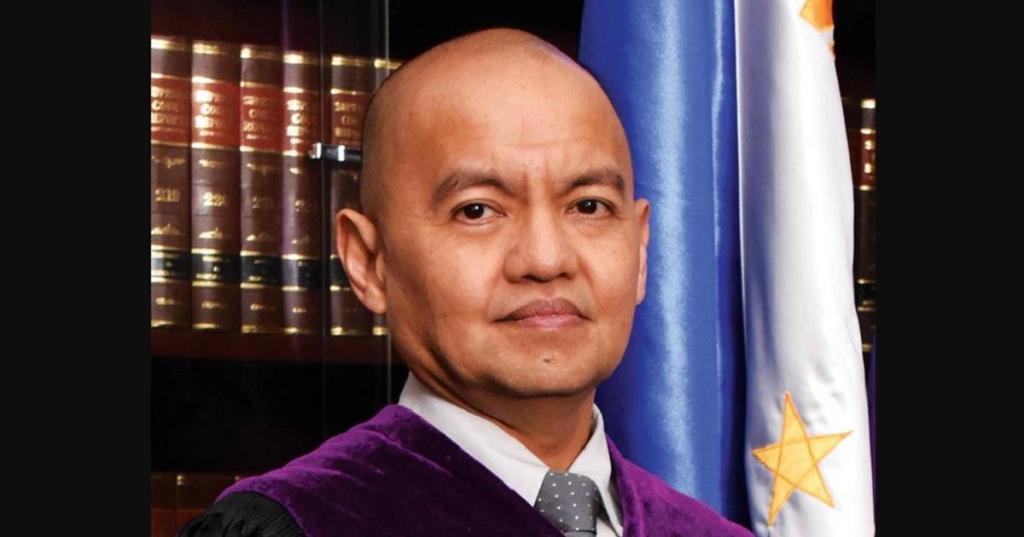
Senior Associate Justice Marvic Leonen stressed that members of the legal profession and the Judiciary must understand the rapidly evolving technology and its implications for the administration of justice.
“For leaders of our profession, for champions like you, like all of you, and for our Judiciary, ignorance of artificial intelligence is simply irresponsible,” Leonen said in a statement on Friday.
While recognizing AI’s potential to assist judicial work, Leonen emphasized that machines cannot replace judges or assume the responsibilities and authority attached to judicial office.
“Justice is not a statistical frequency. It is not an inference from past data. Justice is never artificial. Certainly, justice is not artificial intelligence. Definitely, it is more. Remember also what a machine can never hold. It holds no office. It takes no oath. It cannot be disciplined, suspended or removed. Nothing it produces carries authority of its own. AI may assist a court’s work. It may never sit on the bench,” he added.
Leonen also underscored the continuing role of court stenographers, saying human oversight remains necessary even with the use of technology in courtrooms.
He explained that stenographers must review the text captured by multi-directional microphones before a judge approves it as the official transcript, ensuring human control, editing and a human-centered approach.
Separately, Leonen explained that the SC’s digitalization initiatives under its Strategic Plan for Judicial Innovations 2022–2027 (SPJI) serve a different purpose from AI.
“Digitalization simply wants to replace the platform, the paper. It is the how of justice, it is about records, the filings, summonses, raffles, hearings from paper to a digital platform. It’s the plumbing, the logistics, the medium that carries the data of a case from grievance to judgment. And it matters,” he said.
Through the eCourt system, the SC has streamlined court procedures, including the filing and service of pleadings, judgments and other documents in civil cases, Leonen said.
“Processes that previously took months or even years have been shortened through electronic processes,” he said. (PNA)





Leave a Reply