
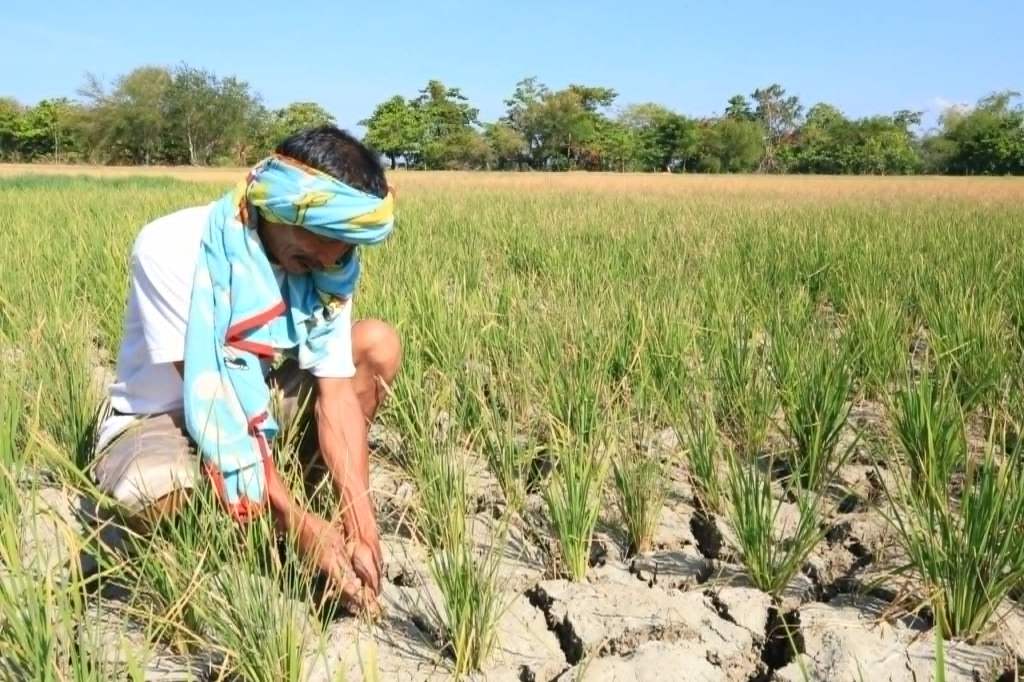
MANILA— The Department of Agriculture (DA) has presented a consolidated ₱61.99-billion action plan to mitigate the anticipated effects of El Niño on food production and rural livelihoods, including ₱371 million worth of proposed interventions that remain unfunded.
Undersecretary for Operations Roger V. Navarro presented the plan to Agriculture Secretary Francisco P. Tiu Laurel Jr. following the National El Niño Task Force meeting presided over by President Ferdinand R. Marcos Jr. at Malacañan Palace on October 13, according to a memorandum summarizing the meeting.
The proposed spending package includes ₱6.2 billion already released under the government’s UPLIFT Program. The remaining funding requirements and unfunded interventions highlight the need for timely financing and implementation as the country prepares for potential drought-related disruptions.
“We need to plan ahead and ensure farmers have the support they need to cope with a potentially severe El Niño, including access to drought-tolerant rice varieties and other appropriate inputs,” Tiu Laurel said.
“Early preparation is crucial to minimizing production losses and protecting farmers’ livelihoods and the country’s food supply,” he added.
Among the proposed interventions without funding are cloud seeding operations and measures to manage red-striped soft scale insect (RSSI) infestations affecting sugarcane production.
Marcos directed the DA to submit a comprehensive accounting of cloud seeding operations, including the areas covered and corresponding budget allocations.
He also instructed the department to explore importing drought-resistant rice seeds from India for possible distribution to farmers, subject to feasibility and implementation requirements.
The President likewise ordered intensified market surveillance and price monitoring of agricultural and fishery commodities to prevent manipulation, profiteering and other irregularities during the El Niño period.
He also directed the government to conduct location-specific public information campaigns, with materials aired or disseminated for at least two minutes every hour. The campaigns must explain government interventions, available assistance and how farmers, fisherfolk and the public can access support.
The DA was further tasked with preparing a prioritized list of beneficiaries to ensure assistance reaches vulnerable communities promptly and equitably.
All government agencies were instructed to implement energy- and water-conservation measures. Early procurement and possible budget realignment were also encouraged, subject to applicable procurement, budgeting, accounting and auditing rules.
The response plan also includes interagency livelihood initiatives. The Department of Social Welfare and Development reported updates on Project LAWA and BINHI, a cash-for-work initiative receiving technical assistance from the DA’s plant industry, fisheries, and soil and water management bureaus.
Meanwhile, the Department of Labor and Employment announced the forthcoming launch, in partnership with the DA, of the Trabahong-Dagat and Blue Enterprise Development Program for fisherfolk who may be affected by El Niño.
The plan’s implementation will depend on funding availability, interagency coordination and the timely delivery of assistance to affected communities.




Leave a Reply